Walter Tevis - Mockingbird
Здесь есть возможность читать онлайн «Walter Tevis - Mockingbird» весь текст электронной книги совершенно бесплатно (целиком полную версию без сокращений). В некоторых случаях можно слушать аудио, скачать через торрент в формате fb2 и присутствует краткое содержание. Город: London, Год выпуска: 2007, ISBN: 2007, Издательство: Gollancz, Жанр: Фантастика и фэнтези, на английском языке. Описание произведения, (предисловие) а так же отзывы посетителей доступны на портале библиотеки ЛибКат.
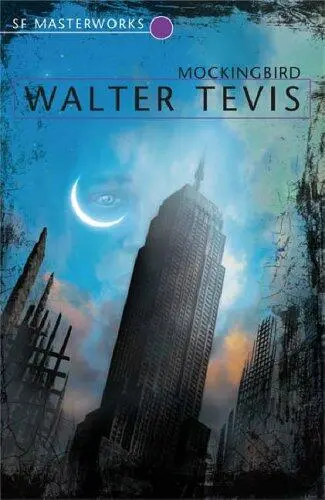
- Название:Mockingbird
- Автор:
- Издательство:Gollancz
- Жанр:
- Год:2007
- Город:London
- ISBN:978-0575079151
- Рейтинг книги:5 / 5. Голосов: 1
-
Избранное:Добавить в избранное
- Отзывы:
-
Ваша оценка:
Mockingbird: краткое содержание, описание и аннотация
Предлагаем к чтению аннотацию, описание, краткое содержание или предисловие (зависит от того, что написал сам автор книги «Mockingbird»). Если вы не нашли необходимую информацию о книге — напишите в комментариях, мы постараемся отыскать её.
Mockingbird
Review
From the Inside Flap “A moral tale that has elements of Aldous Huxley’s
,
, and
.”
—
“Set in a far future in which robots run a world with a small and declining human population, this novel could be considered an unofficial sequel to
, for its central event and symbol is the rediscovery of reading.”
—
“Because of its affirmation of such persistent human values as curiosity, courage, and compassion, along with its undeniable narrative power,
will become one of those books that coming generations will periodically rediscover with wonder and delight.”
—
“I’ve read other novels extrapolating the dangers of computerization but Mockingbird stings me, the writer, the hardest. The notion, the possibility, that people might indeed lose the ability, and worse, the desire to read, is made acutely probable.”
—
bestselling author ANNE MCCAFFREY “Walter Tevis is science fiction’s great neglected master, one of the definitive bridges between sf and literature. For those who know his work only through the movies, the lucid prose and literary vision of
and
will come as a revelation.”
—AL SARRANTONIO, Author of
saga
Mockingbird — читать онлайн бесплатно полную книгу (весь текст) целиком
Ниже представлен текст книги, разбитый по страницам. Система сохранения места последней прочитанной страницы, позволяет с удобством читать онлайн бесплатно книгу «Mockingbird», без необходимости каждый раз заново искать на чём Вы остановились. Поставьте закладку, и сможете в любой момент перейти на страницу, на которой закончили чтение.
Интервал:
Закладка:
So I got out of bed and finished writing this. I am tired now, but I still feel frightened. Am I afraid she will leave? Am I afraid I will lose her?
DAY SEVENTY-SIX
She has been here eighteen days now, and I have not written anything down for the last nine.
My happiness has grown! I do not think about the immorality of our cohabitation, or of its being probably against the law. I think about Mary Lou and about what I see in films and what I read and what she reads.
All day yesterday she read a new kind of writing called poems. Some of them she read aloud. In places they were like chess—incomprehensible—and in other places they said strange and interesting things. She read this one to me twice:
O Western wind, when wilt thou blow,
That the small rain down can rain?
Christ! That my love were in my arms
And I in my bed again!
I had to look up “thou” in Dictionary . The second time she read the lines I felt the feeling I have felt in watching some of the strong scenes in films. An expansive feeling, painfully joyful, in my chest.
When she had finished I said, for some strange reason, “Only the mockingbird sings at the edge of the woods.”
She looked up from the book and said, “What?” and I said it again: “Only the mockingbird sings at the edge of the woods.”
“What does that mean?” she said.
“I don’t know. It’s from a film.”
She pursed her lips. “It’s like the words I just read, isn’t it? It makes you feel something and you don’t know what it is.”
“Yes,” I said, astonished, almost awed, to find that she had said what I wanted to say. “Yes. Exactly.”
Then she read more poems, but none of them made me feel that way again. I liked hearing her read them anyway. I watched her sitting cross-legged on the floor, staring at the book, and listening to her serious and clear voice as she read to us both. She holds the book much closer to her face than I do, and there is something very touching about her when she reads.
We take walks together every day and have lunch in a different place.
DAY SEVENTY-SEVEN
Mary Lou went out this morning, as she often does, to buy some Quik-Serv food for us. She uses my credit card for this. When she was gone I started up the projector and began to watch a film with Lillian Gish and to read the dialogue from it into the recorder when suddenly the door opened and I looked up to see Spofforth standing there in the doorway. He was so tall and so powerful-looking that he seemed to fill up all the space just standing there. And yet I was not frightened by him this time. Spofforth is, after all, only a robot. I turned off the projector and invited him in. He came in and sat in the white plastic chair by the far wall, facing me. He was wearing khaki pants, sandals, and a white T-shirt. His face was unsmiling, but not harsh.
After we had sat silently for a while I said, “Have you been listening to my journal?” I hadn’t seen him for a long time, and he had never been in my room before.
He nodded. “When I have time.”
Something about this annoyed me, and I felt bold with him. “Why do you want to know about me?” I said. “Why do you want me to keep a journal of my life?”
He didn’t answer. After a moment he said, “The teaching of reading is a crime. You could be sent to prison for it.”
That did not frighten me. I thought of what Mary Lou had said about Detection, about how no one ever got detected. “Why?” I said. I was violating a Rule of Conduct: “Don’t ask; relax.” But I didn’t care. I wanted to know why it should be a crime to teach someone to read. And why Spofforth hadn’t told me this before, when I had first suggested teaching reading at NYU. “Why shouldn’t I teach Mary Lou how to read?”
Spofforth leaned forward, putting his huge hands on his knees, staring at me. His stare was a bit frightening, but I did not look away from it.
“Reading is too intimate,” Spofforth said. “It will put you too close to the feelings and the ideas of others. It will disturb and confuse you.”
I was beginning to feel a bit frightened. It was not easy to be in Spofforth’s presence, and to listen to his deep, authoritative voice and not want to be obedient, and unquestioning. But I remembered something I had read in a book: “Others can be wrong too, you know,” and I held on to that. “Why should it be a crime to be disturbed and confused? And to know what others have thought and felt?”
Spofforth stared at me. “Don’t you want to be happy?” he said.
I had heard that question asked before, by my robot-teachers at the dormitory; it had always seemed unanswerable. But now, here in my room, with Mary Lou’s things in it and with my projector and cans of film, and with my mind undrugged, it made me suddenly angry. “People who don’t read are killing themselves, burning their bodies with fire. Are they happy?”
Spofforth stared at me. Then, suddenly, he looked away, toward the back of another chair where Mary Lou’s red dress was lying, crumpled, with a pair of her sandals sitting on the seat by it. “It is also a crime,” he said, but softer now, “to live for over a week with another person.”
“What is a week?” I said.
“Seven days,” Spofforth said.
“Why not seven days?” I said. “Or seven hundred? I am happy with Mary Lou. Happier than I ever was before, with dope and with quick sex.”
“You’re frightened,” Spofforth said. “I can see that you’re frightened right now.”
Suddenly I stood up. “So what?” I said. “So what? It’s better to be living than to be—to be a robot.”
I was frightened. Frightened of Spofforth, frightened of the future. Frightened of my own anger. For a moment I had a strong desire, standing there silently, to take a sopor—to take a whole handful of them and to make myself calm, unruffled, unfeeling. But I liked being angry, and I was not ready to let go of it. “Why should you care if I’m happy?” I said. “What business is it of yours what I do? You’re some kind of machine, anyway.”
And then Spofforth did a surprising thing. He threw back his head and laughed, loud and deep, for a long time. And, crazily, I felt my anger going away and I began to laugh with him. Finally he stopped and said, “Okay, Bentley. Okay.” He stood up. “You’re more than I thought you were. Go on living with her.” He walked toward the door and then turned around and faced me. “For a while.”
I just looked at him and said nothing. He left, closing the door behind him.
When he was gone I sat down on my bed-and-desk again and found that my arms were trembling uncontrollably and that my heart was pounding. I had never talked like that to anyone before and certainly not to a robot. I was terribly frightened of myself. But, deeper, I was elated. It was strange. I had never felt that way before.
When Mary Lou returned I told her nothing about my visitor. But when she wanted to go on with our reading I made love to her instead. She was a little angry with that at first; but my desire for her was so strong, and we made love so powerfully, on the carpet on the floor, with my holding her body tightly and forcing myself into her strongly, that before long she was kissing me all over my face and laughing.
And afterward I felt so good, so relaxed, that I said, “Let’s read for a while.” And we did. And nothing happened. Spofforth did not return.
Mary Lou has been writing down the memory of her life at the same time that I have been writing this. I am at my desk and she is sitting in my< extra chair, using a large book in her lap as a writing surface. She prints beautifully, methodically, in small, neat letters. I am embarrassed that after such a short time she can write better than I. Yet I was her teacher, and I am proud of that. I think now that in my years at the university I never taught anyone anything worth knowing; I have more pleasure from what I have taught Mary Lou than in all my work in Ohio.
Читать дальшеИнтервал:
Закладка:
Похожие книги на «Mockingbird»
Представляем Вашему вниманию похожие книги на «Mockingbird» списком для выбора. Мы отобрали схожую по названию и смыслу литературу в надежде предоставить читателям больше вариантов отыскать новые, интересные, ещё непрочитанные произведения.






Обсуждение, отзывы о книге «Mockingbird» и просто собственные мнения читателей. Оставьте ваши комментарии, напишите, что Вы думаете о произведении, его смысле или главных героях. Укажите что конкретно понравилось, а что нет, и почему Вы так считаете.