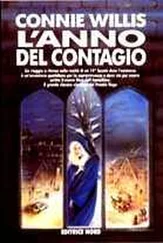
Connie Willis - Passage
Здесь есть возможность читать онлайн «Connie Willis - Passage» весь текст электронной книги совершенно бесплатно (целиком полную версию без сокращений). В некоторых случаях можно слушать аудио, скачать через торрент в формате fb2 и присутствует краткое содержание. Год выпуска: 2001, ISBN: 2001, Издательство: Bantam Books, Жанр: Фантастика и фэнтези, на английском языке. Описание произведения, (предисловие) а так же отзывы посетителей доступны на портале библиотеки ЛибКат.
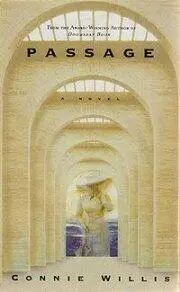
- Название:Passage
- Автор:
- Издательство:Bantam Books
- Жанр:
- Год:2001
- ISBN:0-553-11124-8
- Рейтинг книги:3 / 5. Голосов: 1
-
Избранное:Добавить в избранное
- Отзывы:
-
Ваша оценка:
Passage: краткое содержание, описание и аннотация
Предлагаем к чтению аннотацию, описание, краткое содержание или предисловие (зависит от того, что написал сам автор книги «Passage»). Если вы не нашли необходимую информацию о книге — напишите в комментариях, мы постараемся отыскать её.
Nominated for Nebula Award for Best Novel in 2001, Hugo, Campbell, and Clark awards in 2002.
Passage — читать онлайн бесплатно полную книгу (весь текст) целиком
Ниже представлен текст книги, разбитый по страницам. Система сохранения места последней прочитанной страницы, позволяет с удобством читать онлайн бесплатно книгу «Passage», без необходимости каждый раз заново искать на чём Вы остановились. Поставьте закладку, и сможете в любой момент перейти на страницу, на которой закончили чтение.
Интервал:
Закладка:
“Go?” Mr. Briarley said, shutting his book and marking the place with his thumb. “Where are you going?”
“I’m going out, Uncle Pat,” Kit said. “I’m going to watch a movie. With Joanna, Joanna Lander,” she said, presenting Joanna to him.
He gave no sign of recognition. “She was a student of yours at Dry Creek,” Kit said. “We’re going to go watch a movie.”
Joanna thought of the steward, repeatedly starting off down the deck, of the young woman in the nightgown, saying over and over again, “It’s so cold.” Was that what having Alzheimer’s was like, being trapped in a hallucination, in a dream, repeating the same lines, the same actions, over and over again? And how about Kit? She was trapped, too, in an endlessly repeating nightmare, though you couldn’t tell by the quiet, loving way she answered him, patted his arm.
“What about Kevin?” he asked. “Isn’t he going with you?”
“No, Uncle Pat.” She turned to Joanna. “Ready? Oh, wait, I had a book I wanted to show you before we go,” she said, and ran upstairs.
At the word go, Joanna looked apprehensively at Mr. Briarley, but he had returned to his book. Kit reappeared, carrying two textbooks. “I don’t think either of these is it,” she said, handing them to Joanna, “but since you’re here—”
Neither of them was it. Joanna knew as soon as she saw them. “Well, it was worth a try,” Kit said, ran them back upstairs, and came down again, cell phone in hand. “Okay. I’m ready. Good-bye, Uncle Pat.” She kissed him on the cheek.
“ ‘The Rime of the Ancient Mariner’ is not, contrary to the way it is popularly taught, a poem about similes and alliteration and onomatopoeia,” Mr. Briarley said, as if he were lecturing to her second-period class. “Neither is it about albatrosses and oddly spelled words. It is a poem about death and despair. And resurrection.” He stood up, walked to the window, and pulled the curtain aside to look out. “Where’s Kevin? He should be here by now.”
Kit went over and led him back to his chair. He sat down. “I’ll be back soon,” she said.
He looked up innocently. “Where are you going?”
“I’m going out with Joanna. We’re going to go watch a movie,” she said and held her cell phone up to show Mrs. Gray, who was contentedly crocheting. “Call me,” she said.
“Does that happen every time you go out?” Joanna asked as they got in the car.
“Pretty much,” Kit said, turning on her cell phone. “This was such a great idea. Now I won’t worry that Mrs. Gray’s trying to reach me and I don’t know it.”
Like the Californian, Joanna thought, wondering how to broach the subject of the questions Kit had said she’d found the answers to. If she asked her now, on the way over, it would sound like she’d only invited Kit to Dish Night to get information out of her. But if she waited, Kit might bring it up in the middle of the movie, with Vielle right there, and Vielle was already suspicious.
It had better be now. But at least lead up to it, Joanna thought. “I’m so glad you decided to come, Kit,” she said.
“So am I,” Kit said, reaching in the pocket of her coat and pulling out a folded sheet of paper. “Okay, the Morse lamp,” she said. “They did use one on the Titanic, to signal the Californian. It was on the port bridge wing, which, according to the map in The Illustrated Titanic, was just in front of the bridge and off to the left. I had to look that up,” she said, smiling. “I never can remember which is port and which is starboard. Port is left as you’re facing the bow. Starboard’s right.”
In front of the bridge and off to the left. That was where the two men had stood, signaling with the lantern. “Did it say what the Morse lamp looked like?”
Kit shook her head. “Unfortunately, even though it’s called The Illustrated Titanic, there was no illustration, and no description. I’ll keep looking. Now, about the ships she tried to contact, I’m not sure I’ve got them all. The stuff about the wireless is scattered all over the place, and half the books don’t have indexes, so I don’t know if this is all of them, but the ones I have are…” she peered at the paper in the light from the passing streetlights, “…the Virginian, the Carpathia —that’s the one that picked up the survivors—the Burma, and the Olympic.”
The Virginian, the Carpathia, the Burma, and the Olympic. Not the Baltic or the Frankfurt. But Kit had said the information about the wireless was scattered all over the place, and the Titanic could have signaled dozens of ships. The books might only mention those that were close enough to help or had responded. The officer had said the Frankfurt wasn’t answering.
“And of course the Californian,” Kit said, “but you said ‘contacted,’ and they were never able to contact her. Did you know her wireless operator shut down his wireless and went to bed five minutes before the Titanic sent her first SOS?”
Joanna laughed.
“What is it?” Kit asked. “Did I say something funny?”
“You just remind me of somebody, a little girl I know who’s always beginning her sentences with ‘Did you know?’ ”
“A patient of yours?” Kit asked.
“Sort of,” Joanna said. “Were you able to find out anything about the first-class dining room?”
“First-Class Dining Saloon,” Kit corrected. “Yes, there was tons of stuff. It was…” she consulted her notes by the light of the streetlights again, “ ‘a sumptuous dining room patterned after England’s Haddon Hall and decorated in the Jacobean style.’ ”
Jacobean. Joanna had no idea what Jacobean furniture looked like. She pulled into the parking lot of Vielle’s apartment complex. “Now, I have to warn you,” she said, shutting off her headlights. “We have a rule against talking about work at Dish Night, so you’ll have to tell me about the rest of this on the way back.”
“Okay,” Kit said. “Just let me finish this part about the dining saloon.” Joanna nodded and switched on the overhead light. “It was located in the center of the ship, on the saloon deck, next to the Grand Staircase. It was one hundred and fourteen feet long and was capable of seating five hundred passengers at a time. It was painted white and had two rows of white pillars down the middle. The chairs and tables were dark oak, and the chairs were upholstered in dark green velvet with headrests embroidered in fleurs-de-lis.” Kit folded up the paper and stuck it back in the pocket of her coat. “I’ll tell you what I found out about the engines stopping on the way back,” she said, but that wouldn’t be necessary. Richard was right. It wasn’t the Titanic.
28
“SOS. Come at once—big list—ten miles south Head Old Kinsak—SOS…”
—Wireless message from the LusitaniaVielle had a fit about Joanna’s having brought Kit. “Are you out of your mind?” she whispered when Kit took the popcorn into the living room. “Letting her near Richard? Did you look at her? She’s beautiful, and guys really go for the fragile, helpless type. If he gets one look at her, you can kiss your chances with Dr. Right good-bye.”
“Richard’s not coming,” Joanna said. “We had a problem with the session this afternoon, and he needed to—”
“What kind of problem?” Vielle demanded. “And whose session? Yours?”
“Dish Night Rule Number One, no talking about work,” Joanna said. “I’ve already warned Kit about that.”
“Is that why you brought her?” Vielle asked. “So I couldn’t ask you about the project? Or about why you’re so interested all of a sudden in a movie neither of us liked? Or why you don’t want to watch it—?” She broke off as Kit came in the kitchen with her cell phone, studying the buttons on it.
Читать дальшеИнтервал:
Закладка:
Похожие книги на «Passage»
Представляем Вашему вниманию похожие книги на «Passage» списком для выбора. Мы отобрали схожую по названию и смыслу литературу в надежде предоставить читателям больше вариантов отыскать новые, интересные, ещё непрочитанные произведения.




Обсуждение, отзывы о книге «Passage» и просто собственные мнения читателей. Оставьте ваши комментарии, напишите, что Вы думаете о произведении, его смысле или главных героях. Укажите что конкретно понравилось, а что нет, и почему Вы так считаете.