Connie Willis - Passage
Здесь есть возможность читать онлайн «Connie Willis - Passage» весь текст электронной книги совершенно бесплатно (целиком полную версию без сокращений). В некоторых случаях можно слушать аудио, скачать через торрент в формате fb2 и присутствует краткое содержание. Год выпуска: 2001, ISBN: 2001, Издательство: Bantam Books, Жанр: Фантастика и фэнтези, на английском языке. Описание произведения, (предисловие) а так же отзывы посетителей доступны на портале библиотеки ЛибКат.
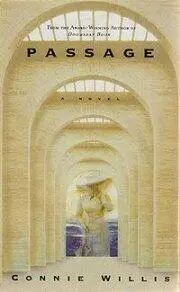
- Название:Passage
- Автор:
- Издательство:Bantam Books
- Жанр:
- Год:2001
- ISBN:0-553-11124-8
- Рейтинг книги:3 / 5. Голосов: 1
-
Избранное:Добавить в избранное
- Отзывы:
-
Ваша оценка:
Passage: краткое содержание, описание и аннотация
Предлагаем к чтению аннотацию, описание, краткое содержание или предисловие (зависит от того, что написал сам автор книги «Passage»). Если вы не нашли необходимую информацию о книге — напишите в комментариях, мы постараемся отыскать её.
Nominated for Nebula Award for Best Novel in 2001, Hugo, Campbell, and Clark awards in 2002.
Passage — читать онлайн бесплатно полную книгу (весь текст) целиком
Ниже представлен текст книги, разбитый по страницам. Система сохранения места последней прочитанной страницы, позволяет с удобством читать онлайн бесплатно книгу «Passage», без необходимости каждый раз заново искать на чём Вы остановились. Поставьте закладку, и сможете в любой момент перейти на страницу, на которой закончили чтение.
Интервал:
Закладка:
There was no answer. “Kit! Are you okay?” Joanna called, pelting down the hall, thinking, Mr. Briarley’s dead. “What happened?”
Kit was standing arms akimbo over Mr. Briarley, and he wasn’t dead. He was awake and staring dully ahead, slumped in the dark red leather chair, his hands loosely folded in his lap. Joanna saw with a pang that his gray tweed vest was buttoned wrong. Looking at him, Joanna realized that this, and not the disaster in the kitchen, was what Kit had meant when she said he was having a bad day.
“It’s not there,” Kit said disgustedly.
“What isn’t?” Joanna said.
“Mazes and Mirrors,” Kit said. She knelt down in front of Mr. Briarley. “Uncle Pat, did you take the book?”
He didn’t answer, or even give any indication he’d heard her, or knew she was there. He stared dully at the opposite side of the room.
“Where did you put it, Uncle Pat?” Kit asked, and when there was no answer, she straightened. “He’s hidden it again. He can’t have been awake more than five minutes. He was still asleep when I brought the books about the Titanic down.”
“Where did you leave it?” Joanna asked.
“Right here,” Kit said, pointing to an empty space at the end of a bookshelf. “I thought he wouldn’t notice it in the bookcase. I should never have left it in here. I should have put it upstairs with the Titanic books.”
“It doesn’t matter,” Joanna said, worried that Kit seemed so upset. “The book was an excuse. I really came to ask you about the Carpathia, to find out why Greg Menotti saw the Titanic when he was dying—”
“It does matter,” Kit said, nearly in tears. “I should have known not to leave it in here. Yesterday, I found him hiding my boots in the clothes hamper—wait a minute! I just had an idea!” She ran up the stairs.
“Can I help?” Joanna called after her.
“No, you’d better stay there with him,” she said. “There’s no telling what he’ll hide next!”
Joanna went back in the library, though Mr. Briarley didn’t look like he would move from his chair, let alone sneak out of the room to hide things. He looked as still, as senseless, as Coma Carl, and Joanna felt suddenly embarrassed to be looking at him, as if she had broken into a house when no one was home. She turned and stared at the bookcases.
If he had taken the book out of one bookcase, he might have put it in another. She scanned the books lying along the tops of the shelves first and then along the ranks of shelved volumes, looking for something thick, with a textbook binding. And here it was, sandwiched in between Bleak House and Spoon River Anthology. She called up to Kit, “I’ve foun—” then stopped, looking at it.
“You found it?” Kit said from the top of the stairs.
“No,” Joanna shouted up to her. “Sorry, it’s the other one, the one that wasn’t right.”
The one that wasn’t right, she thought, looking down at the clipper ship and the blue background and the orange lettering. It wasn’t right, even though it fit all the criteria.
And neither was Kit’s theory. It was logical, it fit all the circumstances, but even if they found Mazes and Mirrors and it had a poem about the Carpathia, a poem with an introduction that explained in italics, “On the night the Titanic sank, the steamer Carpathia was fifty-eight miles away, too far away for her to come to the liner’s rescue…” it still wouldn’t make it the right one.
I didn’t see the Titanic because of Greg’s dying words, she thought. It was because of something Mr. Briarley said in class. And she would know it when she heard it, the way Kit had known when she found the right book, the way she had known that the sound she’d heard was the stopping of the engines.
Joanna went over to Mr. Briarley’s chair. “Mr. Briarley,” she said, kneeling next to the arm of the chair. “You said something in class about the Titanic, about what it meant. What was it? Can you remember?”
Mr. Briarley continued to stare dully at the opposite wall.
“I know it’s hard for you to remember,” Joanna said gently, “but this is really important. It was something about the Titanic. You shut the book, and you said,” she hit the leather arm of the chair, trying to make the memory come, “ something. About the Titanic. It was foggy out, and you were holding a book…”
Joanna shut her eyes, trying to remember if he had been holding Mazes and Mirrors or the tattered paperback of A Night to Remember. “Please try to remember what you said, Mr. Briarley,” she whispered. “Please. It’s important.”
There was no response at all.
He’s too far away to hear me, Joanna thought. Where are you, Mr. Briarley? Standing in the mail room, ankle-deep in water, asking the clerk for the key? Or in the library, trying to scrawl Kit a message?
Or nowhere, the brain cells that held awareness and comprehension and identity destroyed by the plaque of Alzheimer’s, the synapses that held the memory of that foggy afternoon sunk without a trace? “You don’t remember,” she said hopelessly and stood up. “It’s all right. Don’t worry about it.”
She put Voyages and Voices back on the shelf and searched carefully along the rest of the shelves, even though it was useless. Because Mazes and Mirrors didn’t have anything about the Titanic in it. She had remembered it not because of a poem or an essay, but because Mr. Briarley had been holding it when he made the speech that was the trigger. And that was why, when Betty had told her the title, she had felt that shock of recognition. Because it was the cover she remembered, the cover she was looking at when he said the critical words.
She finished the bookshelves and started through the books piled in the window seat. She wondered if the window seat lifted up, if Mr. Briarley could have put the textbook inside.
“What else would he see?” Mr. Briarley said from his chair.
“What?” Joanna said, startled into answering. He had sat up and was looking at the side of the chair where she had knelt.
“Who can tell me what a metaphor is?” he asked, scanning the room. His class, she thought. He’s seeing his English class.
“Ms. Lander?” he said, his gaze coming back to the space next to his chair. “Can you define a metaphor?”
Joanna glanced toward the stairs, wondering if she should call Kit.
“A metaphor is an implied or direct comparison of two things that are alike in some way,” he said. “Death is a journey, a voyage, a passage. And yes, I know, Mr. Inman, you never saw fog with feet. That is because most things are only alike in one or two ways. Like a cat, the fog is silent, mysterious. On the other hand, it does not eat fish or, as you have pointed out, Mr. Inman, have feet.” Mr. Briarley stood up and walked over to the library table, sat down on the edge of it.
Joanna held her breath.
“Usually there are only a few points of comparison, but sometimes, sometimes, the two things are mirror images. Have you never wondered why I would spend valuable class time on a shipwreck?” Mr. Briarley said. “Have you never wondered why, after all these years, all those books and movies and plays, people are still fascinated?”
He’s talking about the Titanic, Joanna thought. He remembers. She sank down on the window seat, waiting.
“They know it when they see it,” he said. “They recognize it instantly, though they have never seen it before. And cannot take their eyes off it.”
He was talking in riddles, in tangles of memory and metaphor, and it might mean no more than his asking her why she didn’t have a hall pass, but she sat silently on the window seat, afraid to move, afraid even to breathe.
Читать дальшеИнтервал:
Закладка:
Похожие книги на «Passage»
Представляем Вашему вниманию похожие книги на «Passage» списком для выбора. Мы отобрали схожую по названию и смыслу литературу в надежде предоставить читателям больше вариантов отыскать новые, интересные, ещё непрочитанные произведения.
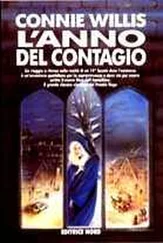
Обсуждение, отзывы о книге «Passage» и просто собственные мнения читателей. Оставьте ваши комментарии, напишите, что Вы думаете о произведении, его смысле или главных героях. Укажите что конкретно понравилось, а что нет, и почему Вы так считаете.