Marcus Sakey - Brilliance
Здесь есть возможность читать онлайн «Marcus Sakey - Brilliance» весь текст электронной книги совершенно бесплатно (целиком полную версию без сокращений). В некоторых случаях можно слушать аудио, скачать через торрент в формате fb2 и присутствует краткое содержание. Город: Las Vegas, Год выпуска: 2013, ISBN: 2013, Издательство: Thomas & Mercer, Жанр: Фантастика и фэнтези, Триллер, на английском языке. Описание произведения, (предисловие) а так же отзывы посетителей доступны на портале библиотеки ЛибКат.
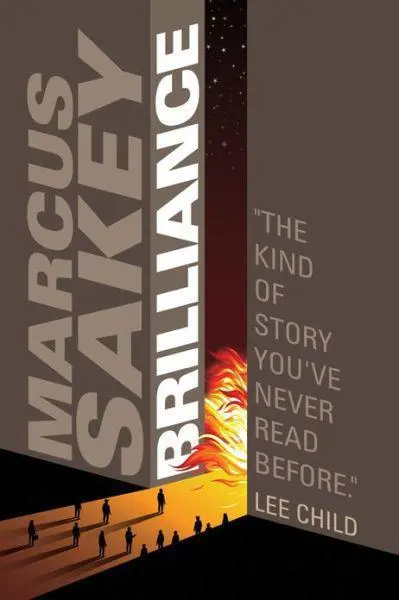
- Название:Brilliance
- Автор:
- Издательство:Thomas & Mercer
- Жанр:
- Год:2013
- Город:Las Vegas
- ISBN:9781611099690
- Рейтинг книги:5 / 5. Голосов: 1
-
Избранное:Добавить в избранное
- Отзывы:
-
Ваша оценка:
Brilliance: краткое содержание, описание и аннотация
Предлагаем к чтению аннотацию, описание, краткое содержание или предисловие (зависит от того, что написал сам автор книги «Brilliance»). Если вы не нашли необходимую информацию о книге — напишите в комментариях, мы постараемся отыскать её.
From Marcus Sakey, “a modern master of suspense” (Chicago Sun-Times) and “one of our best storytellers” (Michael Connelly), comes an adventure that’s at once breakneck thriller and shrewd social commentary; a gripping tale of a world fundamentally different and yet horrifyingly similar to our own, where being born gifted can be a terrible curse.
Brilliance — читать онлайн бесплатно полную книгу (весь текст) целиком
Ниже представлен текст книги, разбитый по страницам. Система сохранения места последней прочитанной страницы, позволяет с удобством читать онлайн бесплатно книгу «Brilliance», без необходимости каждый раз заново искать на чём Вы остановились. Поставьте закладку, и сможете в любой момент перейти на страницу, на которой закончили чтение.
Интервал:
Закладка:
Cooper forced himself to think back. “You said you didn’t hate me because I was an abnorm. You hate me because you think I’m weak.”
“I don’t hate you at all, Cooper. That’s the point. But I believe. And you don’t.”
Cooper rubbed at his face with his hand. “Roger, please—”
The line was dead. He stood holding the phone to his ear, Muzak in the background, the scuff and squeal of dress shoes on the floor, the faint odor of disinfectant from the bathroom, his family held hostage by monsters.
You decided a long time ago that you’d lie down in traffic for your children. Every parent does. Time to pay that piper.
He dropped the phone and started for the exit. Felt relief, honestly. He was tired, so bloody, stoop-shouldered tired, and he’d been on his own too long. Die for his children? No problem. One dead twist, coming right up.
Do you really believe Peters will let them go?
Why not? It’s me he wants. Me and his precious insurance, whatever it is. What harm can an environmental lawyer and two children do him?
He froze. What harm indeed?
Cooper turned and walked back to the men’s room. Pushed open the door. A janitor was leaning against a mop.
“Get out.”
“Say what?”
“Now.”
The janitor took another look, then rolled his cart out, muttering something about crazy-ass people, he had a job same as anybody else. Cooper opened the middle stall and shut and locked it behind him. From one pocket he took his datapad, from the other the drive, still encased in duct tape. He peeled that off, dropped it on the floor. The chip he’d found on the back of Teddy Eaton’s casket was a standard stamp drive, a terabyte storage, the kind you could buy in any drugstore. He slotted it, then sat down on the toilet.
The screen brightened, then started playing automatically.
The video showed two men talking in a bland room. One of the men was Drew Peters. The other he’d never met, but knew. Everybody did.
Cooper watched the video all the way through.
And when it was done, he hung his head, pressed his fingers into his eyes hard enough that black-and-white patterns danced. But not hard enough to erase what he had just seen.
He’d thought things were bad before. Bad last night, in Wyoming. Bad this afternoon, in the cemetery. Bad half an hour ago, on the phone with Roger Dickinson.
It turned out he’d had no idea what bad was.
There was no chance, none at all, that Peters would let his family live.
CHAPTER THIRTY-SEVEN
He might have cried, sitting in that smelly toilet stall in the shitty mall in the heart of DC. He might have. He couldn’t really say.
There seemed to be a few moments missing from his personal history. And he was having a hard time wanting them back.
What he did know was that at some point, he’d stood up, opened the stall door, and walked to the sink. Held his hands under the faucet until it finally came on, then splashed lukewarm water on his face. Again, and again. Paper-toweled dry.
Stared in the mirror. At a dead man, most likely, the father of murdered children.
But not a man who would go quietly.
Cooper tossed the towels in the trash, walked back to the payphone, inserted his last coins, and dialed another number.

Forty-five minutes later he walked into a pub called McLaren’s. Oak and worn stools, coasters with the Guinness logo. A smallish crowd of post-work drinkers, mostly men, mostly watching the game. He’d been there once before, years ago, some work party of Natalie’s. Cooper walked to the bar, signaled the man behind it.
“What can I getcha?”
“You guys have a back room, right?”
“Yeah. Not open now, but if you want to rent it for an event, I can get you the manager’s—”
“I’ll give you…” He opened his wallet and took out a handful of bills. “Three hundred and forty bucks to let me use it for an hour.”
The man looked left, then right. Shrugged, folded his hand around the bills. “Right this way.”
He followed the guy around the end of the bar. The bartender jangled out a ring of keys, found one, and turned the lock. “You want anything?”
“Just privacy.”
“Don’t mess it up, okay? I’m the one who cleans.”
Cooper nodded, said, “Privacy,” then pushed into the back room.
It was a smaller twin of the main room. A bar along one side, the taps unscrewed, pitchers racked, washcloth dangling. Without anyone there, it had an air of sad expectation. Cooper flipped on the lights, then sat down at the abandoned bar. He laid his datapad down, then spread his arms, put them palm first on the polished surface, and waited.
Ten minutes later, he heard the door open. Very slowly, moving only his head, he turned to look.
Bobby Quinn had on the same suit as earlier. His posture radiated fight-or-fight, and screw the other option. One hand rested on his weapon, the holster unsnapped.
“I’m not moving, Bobby. Legs crossed, hands on the bar.”
Quinn glanced around the room. Didn’t relax, but did step inside. He let the door click behind him, then drew the gun. Didn’t point it, which was something.
“Half an hour,” Cooper said. “Like I said on the phone. Then you’ll understand.”
His partner moved to the end of the bar. With his off hand, he reached around his back and came out with a pair of handcuffs. Slid them to Cooper. “Keep your right hand on the bar. Use your left to lock it to the rail.”
“Come on, Bobby—”
The gun came up. “Do it.”
Cooper sighed. He picked up the cuffs, careful to move slowly. Snapped them around his right wrist.
You do this, you’re helpless. If you’re wrong about Quinn, then it’s all over.
He fastened the other end to the brass rail. Gave an experimental tug. A clang and a bite. “Better?”
Quinn holstered his weapon. Walked closer. His face was unreadable, too many things happening at once. “I’ll give you your half hour, because I said I would. But when time is up, I’m going to call a team to bring you in.”
“Like I said on the phone, if you do, I won’t resist.” He tried for a grin. “Much.”
“You resist at all, and I’ll kill you.” It was a simple statement of fact, and all the more jarring for coming from Bobby Quinn, to whom sarcasm and irony were akin to oxygen. “Start talking.”
Cooper took a breath. “I’ve been in deep cover for six months. Since March 12th, when you and I almost stopped the bombing of the Exchange. I was inside. No idea how I survived, but I woke up in a triage tent. When I could walk again, I hitched a ride with a bunch of Marines and went to see Drew Peters. I pitched him a crazy plan: I’d go rogue. Everyone would blame me for the explosion. I’d become a bad guy. Be hunted.”
He talked fast, didn’t waste time on embellishments, just laid out the facts. His time on the run. Building a reputation as a thief. His coming-out party on the El platform. The trip to Wyoming. Meeting Epstein.
“Why? Why do all this?”
“I told you, so that I could get to John Smith and kill him.”
Quinn shook his head. “That’s the goal. I asked why.”
“Oh. My daughter.”
“Kate?”
“She was about to be tested. She would have been sent to an academy. Peters promised to keep her out.” His stomach soured. I’ll take care of your family. “Everything I’ve done, I did for her.”
“Did you find Smith?”
“Yes.”
“Did you kill him?”
“No.”
“Ah-so.”
Cooper started to lean back, stopped when the cuff bit his wrist. He said, “You don’t believe me, do you?”
Читать дальшеИнтервал:
Закладка:
Похожие книги на «Brilliance»
Представляем Вашему вниманию похожие книги на «Brilliance» списком для выбора. Мы отобрали схожую по названию и смыслу литературу в надежде предоставить читателям больше вариантов отыскать новые, интересные, ещё непрочитанные произведения.









Обсуждение, отзывы о книге «Brilliance» и просто собственные мнения читателей. Оставьте ваши комментарии, напишите, что Вы думаете о произведении, его смысле или главных героях. Укажите что конкретно понравилось, а что нет, и почему Вы так считаете.