Marcus Sakey - Brilliance
Здесь есть возможность читать онлайн «Marcus Sakey - Brilliance» весь текст электронной книги совершенно бесплатно (целиком полную версию без сокращений). В некоторых случаях можно слушать аудио, скачать через торрент в формате fb2 и присутствует краткое содержание. Город: Las Vegas, Год выпуска: 2013, ISBN: 2013, Издательство: Thomas & Mercer, Жанр: Фантастика и фэнтези, Триллер, на английском языке. Описание произведения, (предисловие) а так же отзывы посетителей доступны на портале библиотеки ЛибКат.
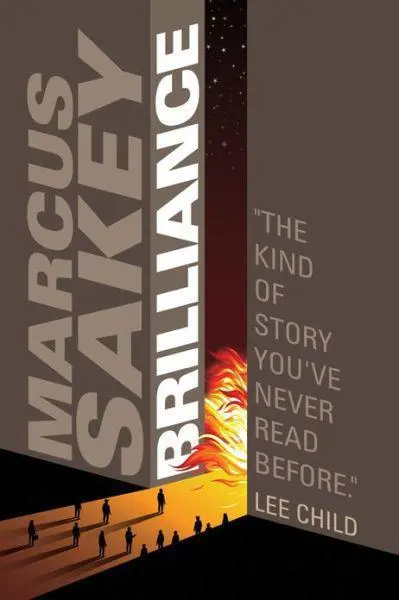
- Название:Brilliance
- Автор:
- Издательство:Thomas & Mercer
- Жанр:
- Год:2013
- Город:Las Vegas
- ISBN:9781611099690
- Рейтинг книги:5 / 5. Голосов: 1
-
Избранное:Добавить в избранное
- Отзывы:
-
Ваша оценка:
Brilliance: краткое содержание, описание и аннотация
Предлагаем к чтению аннотацию, описание, краткое содержание или предисловие (зависит от того, что написал сам автор книги «Brilliance»). Если вы не нашли необходимую информацию о книге — напишите в комментариях, мы постараемся отыскать её.
From Marcus Sakey, “a modern master of suspense” (Chicago Sun-Times) and “one of our best storytellers” (Michael Connelly), comes an adventure that’s at once breakneck thriller and shrewd social commentary; a gripping tale of a world fundamentally different and yet horrifyingly similar to our own, where being born gifted can be a terrible curse.
Brilliance — читать онлайн бесплатно полную книгу (весь текст) целиком
Ниже представлен текст книги, разбитый по страницам. Система сохранения места последней прочитанной страницы, позволяет с удобством читать онлайн бесплатно книгу «Brilliance», без необходимости каждый раз заново искать на чём Вы остановились. Поставьте закладку, и сможете в любой момент перейти на страницу, на которой закончили чтение.
Интервал:
Закладка:
“This isn’t really my area.”
“Still, surely you could have gotten these answers without a trip—”
“I like to see for myself.”
“Why weren’t you academy trained, Agent Cooper?”
The suddenness of the topic change wasn’t what surprised Cooper—he’d seen it coming in the fold of the man’s lips and the crinkle of his eyes—but the content threw him. I never told him I was gifted, or that I was tier one. He could tell on his own. “I was born in 1981.”
“You were in the first wave?”
“Technically second.”
“So you would have been thirteen the year the first academy opened. Back then we could barely manage fifteen percent of the tier-one population. With the opening of Mumford Academy next year, we expect to be able to train one hundred percent of them. That’s not public knowledge, of course, but imagine it. Every tier one born in America. A shame you were born so early.”
“Not from my perspective.” Cooper smiled and imagined breaking the administrator’s nose.
“Tell me, how did you grow up?”
“Doctor, I asked a question, and I want an answer.”
“I’m giving you one. Indulge me. Please, your childhood.”
Cooper sighed. “My dad was army. My mother died when I was young. We moved around.”
“Did you know a lot of children like you?”
“Military brats?” The old snide side coming out, the part that didn’t handle authority figures well.
But Norridge didn’t bite, just mildly said, “Abnorms.”
“No.”
“Were you close to your father?”
“Yes.”
“Was he a good officer?”
“I never said he was an officer.”
“But he was.”
“Yes. And yes, a good one.”
“Patriotic?”
“Of course.”
“But not a flag worshipper. He cared about the principles, not the symbol.”
“That’s what patriotism means. The others are just fetishists.”
“Did you have a lot of friends?”
“Enough.”
“Did you have a lot of fights?”
“A few. And you’ve about hit the limit on my patience.”
Norridge smiled. “Well, Agent Cooper, you were academy trained. Your childhood is essentially what we try to replicate. We turn up the intensity, of course, and we also provide access to programs to develop their gifts, resources your father couldn’t have dreamed of. But. You were lonely. Isolated. Often punished for being what you were. You never had the opportunity to learn to trust other abnorms, and because you so often had to defend yourself for being one, you were unlikely to seek them out. You didn’t have many friends and lived in a constantly shifting environment, which means you placed special value on the one rock in your world—your father. He was a military man, so concepts like duty and loyalty came easily to you. You grew up learning all the lessons we teach here. You even ended up working for the government, as the majority of our graduates do.”
Cooper fought an urge to lean over and bang Director Norridge’s face into the desk three or four times. It wasn’t the things he was saying about Cooper’s life, all of which were true, and none of which had stung him for years. It was the condescension, and worse, the bullying gleefulness of the man. Norridge didn’t just want to make his point. Like the blond boy on the playground, he wanted to dominate.
“You still haven’t answered my question. Why?”
“Surely you know.”
“Indulge me,” he said.
Norridge gave a tip of his head to acknowledge the returned volley. “The gifts of the vast majority of abnorms have no significant value. However, a rare handful have abilities that make them equivalent to the greatest geniuses of our history. Individually, that is reason enough to harness their power. However, the real concern is not the individual. It is the group. You, for example. What would happen if I were to attack you?”
Cooper smiled. “I wouldn’t recommend it.”
“What about someone more skilled? A boxer, or a martial artist?”
“Training can teach you how to defend yourself. But unless you were very, very good, your body would still reveal what you were about to do. That makes it easy for me to avoid.”
“I see. And what about, say, three martial artists?”
“They’d win.” Cooper shrugged. “Too many attacks to track.”
Norridge nodded. Then he said, quietly, “And what about twenty totally average, out-of-shape, slightly overweight adults?”
Cooper narrowed his eyes—
He said “our history” and “their power.” He doesn’t see abnorms as human.
Despite that, he knows us so well he could identify your gift. That knowledge has been applied to every facet of life here.
He dissected your past and the sensitive spots in it based just on this conversation.
He could have illustrated this current point a hundred different ways. But he chose combat as a metaphor.
—and said, “I’d lose.”
“Precisely. And we must always hold that advantage. It’s the only way. The gifted cannot be allowed to band together. So from their youth we teach them that they cannot trust one another. That other abnorms are weak, cruel, and small. Their only comfort comes from a single normal figure, a mentor like the woman you heard earlier. And they learn core values like obedience and patriotism. In that way, we protect humanity.” Norridge paused, then smiled toothily. It was a strange expression, knowing. It looked like given the chance, the man might take a bite out of him. “Does that make sense?”
“Yes,” Cooper said. “I understand you now.”
Norridge cocked his head. Whether he caught the real meaning or not, he’d at least caught the tone. “Forgive me. Getting me started can be dangerous.”
No kidding .
“I should mention the tangible benefits, too. Academy graduates have made enormous breakthroughs in chemistry, mathematics, engineering, medicine—all of it government controlled. That recording device I mentioned? The nano-technology is the work of a former pupil. All the latest military equipment is designed by abnorms. The computer systems that connect us. Even the new stock market, which is, ironically, immune to abnorm manipulation.
“All these things come from academy graduates. And thanks to our work, all are managed and controlled by the US government. Surely you can agree that as a nation—as a people—we can’t afford another Erik Epstein?”
Which people, doc? Cooper could feel a scream boiling inside of him, a rage that he very much wanted to give in to. Everything here was worse than he had imagined.
No. Be honest. You never let yourself imagine it. Not really.
Still, now that he knew, what could he do about it? Kill the director, then the staff? Tear down the walls and blow up the dormitories? Lead the children like Moses out of Egypt?
It was either that or get the hell out of here. He stood.
Norridge looked surprised. “Are you satisfied, then?”
“Not even close.” But if he stayed another minute he was going to explode, so he stalked out of the office, down the polished halls, past the narrow windows with their rocky evergreen vistas. Thinking, This cannot be the way.
And, John Smith was raised in an academy. Not this one, but they’ll all be the same, and there will be a Norridge heading all of them. An administrator who holds all the power, a skilled manipulator who understands and hates his pupils.
John Smith was raised in an academy.
John Smith was at war from his earliest days.
CHAPTER SEVEN
“Ground one?”
“We’re go.”
Читать дальшеИнтервал:
Закладка:
Похожие книги на «Brilliance»
Представляем Вашему вниманию похожие книги на «Brilliance» списком для выбора. Мы отобрали схожую по названию и смыслу литературу в надежде предоставить читателям больше вариантов отыскать новые, интересные, ещё непрочитанные произведения.










Обсуждение, отзывы о книге «Brilliance» и просто собственные мнения читателей. Оставьте ваши комментарии, напишите, что Вы думаете о произведении, его смысле или главных героях. Укажите что конкретно понравилось, а что нет, и почему Вы так считаете.