Greg Bear - Darwin's Children
Здесь есть возможность читать онлайн «Greg Bear - Darwin's Children» — ознакомительный отрывок электронной книги совершенно бесплатно, а после прочтения отрывка купить полную версию. В некоторых случаях можно слушать аудио, скачать через торрент в формате fb2 и присутствует краткое содержание. Город: New York, Год выпуска: 2010, ISBN: 2010, Издательство: Del Rey Books, Жанр: Фантастика и фэнтези, на английском языке. Описание произведения, (предисловие) а так же отзывы посетителей доступны на портале библиотеки ЛибКат.
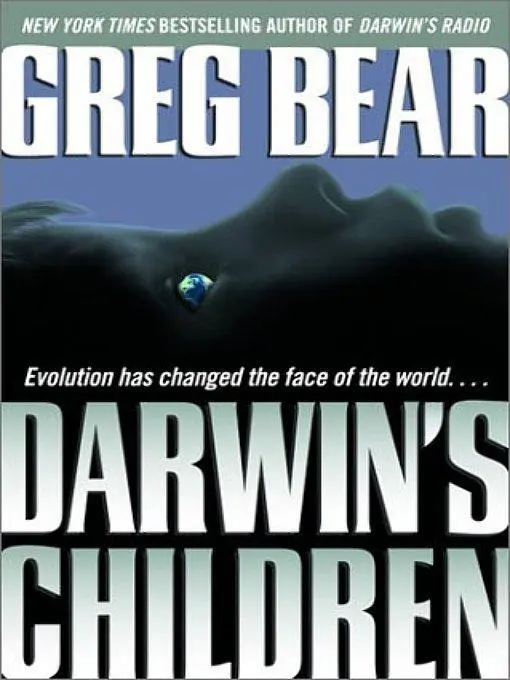
- Название:Darwin's Children
- Автор:
- Издательство:Del Rey Books
- Жанр:
- Год:2010
- Город:New York
- ISBN:9780345448361
- Рейтинг книги:3 / 5. Голосов: 1
-
Избранное:Добавить в избранное
- Отзывы:
-
Ваша оценка:
Darwin's Children: краткое содержание, описание и аннотация
Предлагаем к чтению аннотацию, описание, краткое содержание или предисловие (зависит от того, что написал сам автор книги «Darwin's Children»). Если вы не нашли необходимую информацию о книге — напишите в комментариях, мы постараемся отыскать её.
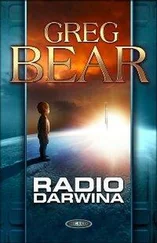
, painted a chilling portrait of humankind on the threshold of a radical leap in evolution—one that would alter our species forever. Now Bear continues his provocative tale of the human race confronted by an uncertain future, where “survival of the fittest” takes on astonishing and controversial new dimensions.
Eleven years have passed since SHEVA, an ancient retrovirus, was discovered in human DNA—a retrovirus that caused mutations in the human genome and heralded the arrival of a new wave of genetically enhanced humans. Now these changed children have reached adolescence… and face a world that is outraged about their very existence. For these special youths, possessed of remarkable, advanced traits that mark a major turning point in human development, are also ticking time bombs harboring hosts of viruses that could exterminate the “old” human race.
Fear and hatred of the virus children have made them a persecuted underclass, quarantined by the government in special “schools,” targeted by federally sanctioned bounty hunters, and demonized by hysterical segments of the population. But pockets of resistance have sprung up among those opposed to treating the children like dangerous diseases—and who fear the worst if the government’s draconian measures are carried to their extreme.
Scientists Kaye Lang and Mitch Rafelson are part of this small but determined minority. Once at the forefront of the discovery and study of the SHEVA outbreak, they now live as virtual exiles in the Virginia suburbs with their daughter, Stella—a bright, inquisitive virus child who is quickly maturing, straining to break free of the protective world her parents have built around her, and eager to seek out others of her kind.
But for all their precautions, Kaye, Mitch, and Stella have not slipped below the government’s radar. The agencies fanatically devoted to segregating and controlling the new-breed children monitor their every move—watching and waiting for the opportunity to strike the next blow in their escalating war to preserve “humankind” at any cost. DARWIN’S CHILDREN
Darwin's Children — читать онлайн ознакомительный отрывок
Ниже представлен текст книги, разбитый по страницам. Система сохранения места последней прочитанной страницы, позволяет с удобством читать онлайн бесплатно книгу «Darwin's Children», без необходимости каждый раз заново искать на чём Вы остановились. Поставьте закладку, и сможете в любой момент перейти на страницу, на которой закончили чтение.
Интервал:
Закладка:
The crickets and frogs started their racket again, answering.
Finally, the conflict became too much. She dropped slowly to her knees on the dock, feeling that she carried precious cargo, it must not spill. She bent over and laid her hands flat on the rough, weathered wood.
She had to lie down to keep from falling over. With a long, slow release of breath, Kaye stretched out her legs.
47
OHIO
Augustine had divided them into two teams, the first with eight students, the second with seven. Toby’s team had worked first, from ten in the evening until three in the morning. Teachers and nurses carried those chosen by the team to an exercise field, laying them in rows under the blue glare of tall pole lamps, in the warm early-morning air.
Silently—with little more than a touch of palms and a whiff behind each ear—Toby passed his duties to a girl named Fiona, and the first team fell onto cots laid out in Trask’s office.
Fiona and the others on the second team went out with Augustine, back down the steel stairs to the main floor.
Until dawn, Fiona and the six helped Augustine sort through other buildings, walking up to each child on the cots or on bedding spread over concrete or wood floors, on bunks in the former cells and in the dormitories; bending over and smelling above the heads of the sick, showing with one finger, or two, who was strongest, who would probably live another day.
One finger meant the child was likely to die.
After eight hours of work, they had processed about six hundred children, starting with the worst, and consequently, had already visited the most dead and dying, and the children on both teams were quiet and tired.
More children volunteered, forming a third, fourth, and fifth team. Toby did not object, nor did Augustine.
While the first two teams slept, the new teams examined another nine hundred children, separating out four hundred, most of them able to walk with the teachers to the field, where they were assigned to old tents marked “Inmate Overflow.”
And round into the dawn and beyond ten o’clock, the kids worked with the remaining teachers, nurses, and security officers—the bravest of the brave—carrying bodies wrapped in sheets or in the last remaining body bags, or even in doubled plastic garbage bags, out to the farthest area within the fence, the employee parking lot, where the dead were laid out between the few and scattered cars.
Middleton worked to rearrange accommodations so that they could set up a morgue in the main gymnasium, adjacent to the infirmary. By eleven, the bodies had been removed from the parking lot and placed out of the sun.
Augustine estimated they had perhaps ten or fifteen hours before the dead would become a horrible nuisance, and twenty before they became a health hazard.
At noon, Augustine fell over after stumbling, half-blind with exhaustion, between a row of inmate tents. The children carried him back to the infirmary, with the help of DeWitt.
There, DeWitt fed Augustine a little canned soup, gave him some water. He said he was feeling better and went back out with the rested first team.
All through the morning and afternoon, their labors were watched by rows of stone-faced National Guard troops patrolling beyond the razor wire perimeter fences.
At two in the afternoon, Augustine was compelled once again to go up to the office and lie down. Dicken emerged from the research lab with another bag full of specimen kits and met him there.
Four children who had worked with the teams slept in the corner, arms around each other, snoring lightly.
Dicken looked down on his former boss. Augustine was trembling, but his face had lost that distant, defeated look.
“You are a surprising fellow, Mark,” Dicken admitted.
“Not really,” Augustine croaked. He touched his throat. “Sorry. My voice is shot. How’s the lab work going?”
“Your turn,” Dicken said, and bent down to draw blood. When he was finished, he had Augustine scrape a plastic depressor on his tongue, and sealed that into a little plastic bag.
“Anything conclusive?” Augustine asked.
“Still getting specimens from the staff.”
“What next?”
“I’m going out into the field with Toby. Carry on while you rest. Can’t let an old bastard like you act the humanitarian all by your lonesome.”
Augustine nodded. “Conversion of Saul. Go forth,” he advised piously, and crossed the air between them.
Dicken stretched. His whole body felt stiff.
Augustine rolled on his side. “I’m not doing this out of pure charity, I confess,” he murmured. Dicken bent over to hear the soft words. “I have done a nasty thing, Christopher. I have played a card I vowed I would never play, to give my enemies—our enemies—the rope I need to hang them all.”
“What card?” Dicken said.
“I’m still a bastard. But I do begin to understand them, Christopher.”
“The children?”
“All our sweet little albatrosses.”
“Good for you,” Dicken said, his neck hair prickling, and turned to leave.
48
PENNSYLVANIA
The sun was high in the sky when Kaye raised her head. She might have slept for another hour or two; she did not remember.
She rolled over on the dock.
It’s gone, she said. It was a dream. Or worse.
She stood and brushed off her jeans, prepared to feel a resigned sadness. I should get a checkup. There’s been so much stress… Her nose and forehead still felt stuffy. Was that a symptom of embolism or a burst aneurysm? Had wires crossed in her head, pouring signals from one side of the brain to the other? A short circuit?
She turned to look back along the dock at the house, took a step…
And let out a squeak like a surprised mouse. She stretched out her arms.
The presence was still with her. Quiet, calm, other; patient and real. At the same time Kaye was relieved and terrified.
She ran to the cabin. Mitch knelt on the floor beside Stella. He looked up as she came through the porch door. His hair was tousled and his face looked like a rumpled rag.
“Her fever’s gone, I think,” Mitch said, searching Kaye’s features. His brows twitched. “The spots are smaller. The spots on her butt are gone.”
Stella rolled over. Her cheeks had regained more of their color. The sleeping bag was gone, and in its place Mitch had laid out an air mattress covered with a bright yellow sheet and a lime green blanket.
Kaye stared at them both. Her hands hung by her sides, her shoulders slumped.
“Are you all right?” Mitch asked.
Stella rubbed her eyes and reached out to Kaye. Their fingers touched and Kaye moved in and gripped her hand.
“You smell different,” Stella said.
Kaye bent down and hugged her daughter as fiercely as she dared.
“She’s asleep again.” Mitch rejoined Kaye in the cabin’s small, neat kitchen. “She looks better, doesn’t she?”
“Yes. Much.” Kaye bit the inside of her lip and glanced at her husband. “The Mackenzies laid in a wide selection of teas,” she said. She opened the box of teabags, confused, desperate.
Mitch returned her look, patient but tired. “Does she need more medicine?”
“Her neck doesn’t hurt. Her head doesn’t hurt. She’s not feverish. I removed the needle because she drank some orange juice. I don’t think she’ll need any more antiviral.”
“She wet the sleeping bag.”
“I know. Thank you for changing it.”
“You were on the dock. You were asleep.”
Kaye looked out the kitchen window at the dock, now bright in the full sun. “You should have awakened me.”
Читать дальшеИнтервал:
Закладка:
Похожие книги на «Darwin's Children»
Представляем Вашему вниманию похожие книги на «Darwin's Children» списком для выбора. Мы отобрали схожую по названию и смыслу литературу в надежде предоставить читателям больше вариантов отыскать новые, интересные, ещё непрочитанные произведения.








Обсуждение, отзывы о книге «Darwin's Children» и просто собственные мнения читателей. Оставьте ваши комментарии, напишите, что Вы думаете о произведении, его смысле или главных героях. Укажите что конкретно понравилось, а что нет, и почему Вы так считаете.