Моник Райан - Питание в спорте на выносливость. Все, что нужно знать бегуну, пловцу, велосипедисту и триатлету
Здесь есть возможность читать онлайн «Моник Райан - Питание в спорте на выносливость. Все, что нужно знать бегуну, пловцу, велосипедисту и триатлету» — ознакомительный отрывок электронной книги совершенно бесплатно, а после прочтения отрывка купить полную версию. В некоторых случаях можно слушать аудио, скачать через торрент в формате fb2 и присутствует краткое содержание. Город: Москва, Год выпуска: 2018, ISBN: 2018, Издательство: Литагент МИФ без БК, Жанр: Здоровье, Спорт, на русском языке. Описание произведения, (предисловие) а так же отзывы посетителей доступны на портале библиотеки ЛибКат.
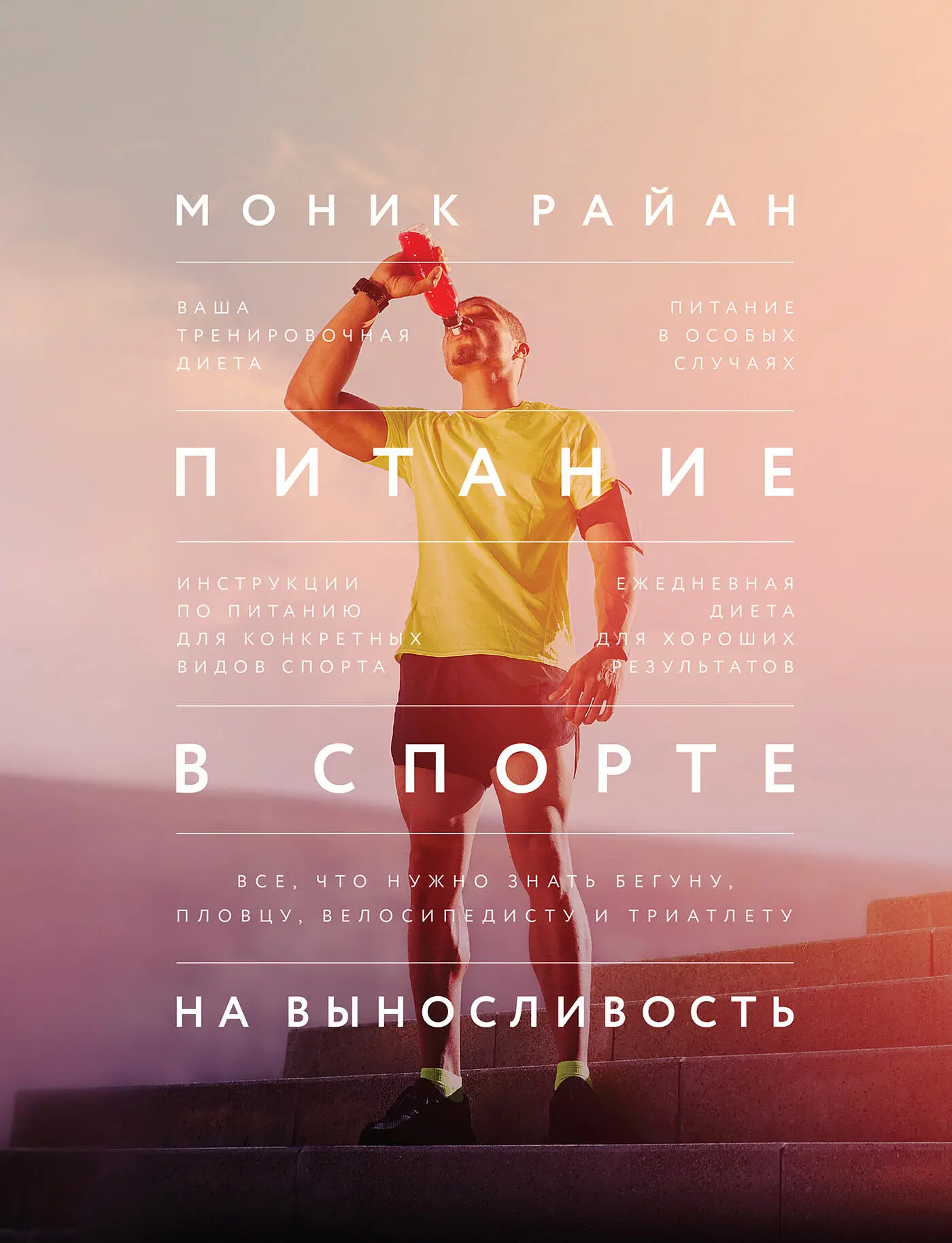
- Название:Питание в спорте на выносливость. Все, что нужно знать бегуну, пловцу, велосипедисту и триатлету
- Автор:
- Издательство:Литагент МИФ без БК
- Жанр:
- Год:2018
- Город:Москва
- ISBN:978-5-00117-453-0
- Рейтинг книги:3 / 5. Голосов: 1
-
Избранное:Добавить в избранное
- Отзывы:
-
Ваша оценка:
Питание в спорте на выносливость. Все, что нужно знать бегуну, пловцу, велосипедисту и триатлету: краткое содержание, описание и аннотация
Предлагаем к чтению аннотацию, описание, краткое содержание или предисловие (зависит от того, что написал сам автор книги «Питание в спорте на выносливость. Все, что нужно знать бегуну, пловцу, велосипедисту и триатлету»). Если вы не нашли необходимую информацию о книге — напишите в комментариях, мы постараемся отыскать её.
Книга предназначена для всех, кто занимается видами спорта на выносливость – бегом, плаванием, велоспортом, триатлоном – на любительском или профессиональном уровне. Также будет интересна тренерам и спортивным врачам.
На русском языке публикуется впервые.
Питание в спорте на выносливость. Все, что нужно знать бегуну, пловцу, велосипедисту и триатлету — читать онлайн ознакомительный отрывок
Ниже представлен текст книги, разбитый по страницам. Система сохранения места последней прочитанной страницы, позволяет с удобством читать онлайн бесплатно книгу «Питание в спорте на выносливость. Все, что нужно знать бегуну, пловцу, велосипедисту и триатлету», без необходимости каждый раз заново искать на чём Вы остановились. Поставьте закладку, и сможете в любой момент перейти на страницу, на которой закончили чтение.
Интервал:
Закладка:
Избранная библиография
Armstrong, L. E. 2000. Performing in Extreme Environments. Champaign, IL: Human Kinetics.
Armstrong, L. E. 2002. Caffeine, body fluid-electrolyte balance, and exercise performance. International Journal of Sport Nutrition and Exercise Metabolism 12 (2): 189–206.
Armstrong, L. E. 2005. Fluid, electrolyte, and renal indices of hydration during 11 days of controlled caffeine consumption. International Journal of Sport Nutrition and Exercise Metabolism 15 (3): 252–265.
Ball, T., et al. 1995. Periodic carbohydrate replacement during 50 minutes of high-intensity cycling improves subsequent sprint performance. International Journal of Sport Nutrition and Exercise Metabolism 5 (2): 151–158.
Beals, K. 2004. Disordered Eating Among Athletes. Champaign, IL: Human Kinetics.
Beals, K., and M. Manore. 1994. The prevalence and consequences of subclinical eating disorders in female athletes. International Journal of Sport Nutrition and Exercise Metabolism 4 (2): 175–195.
Beelen, M., et al. 2010. Nutritional strategies to promote exercise recovery. International Journal of Sport Nutrition and Exercise Metabolism 20 (6): 515–532.
Below, P., et al. 1995. Fluid and carbohydrate ingestion independently improve performance during 1 hour intense exercise. Medicine and Science in Sports and Exercise 27: 200–210.
Benson, J., et al. 1996. Nutritional aspects of amenorrhea in the female athlete triad. International Journal of Sport Nutrition and Exercise Metabolism 6 (2): 134–145.
Berning, J. 1996. The role of medium chain triglycerides in exercise. International Journal of Sport Nutrition and Exercise Metabolism 6 (2): 121–133.
Betts, J. A., and C. Williams. 2010. Short-term recovery from prolonged exercise: Exploring the potential for protein ingestion to accentuate the benefits of carbohydrate supplements. Sports Medicine 40 (11): 941–959.
Betts, J. A., et al. 2008. Increased carbohydrate oxidation after ingesting carbohydrate with added protein. Medicine and Science in Sports and Exercise 40 (5): 903–912.
Blom, T., et al. 1987. The effects of different post-exercise sugar diets on the rate of muscle glycogen resynthesis. Medicine and Science in Sports and Exercise 19: 491–496.
Brand-Miller, Jennie, et al. 2003. The New Glucose Revolution Complete Guide to Glycemic Index Values. New York: Marlowe.
Brooks, G., et al. 1991. Increased dependence on blood glucose after acclimatization to 4,300 meters. Journal of Applied Physiology 70 (2): 919–927.
Brown, G., et al. 2000. Effect of anabolic precursors on serum testosterone concentrations and adaptations to resistance training in young men. International Journal of Sport Nutrition and Exercise Metabolism 10 (3): 340–359.
Bruce, C. R., et al. 2000. Enhancement of 2000-m rowing performance after caffeine ingestion. Medicine and Science in Sports and Exercise 32 (11): 1958–1963.
Burke, L. M. 2010. Fueling strategies to optimize performance: Training high or training low? Scandinavian Journal of Medicine and Science in Sports 20 (supplement 2): 48–58.
Burke, L. M., and J. A. Hawley. 2002. Effects of short-term fat adaptation on metabolism and performance for prolonged exercise. Medicine and Science in Sports and Exercise 34 (9): 1492–1498.
Burke, L. M., et al. 1993. Muscle glycogen storage after prolonged exercise: Effect of the glycemic index of carbohydrate feedings. Journal of Applied Physiology 75 (2): 1019–1023.
Burke, L. M., et al. 1996. Muscle glycogen storage after prolonged exercise: Effect of the frequency of carbohydrate feedings. American Journal of Clinical Nutrition 64: 115–119.
Burke, L. M., et al. 2000. Effect of fat adaptation and carbohydrate restoration on metabolism and performance during prolonged cycling. Journal of Applied Physiology 89 (6): 2413–2421.
Burke, L. M., et al. 2002. Adaptations to short-term high-fat diet persist during exercise despite high carbohydrate availability. Medicine and Science in Sports and Exercise 34 (1): 83–91.
Burke, L. M., et al. 2004. Carbohydrate and fat for training and recovery. Journal of Sports Sciences 22 (8): 15–30.
Burke, L. M., et al. 2005. Effect of carbohydrate intake on half-marathon performance of well-trained runners. International Journal of Sport Nutrition and Exercise Metabolism 15 (6): 573–589.
Butterfield, G., et al. 1992. Increased energy intake minimizes weight loss in men at high altitude. Journal of Applied Physiology 72 (5): 1741–1748.
Campbell, W., et al. 1997. Effects of chromium picolinate and resistance training on body composition in older men. Medicine and Science in Sports and Exercise 29 (5): S277.
Carey, A., et al. 2001. Effects of fat adaptation and carbohydrate restoration on prolonged endurance exercise. Journal of Applied Physiology 91(1): 115–122.
Catlin, D., et al. 2000. Trace contamination of over-the-counter androstenedione and positive urine test results for a nandrolone metabolite. Journal of the American Medical Association 284 (20): 2618–2621.
Chryssanthopoulos, C., et al. 2002. The effect of a high carbohydrate meal on endurance running capacity. International Journal of Sport Nutrition and Exercise Metabolism 12 (2): 157–171.
Clancy, S., et al. 1994. Effects of chromium picolinate supplementation on body composition, strength, and urinary chromium loss in football players. International Journal of Sport Nutrition and Exercise Metabolism 4: 142–153.
Clarkson, P. 1991. Nutritional ergogenic aids: Chromium, exercise, and muscle mass. International Journal of Sport Nutrition and Exercise Metabolism 1: 289–293.
Clarkson, P. 1992. Nutritional ergogenic aids: Carnitine. International Journal of Sport Nutrition and Exercise Metabolism 2: 185–190.
Conley, M., and M. Stone. 1996. Carbohydrate ingestion/supplementation for resistance exercise and training. Sports Medicine 21 (1): 7–17.
Cox, G. R., et al. 2002. Effect of different exercise protocols of caffeine intake on metabolism and endurance performance. Journal of Applied Physiology 93 (3): 900–909.
Cox, G. R., et al. 2010. Daily training with high carbohydrate availability increases exogenous carbohydrate oxidation during endurance cycling. Journal of Applied Physiology 109 (1): 126–134.
Cox, G. R., et al. 2010. Race-day carbohydrate intakes of elite triathlete contesting Olympic-distance triathlon events. International Journal of Sport Nutrition and Exercise Metabolism 20 (4): 299–306.
Coyle, E. 2004. Fluid and fuel intake during exercise. Journal of Sports Sciences 22 (8): 39–55.
Coyle, E., et al. 2001. Low-fat diet alters intramuscular substrates and reduces lipolysis and fat oxidation during exercise. American Journal of Endocrinology and Metabolism 280 (3): E391–E398.
Crowe, M. J., et al. 2003. The effects of B-hydroxy-B-methylbutуrate (HMB) and HMB/creatine supplementation on indices of health in highly trained athletes. International Journal of Sport Nutrition and Exercise Metabolism 13 (2): 184–197.
Currell, K., and A. E. Jeukendrup. 2008. Superior endurance performance with ingestion of multiple transportable carbohydrates. Medicine and Science in Sports and Exercise 40 (2): 275–281.
Davis, J. 1996. Carbohydrates, branched chain amino acids, and endurance: The central fatigue hypothesis. Gatorade Sports Science Exchange 9 (2).
Decombaz, J., et al. 1993. Effect of l-carnitine on submaximal exercise metabolism after depletion of muscle glycogen. Medicine and Science in Sports and Exercise 25: 733–740.
Decombaz, J., et al. 2011. Fructose and galactose enhance post-exercise human liver glycogen synthesis. Medicine and Science in Sports and Exercise, March 10 (Epub).
DeSouza, M. J., et al. 2010. High prevalence of subtle and severe menstrual disturbances in exercising women: Confirmation using daily hormone measures. Human Reproduction 25 (2): 491–503.
Читать дальшеИнтервал:
Закладка:
Похожие книги на «Питание в спорте на выносливость. Все, что нужно знать бегуну, пловцу, велосипедисту и триатлету»
Представляем Вашему вниманию похожие книги на «Питание в спорте на выносливость. Все, что нужно знать бегуну, пловцу, велосипедисту и триатлету» списком для выбора. Мы отобрали схожую по названию и смыслу литературу в надежде предоставить читателям больше вариантов отыскать новые, интересные, ещё непрочитанные произведения.



Обсуждение, отзывы о книге «Питание в спорте на выносливость. Все, что нужно знать бегуну, пловцу, велосипедисту и триатлету» и просто собственные мнения читателей. Оставьте ваши комментарии, напишите, что Вы думаете о произведении, его смысле или главных героях. Укажите что конкретно понравилось, а что нет, и почему Вы так считаете.