Pfitzinger Pete - Advanced Marathoning
Здесь есть возможность читать онлайн «Pfitzinger Pete - Advanced Marathoning» весь текст электронной книги совершенно бесплатно (целиком полную версию без сокращений). В некоторых случаях можно слушать аудио, скачать через торрент в формате fb2 и присутствует краткое содержание. Год выпуска: 2008, Издательство: Human Kinetics - A, Жанр: Спорт, на английском языке. Описание произведения, (предисловие) а так же отзывы посетителей доступны на портале библиотеки ЛибКат.
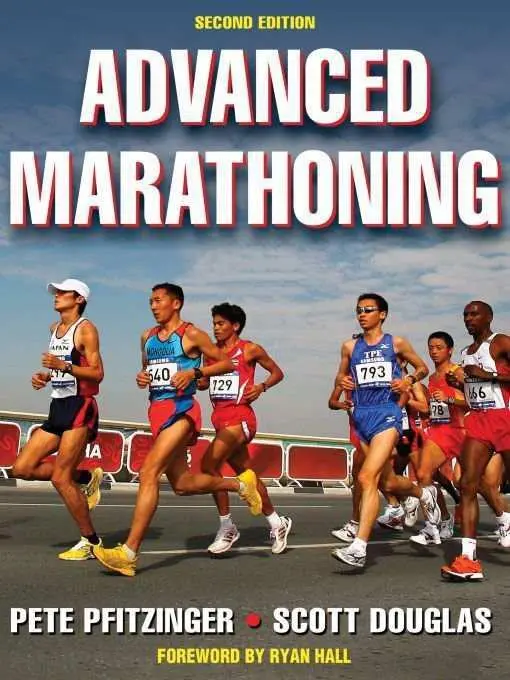
- Название:Advanced Marathoning
- Автор:
- Издательство:Human Kinetics - A
- Жанр:
- Год:2008
- ISBN:нет данных
- Рейтинг книги:5 / 5. Голосов: 1
-
Избранное:Добавить в избранное
- Отзывы:
-
Ваша оценка:
Advanced Marathoning: краткое содержание, описание и аннотация
Предлагаем к чтению аннотацию, описание, краткое содержание или предисловие (зависит от того, что написал сам автор книги «Advanced Marathoning»). Если вы не нашли необходимую информацию о книге — напишите в комментариях, мы постараемся отыскать её.
Advanced Marathoning — читать онлайн бесплатно полную книгу (весь текст) целиком
Ниже представлен текст книги, разбитый по страницам. Система сохранения места последней прочитанной страницы, позволяет с удобством читать онлайн бесплатно книгу «Advanced Marathoning», без необходимости каждый раз заново искать на чём Вы остановились. Поставьте закладку, и сможете в любой момент перейти на страницу, на которой закончили чтение.
Интервал:
Закладка:
Massage therapy is widely used by competitive marathoners to improve recovery and prevent injury. Unfortunately, it is very difficult to design a scientific study to evaluate the benefits of massage. As a result, there is little scientific evidence but much anecdotal evidence for the benefits of massage therapy for athletes in general, and distance runners in particular.
The established benefits of massage are improved blood flow to the massaged area, enhanced muscle relaxation, improved mobility and flexibility of the muscle and surrounding connective tissue, general relaxation of the athlete, breakdown of scar tissue, and identification of tight areas before they lead to injury. Interestingly, research with horses has shown that massage therapy can increase both range of motion and stride length. These results with horses eliminate the placebo effect, which is one of the problems with massage studies conducted with human subjects, and indicate that, with the correct technique, there can be a performance benefit from massage.
If you can afford massage, anecdotal evidence suggests that it will help you recover more quickly from hard marathon training. To be effective, sports massage should be “pleasantly uncomfortable” (i.e., it shouldn’t be gentle). It is beneficial to supplement massage sessions with self-massage on tight muscles that can be easily reached, such as the quadriceps, calf muscles, and feet.
There are many different types of massage therapy, and as with any discipline there are wide ranges in expertise among massage therapists. Since the industry is relatively unregulated, it is best to use a massage therapist who is a member of the American Massage Therapy Association (or a similar national organization in other countries) and has been recommended by other runners, so you can be confident that the sessions will be effective.
If you’re like a lot of runners, your postworkout routine goes something like this: Stretch, drink water, shower, and get on with the rest of the day. Food? That can wait until you’re hungry, right?
Not if you want to feel your best on your next run. The sooner you replenish your glycogen stores by taking in some calories, the quicker you’ll recover for the next day’s training. The crucial period is the first hour after your run. If you wait until after then, your body’s ability to absorb and make glycogen out of what you consume drops by an astounding 66 percent, and you’ll likely feel sluggish the next day.
Shoot for consuming 300 to 400 calories during this recovery window. In this time, your body can best make glycogen out of simple sources of carbohydrate – think fruit, smoothies, sports drinks, and sports bars. In addition, research has shown that a little protein – about 1 gram of protein for every 4 grams of carbohydrate – will speed the process of replenishing glycogen.
Do compression tights speed recovery? Probably. Over the past few years, compression tights and compression socks have become widely available to wear during training and recovery. Compression apparel applies external pressure to the muscle groups; the most effective products apply graduated pressure, which reduces from the foot or ankle up the leg to the hip. Manufacturers make many claims for the benefits of compression apparel, including improved venous return of blood to the heart, increased lactate flushing, faster muscle repair, and reduced fatigue.
Research on compression clothing is evolving rapidly, but anecdotal evidence suggests that compression tights and knee-high socks are useful for runners both during training and as an aid in recovery. Marathon world-record holder Paula Radcliffe certainly seems to think they work. Even if you don’t wear them running, compression socks can help a traveling marathoner during plane flights, as they are particularly useful for reducing stiffness and swollen ankles when flying.
The purpose of cooling down after a hard run is to help return your body to preexercise conditions. This is the critical first step in managing your recovery from high-intensity training or racing. A thorough cool-down improves your recovery by removing lactate from your muscles and blood more quickly, reducing adrenaline levels, and reducing muscle stiffness, which decreases your likelihood of future injury.
• Increased Lactate Removal. After hard intervals or tune-up races, an important role of the cool-down is to remove the lactate that has accumulated in your muscles and blood. Lactate levels decrease more quickly when you do a cool-down run because blood flow is maintained at a higher level, which increases movement of lactate out of your muscles and also increases the rate at which your muscles oxidize the lactate to produce energy.
• Reduced Adrenaline Levels.Adrenaline and noradrenaline are hormones that increase the rate and force at which your heart contracts, increase blood pressure, increase your rate and depth of breathing, and increase the rate at which your muscles break down glycogen. Adrenaline and noradrenaline levels in your blood increase rapidly when you run hard. Adrenaline levels typically decrease to resting levels in less than an hour, but noradrenaline levels can take several hours to return to resting levels. An active cool-down helps get these hormones out of your system, which helps your body recover more quickly.
Getting a good night’s sleep is important for recovery and positive adaptation to training. Running generally improves both the quantity and quality of sleep, but overtraining can interfere with sleep patterns. No one knows for sure how exercise leads to improved sleep, but the mechanism may be a change in the balance of sympathetic to parasympathetic nervous system activity. Stimulation of the sympathetic nervous system increases heart rate, blood pressure, metabolic rate, and mental activity, all of which are counterproductive to falling asleep. Parasympathetic activity has the opposite effect. During running, sympathetic activity increases, but endurance training leads to a decrease in sympathetic activity relative to parasympathetic activity when you are not exercising. This alteration in the balance of sympathetic to parasympathetic activity may allow you to fall asleep more quickly and to sleep more deeply.
A change in sleeping habits is an early warning sign of overtraining. The physical and psychological stress of training beyond your individual threshold may stimulate the sympathetic nervous system, leading to irritability and reducing the quality and quantity of sleep. A reduction in sleep is a double-edged sword for a runner because much of the body’s recovery and rebuilding occurs during sleep. During preparation for your marathon, you should ensure that you get adequate sleep, or you may experience a decline in performance, have immune system depression, and be more prone to injury.
When you have uncharacteristic difficulty sleeping, you could be training hard too frequently. You may be able to improve your sleep fairly easily by backing off your training and not running too late in the day. The harder you run, the greater the stimulus to your nervous system, so cutting back your training intensity will likely benefit your ability to sleep more than cutting back your mileage.
To improve your sleep pattern, stick with a routine that works for you. Eating dinner and going to bed at approximately the same time each day will help set your body clock, so that your body and mind automatically shut down at the same time each night. In addition, avoid bright lights at night, and avoid caffeinated or alcoholic beverages for several hours before bedtime. Finally, avoid lying down until you are ready to go to sleep so that when you do lie down it provides another signal to ease your mind toward sleep.
Читать дальшеИнтервал:
Закладка:
Похожие книги на «Advanced Marathoning»
Представляем Вашему вниманию похожие книги на «Advanced Marathoning» списком для выбора. Мы отобрали схожую по названию и смыслу литературу в надежде предоставить читателям больше вариантов отыскать новые, интересные, ещё непрочитанные произведения.






Обсуждение, отзывы о книге «Advanced Marathoning» и просто собственные мнения читателей. Оставьте ваши комментарии, напишите, что Вы думаете о произведении, его смысле или главных героях. Укажите что конкретно понравилось, а что нет, и почему Вы так считаете.