Pfitzinger Pete - Advanced Marathoning
Здесь есть возможность читать онлайн «Pfitzinger Pete - Advanced Marathoning» весь текст электронной книги совершенно бесплатно (целиком полную версию без сокращений). В некоторых случаях можно слушать аудио, скачать через торрент в формате fb2 и присутствует краткое содержание. Год выпуска: 2008, Издательство: Human Kinetics - A, Жанр: Спорт, на английском языке. Описание произведения, (предисловие) а так же отзывы посетителей доступны на портале библиотеки ЛибКат.

- Название:Advanced Marathoning
- Автор:
- Издательство:Human Kinetics - A
- Жанр:
- Год:2008
- ISBN:нет данных
- Рейтинг книги:5 / 5. Голосов: 1
-
Избранное:Добавить в избранное
- Отзывы:
-
Ваша оценка:
Advanced Marathoning: краткое содержание, описание и аннотация
Предлагаем к чтению аннотацию, описание, краткое содержание или предисловие (зависит от того, что написал сам автор книги «Advanced Marathoning»). Если вы не нашли необходимую информацию о книге — напишите в комментариях, мы постараемся отыскать её.
Advanced Marathoning — читать онлайн бесплатно полную книгу (весь текст) целиком
Ниже представлен текст книги, разбитый по страницам. Система сохранения места последней прочитанной страницы, позволяет с удобством читать онлайн бесплатно книгу «Advanced Marathoning», без необходимости каждый раз заново искать на чём Вы остановились. Поставьте закладку, и сможете в любой момент перейти на страницу, на которой закончили чтение.
Интервал:
Закладка:
• Heart rate at a standard pace:If your heart rate at a set pace is more than about 7 beats per minute higher than usual, then you may not be recovered from your previous training sessions. For example, if your heart rate at an 8-minute-per-mile pace is typically 145 beats per minute, and one day you find it is 155 beats per minute at that pace, then you likely need additional recovery before doing your next hard training session. Heart rate during running at a given pace varies by a few beats per minute from day to day, and it is also influenced by factors such as dehydration and hot or humid conditions, so take this into consideration in evaluating the implications of a higher-than-usual heart rate.
In some cases of overtraining syndrome, a contributing factor is an imbalance between calories consumed and calories used. When you have a caloric deficit for a prolonged period in combination with hard training, your body’s hormonal system undergoes modifications that are associated with overtraining syndrome. In this situation, body weight may stay the same or only slightly decrease because your metabolic rate drops as your body attempts to adjust to fewer calories. According to Suzanne Girard Eberle, MS, RD, author of Endurance Sports Nutrition (2007), “It appears that the combined effects of chronic dieting and exercise may induce the body to conserve energy (calories) or become more efficient at using the available energy”(page 145). She notes, “Frequent colds, slow recoveries from workouts, nagging injuries, chronic fatigue, and, for women runners, the loss of menstrual periods are the true red flags that you’re not consuming enough calories to meet the energy demands of training and racing.”
Increasing caloric intake while simultaneously reducing training load will eliminate the caloric deficit and should allow your hormonal system to return to normal.
Techniques to Speed Recovery
In addition to finding the correct balance in your training and optimizing your diet, there are a variety of techniques you can use to enhance your body’s rate of recovery. Two traditional aids to recovery from marathon training are hot/cold contrast therapy and massage therapy; compression apparel may also be helpful. Adequate postworkout nutrition and thorough cool-down practices have well-documented recovery benefits.
Hot/cold contrast therapy was initially most popular in team sports but is now widely used by endurance athletes from a variety of sports. Olympic marathon medalists Deena Kastor and Meb Keflezighi are known for placing great emphasis on this therapy to speed their recovery.
Deena Kastor
Fastest Marathon: 2:19:36
(American record)
Marathon Highlights:
Third place, 2004 Olympics;
First place, 2005 Chicago,
2006 London, and 2008 U.S.
Olympic Trials.
Deena Kastor won the 2008 Olympic Marathon Trials more than nine years after she first won a national title (that one being in cross country). In the interim, she set American records at distances ranging from 10,000 meters to the marathon and, most famously, won the bronze medal in the 2004 Olympic marathon.
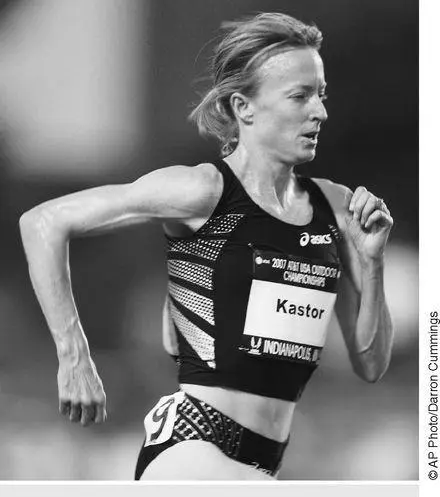
Other than the broken foot she suffered during the 2008 Olympic marathon, she has remained remarkably resilient despite all those 120-mile weeks. Even more impressive, she has remained as hungry and dedicated as when she was up and coming, despite having achieved enough for two satisfying world-class running careers. How has she managed to stay fresh and focused, and what can the rest of us learn from her on this crucial matter?
Kastor views her training as a full-time pursuit. That means more than just putting in a lot of miles, doing regular core strength workouts, and performing the drills and other activities that challenge her body and mind. It means that, in addition to all the physical work, she places supreme importance on recovery. She’s acutely aware that what she does when she is not physically working determines how well she absorbs the benefits of a given session, whether it’s a long run on the roads or a strength session in the gym. As a result, she naps almost daily, gets plenty of sleep at night, begins refueling and rehydrating almost immediately after running, and chooses between-workout activities that require little physical or mental strain.
Of course, Kastor is a professional runner – being meticulous about recovery is as much a part of her job as following the economies of developing nations is part of a bond trader’s. Most of us can’t take daily naps and can’t always control what occurs between our runs. Nonetheless, we can – especially during a marathon buildup – eliminate as many outside stressors that drain our physical and mental energy as possible and we can try to get to bed a bit earlier. If this sounds like a lot of sacrifices, take another lesson from Kastor. She says, “We don’t make sacrifices. If we truly love this sport, and we have these goals and dreams, they’re not sacrifices. They’re choices that we make to fulfill our goals and dreams.”
Having those “goals and dreams” is what has helped Kastor stay so motivated for so long. She excels at selecting as her next major goal one that is most personally meaningful to her. Once she’s set the goal, everything else falls into place, and she can honestly view her lifestyle as being filled not with sacrifices, but with choices that help her reach her goal. That same mind-set is available to all marathoners.
Contrast therapy should ideally be used within about 20 minutes of running and consists of alternately submerging yourself in hot and cold water, generally using bathtubs or portable tubs at home or facilities at a fitness club. It is an extension of the use of heat and cold for physical therapy for injuries. The hot water is typically about 95 degrees Fahrenheit (35 degrees Celsius), and the cold water is in the range of 50 to 60 degrees Fahrenheit (10-16 degrees Celsius). There is obviously a danger in making the water too cold or too hot. For team sports, the athlete is ordinarily in the hot water two to three times longer than the cold water. For example, a typical protocol is 2 to 3 minutes hot followed by 1 minute cold, repeating the cycle three times. Athletes that Pete coaches find the cold most beneficial and like to alternate 4 minutes in cold water with a 2-minute hot shower. They typically finish with hot water in the winter and cold in the summer.
Here are three practical alternatives for contrast therapy at home:
1. Fill the bathtub with cold water, and alternately soak in the bath for 1 minute followed by a hot shower for 2 to 3 minutes.
2. On a hot day, alternate a cold bath (or a dip in the ocean or a lake) with simply getting out into the warm air.
3. Alternate hot and cold water in the shower. Although showering is not as effective as water submersion, it is far easier and more practical.
There is evidence that hot/cold contrast therapy causes alternating dilation and constriction of blood vessels to improve blood flow, thereby increasing elimination of lactate and other products of hard exercise. Contrast therapy also enhances relaxation, which reduces the metabolic rate and can increase the “perception” of recovery. Other unsubstantiated claims for contrast therapy include reduced inflammation and reduced DOMS.
Running causes muscle tightness and damage to muscle fibers. Your muscle fibers need time for repair and recovery before they can work optimally again. If you train hard before allowing your muscles to recover properly, then you’re likely to have a subpar workout using sore and tired muscles and your risk of injury will increase.
Читать дальшеИнтервал:
Закладка:
Похожие книги на «Advanced Marathoning»
Представляем Вашему вниманию похожие книги на «Advanced Marathoning» списком для выбора. Мы отобрали схожую по названию и смыслу литературу в надежде предоставить читателям больше вариантов отыскать новые, интересные, ещё непрочитанные произведения.







Обсуждение, отзывы о книге «Advanced Marathoning» и просто собственные мнения читателей. Оставьте ваши комментарии, напишите, что Вы думаете о произведении, его смысле или главных героях. Укажите что конкретно понравилось, а что нет, и почему Вы так считаете.