George Friedman - The Next Decade
Здесь есть возможность читать онлайн «George Friedman - The Next Decade» весь текст электронной книги совершенно бесплатно (целиком полную версию без сокращений). В некоторых случаях можно слушать аудио, скачать через торрент в формате fb2 и присутствует краткое содержание. Город: New York, Год выпуска: 2011, ISBN: 2011, Издательство: Doubleday, Жанр: Публицистика, Политика, на английском языке. Описание произведения, (предисловие) а так же отзывы посетителей доступны на портале библиотеки ЛибКат.

- Название:The Next Decade
- Автор:
- Издательство:Doubleday
- Жанр:
- Год:2011
- Город:New York
- ISBN:978-0-385-53295-2
- Рейтинг книги:5 / 5. Голосов: 1
-
Избранное:Добавить в избранное
- Отзывы:
-
Ваша оценка:
The Next Decade: краткое содержание, описание и аннотация
Предлагаем к чтению аннотацию, описание, краткое содержание или предисловие (зависит от того, что написал сам автор книги «The Next Decade»). Если вы не нашли необходимую информацию о книге — напишите в комментариях, мы постараемся отыскать её.
bestseller
now focuses his geopolitical forecasting acumen on the next decade and the imminent events and challenges that will test America and the world, specifically addressing the skills that will be required by the decade’s leaders. The next ten years will be a time of massive transition. The wars in the Islamic world will be subsiding, and terrorism will become something we learn to live with. China will be encountering its crisis. We will be moving from a time when financial crises dominate the world to a time when labor shortages will begin to dominate. The new century will be taking shape in the next decade.
In
, George Friedman offers readers a provocative and endlessly fascinating prognosis for the immediate future. Using Machiavelli’s
as a model, Friedman focuses on the world’s leaders—particularly the American president—and with his trusted geopolitical insight analyzes the complex chess game they will all have to play. The book also asks how to be a good president in a decade of extraordinary challenge, and puts the world’s leaders under a microscope to explain how they will arrive at the decisions they will make—and the consequences these actions will have for us all.
The Next Decade — читать онлайн бесплатно полную книгу (весь текст) целиком
Ниже представлен текст книги, разбитый по страницам. Система сохранения места последней прочитанной страницы, позволяет с удобством читать онлайн бесплатно книгу «The Next Decade», без необходимости каждый раз заново искать на чём Вы остановились. Поставьте закладку, и сможете в любой момент перейти на страницу, на которой закончили чтение.
Интервал:
Закладка:
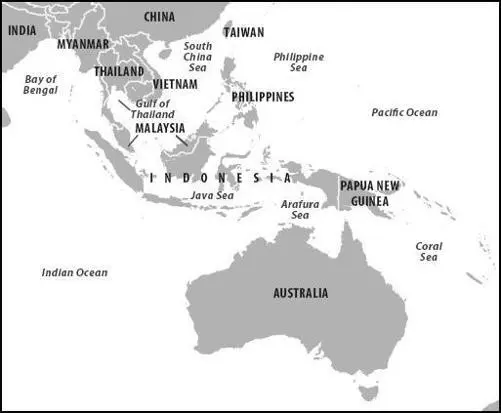
For the United States, maintaining a relationship with Australia shouldn’t be difficult. Australia has only two strategic options. One is to withdraw from alliance commitments and assume that its interests will be addressed in passing. The other is to participate in the alliance and have more formal commitments from the United States. The former is cheaper but riskier. The latter is more expensive but more reliable.
If a major threat developed, Australia would most likely return to the U.S. fold. If a western Pacific power suddenly gained control of the sea-lanes, however, there is always a chance that Australia would make a deal, if it calculated that such compliance would achieve its ends with less risk than fighting alongside the Americans. Therefore, having prior commitments from and installations in Australia serves the American interests best by limiting Australia’s options.
Even if Australia is hostage to U.S. protection, its strategic importance is such that the United States should be as generous and seductive as possible. Being sparing in what it asks of Australian military commitments also makes sense, because the United States may need Australia more—and more broadly—in the future than it needs Australian troops now.
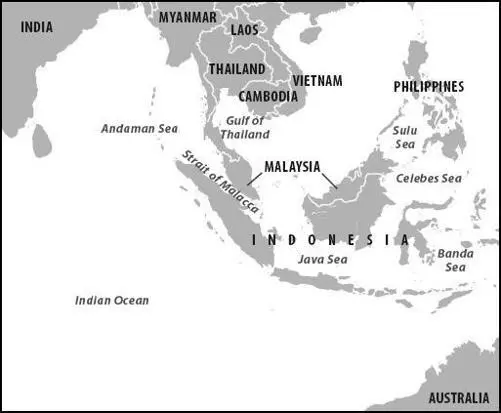
Of similar strategic importance for the United States is the city of Singapore, created by the British at the tip of the Malay Peninsula as a base from which to control the Strait of Malacca. This narrow passageway is still the primary route between the Indian and Pacific Oceans, particularly for oil headed for China and Japan from the Persian Gulf. U.S. warships on the way to the Persian Gulf also must pass through this strait. Along with Gibraltar and the Suez Canal, it is one of the world’s great maritime choke points. Whoever controls it can shut off trade at will, or guarantee that it will flow.
Singapore is now an independent city-state, enormously prosperous because of its geographical position and because of its technology industry. It needs the United States as a customer, but also to protect its sovereignty. When Malaya was given independence, the primarily ethnic-Chinese Singapore split from the predominantly Muslim Malaysia. Relations have varied, and there has not been much threat of annexation, but Singapore understands two geopolitical realities: that the worst thing in the world is to be rich and weak, and that security is never a sure thing. What Malaysia or, for that matter, Indonesia might want to do in a generation or two can’t be predicted.
The United States cannot simply control Singapore; instead it must have cooperative relations with it. As in his dealings with Korea and Australia, the president should be more generous with Singapore than he needs to be in order to assure the alliance. The price is small and the stakes are very high.
INDIA
It is in the context of the western Pacific that we should consider India. Despite its size, its growing economy, and the constant discussion of India as the next China, I simply do not see India as a significant player with deep power in the coming decade. In many ways, India can be understood as a very large Australia. Both countries are economically powerful—obviously in different ways—and in that sense they have to be taken quite seriously.
Like Australia, India is a subcontinent isolated geographically, although Australia’s isolation, based on thousands of miles of water, is much more visible. But India is in its own way an island, surrounded by land barriers perhaps less easily passable than oceans. The Himalayas block access from the north, and hilly jungles from the east. To the south, it is surrounded by the Indian Ocean, which is dominated by the United States Navy.
The biggest problem for India lies to the west, where there is desert, and Pakistan. That Islamic nation has fought multiple wars with the predominantly Hindu India, and relations range from extremely cool to hostile. As we saw in my discussion of Afghanistan, the balance of power between Pakistan and India is the major feature of the subcontinent. Maintaining this balance of power is a significant objective for the United States in the decade to come.
India is called the democratic China, which, to the extent that it is true, exacts a toll in regional power. One of the great limitations on Indian economic growth, impressive as it has been, is that while India has a national government, each of its constituent states has its own regulations, and some of these prevent economic development. These states jealously guard their rights, and the leadership guards its prerogatives. There are many ways in which these regions are bound together, but the ultimate guarantor is the army.
India maintains a substantial military that has three functions. First, it balances Pakistan. Second, it protects the northern frontier against a Chinese incursion (which the terrain makes difficult to imagine). Most important, the Indian military, like the Chinese military, guarantees the internal security of the nation—no minor consideration in a diverse country with deeply divided regions. There is currently a significant rebellion by Maoists in the east, for instance, just the sort of thing that it is the army’s job to prevent or suppress.
On the seas, the Indians have been interested in developing a navy that could become a major player in the Indian Ocean, protecting India’s sea-lanes and projecting Indian power. But the United States has no interest in seeing India proceed along these lines. The Indian Ocean is the passageway to the Pacific for Persian Gulf oil, and the United States will deploy powerful forces there no matter how it reduces its presence on land.
To keep Indian naval development below a threshold that could threaten U.S. interests, the United States will strive to divert India’s defense expenditure toward the army and the tactical air force rather than the navy. The cheapest way to accomplish this and preempt a potential long-range problem is for the United States to support a stronger Pakistan, thus keeping India’s security planners focused on the land and not the sea.
By the same token, India is interested in undermining the U.S.-Pakistani relationship or, at the very least, keeping the United States in Afghanistan in order to destabilize Pakistan. Failing that, India may reach out to other countries, as it did to the Soviet Union during the Cold War. Pakistan does not represent an existential threat to India, even in the unlikely event of a nuclear exchange. But Pakistan is not going to simply collapse, and therefore will remain the persistent problem that India’s strategic policy will continue to pivot on.
India lags behind China in its economic development, which is why it is not yet facing China’s difficulties. The next decade will see India surging ahead economically, but economic power by itself does not translate into national security. Nor does it translate into the kind of power that can dominate the Indian Ocean. American interests are not served by making India feel overly secure. Therefore, U.S.-Indian relations will deteriorate over the next ten years, even as the United States leaves Afghanistan and even as U.S.-Indian trade continues.
THE ASIAN GAME
In the decade to come, while the United States is preoccupied with other issues, the two major Asian powers, China and Japan, will be only minimally subject to outside influence. They will move as their internal processes dictate. Given that pace, the United States should not invest heavily in managing the Chinese-Japanese relationship. To the extent possible, the United States should help maintain a stable China and work to maintain its relationship with Japan.
Читать дальшеИнтервал:
Закладка:
Похожие книги на «The Next Decade»
Представляем Вашему вниманию похожие книги на «The Next Decade» списком для выбора. Мы отобрали схожую по названию и смыслу литературу в надежде предоставить читателям больше вариантов отыскать новые, интересные, ещё непрочитанные произведения.












Обсуждение, отзывы о книге «The Next Decade» и просто собственные мнения читателей. Оставьте ваши комментарии, напишите, что Вы думаете о произведении, его смысле или главных героях. Укажите что конкретно понравилось, а что нет, и почему Вы так считаете.