George Friedman - The Next Decade
Здесь есть возможность читать онлайн «George Friedman - The Next Decade» весь текст электронной книги совершенно бесплатно (целиком полную версию без сокращений). В некоторых случаях можно слушать аудио, скачать через торрент в формате fb2 и присутствует краткое содержание. Город: New York, Год выпуска: 2011, ISBN: 2011, Издательство: Doubleday, Жанр: Публицистика, Политика, на английском языке. Описание произведения, (предисловие) а так же отзывы посетителей доступны на портале библиотеки ЛибКат.

- Название:The Next Decade
- Автор:
- Издательство:Doubleday
- Жанр:
- Год:2011
- Город:New York
- ISBN:978-0-385-53295-2
- Рейтинг книги:5 / 5. Голосов: 1
-
Избранное:Добавить в избранное
- Отзывы:
-
Ваша оценка:
The Next Decade: краткое содержание, описание и аннотация
Предлагаем к чтению аннотацию, описание, краткое содержание или предисловие (зависит от того, что написал сам автор книги «The Next Decade»). Если вы не нашли необходимую информацию о книге — напишите в комментариях, мы постараемся отыскать её.
bestseller
now focuses his geopolitical forecasting acumen on the next decade and the imminent events and challenges that will test America and the world, specifically addressing the skills that will be required by the decade’s leaders. The next ten years will be a time of massive transition. The wars in the Islamic world will be subsiding, and terrorism will become something we learn to live with. China will be encountering its crisis. We will be moving from a time when financial crises dominate the world to a time when labor shortages will begin to dominate. The new century will be taking shape in the next decade.
In
, George Friedman offers readers a provocative and endlessly fascinating prognosis for the immediate future. Using Machiavelli’s
as a model, Friedman focuses on the world’s leaders—particularly the American president—and with his trusted geopolitical insight analyzes the complex chess game they will all have to play. The book also asks how to be a good president in a decade of extraordinary challenge, and puts the world’s leaders under a microscope to explain how they will arrive at the decisions they will make—and the consequences these actions will have for us all.
The Next Decade — читать онлайн бесплатно полную книгу (весь текст) целиком
Ниже представлен текст книги, разбитый по страницам. Система сохранения места последней прочитанной страницы, позволяет с удобством читать онлайн бесплатно книгу «The Next Decade», без необходимости каждый раз заново искать на чём Вы остановились. Поставьте закладку, и сможете в любой момент перейти на страницу, на которой закончили чтение.
Интервал:
Закладка:
Japan’s fundamental weakness remains its lack of natural resources for industry, from oil to rubber to iron ore. To remain an industrial power, Japan has to buy and sell globally, and if it loses access to the sea-lanes, it loses everything. If trouble arises and it lacks the option of turning inward, Japan is far more likely to become assertive once again.
THE SINO-JAPANESE BALANCE OF POWER
For the past thirty years or so, relations between China and Japan have been secondary to each country’s relationship with the United States. The United States maintained the regional balance by maintaining mutually beneficial relations with each country, but those relations will shift in the decade ahead. First, China’s economic problems will alter its relationship to the world while transforming the country’s internal workings. Similarly, Japan’s internal problems and the solutions it chooses will transform the way it operates.
Even when passive and dependent on other countries to guarantee access to world markets, Japan always remains deeply embedded in the world. China is embedded as well, but not as irrevocably as Japan. The loss of imported raw materials does not represent an existential threat to China the way it does to Japan. Similarly, while China depends on exports, it could reconfigure itself if necessary, albeit painfully.
China, then, has less of a temptation to become assertive; it also has less of an ability to do so. China’s main access to the world is by sea, but it does not have a substantial navy relative to geography and the United States. Building a naval power takes generations, not so much to develop the necessary technology as to pass along the accumulated experience that creates good admirals. It will be a long time before China can challenge either the United States or even Japan at sea. There has been a great deal of discussion of the development of China’s navy. Certainly, significant development is under way, but there is a huge gap between the present level of effort and what China has to do to challenge U.S. naval power even in the waters near China. The most significant developments are in land-based anti-ship missiles. But the Chinese have a very long way to go before naval vessels can hope to defeat an American fleet. And even the anti-ship missiles are highly vulnerable to U.S. air and missile strikes. China’s navy will not force the United States out of regional waters in the next decade.
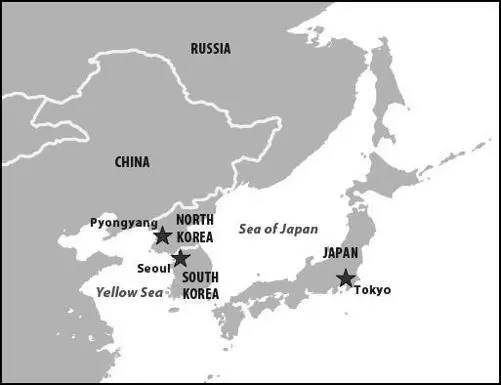
Today Japan is formally a pacifist power, barred by Article 9 of its constitution from having an offensive armed force, but this has not prevented it from maintaining the most capable navy in the western Pacific, nor from having a substantial army and air force. It has, however, managed to avoid using those forces, relying instead on the United States to protect its international interests, particularly its access to natural resources.
Japanese submission to the United States after World War II proved beneficial because the United States needed Japan’s help in the Cold War and wanted Japan to be as strong as possible. Things have now subtly changed. The United States still controls Japan’s sea-lanes and is still prepared to guarantee access, but its willingness to take risks with that access has put Japan in a potentially dangerous position. So far, during the U.S.-jihadist war, the United States has been cautious in not endangering the oil route through the Strait of Hormuz that Japan depends on, but it could easily miscalculate. Simply put, the United States can endure risks that Japan can’t afford, so the two countries’ perspectives on the world and their national interests diverge.
The internal problem for the Japanese is that they have gone as far as they can in this economic cycle. They must either accept austerity and unemployment or allow the economy to begin to overheat. Their great weakness remains capital markets, which still don’t operate freely, and yet the Japanese don’t have effective central planning either. This situation cannot be sustained. Moving to a free market in capital might solve the Japanese problem in the long run, but only at the cost of instability now. Because they can’t afford a true market economy, they will move toward an economy in which the state imposes greater efficiencies (never as efficient as a market, but more efficient than what they have now) and in which the keiretsu decline in importance. This will mean that the Japanese state will concentrate more power in itself and take a greater role in managing finance.
Japan’s other great problem is demographic. It is an aging country that needs more workers but is socially unable to manage large-scale immigration, which moves counter to the cohesiveness of Japanese culture. The solution is not to have workers that come to the factories but to have factories that go to the workers. Over the next ten years, Japan will be even more aggressive in exploiting labor markets outside its own borders, including those in China, depending on the evolution of events there.
Whatever the future holds, the Japanese will want to continue their core strategic relationship with the United States, including their reliance on the U.S. to secure their sea-lanes. For Japan, this is both more cost-effective and far less dangerous than striking out on its own.
THE AMERICAN STRATEGY: PLAYING FOR TIME
The United States does not have the resources or the policy bandwidth to deal with every regional balance of power at the same time. It will be preoccupied with Russia and the Middle East, which does not leave it much in the way of resources to deal with the western Pacific. By default, then, American strategy in this region must be to delay and deflect. The United States cannot really control the vast processes that are under way, so the best it can hope to do is to shape them a bit. Fortunately, this is one region in which the processes at play have the countries on a relatively benign path toward the United States, at least for now. Therefore U.S. policy should be to stall while laying the groundwork for what comes after.
The American danger does not rest in an alliance forged between Japan and China. These two nations compete with each other in too many ways, and differ from each other too profoundly, for close cooperation. Having reached the limits of this economic cycle, Japan will no longer be the quietly passive giant it has been for the past twenty years. China, on the other hand, will be less than the economic juggernaut that it has been. The challenge for the United States will be to manage its relationship with both players in this western Pacific system, each in its own different phase. At the same time, the United States must step back from being the center and let these two Asian powers develop more direct relationships with each other, finding their own point of balance.
Neither China nor Japan will emerge as a regional hegemon in the coming decade. The Chinese economic miracle will subside, as all economic miracles do, and China will focus on maintaining stability without rapid growth. Japan will restructure itself internally while beginning to align its foreign policy with its global interests. But it will be Japan that the United States will have to watch.
As Japan increases its power, it must necessarily increase its maritime strength. It is a fundamental principle of the United States to oppose the rise of maritime powers, but obviously the United States isn’t going to go to war with Japan over this issue in 2015 or 2020 the way it did in 1941. Still, it will have to develop a strategy to deal with a more assertive Japan.
Читать дальшеИнтервал:
Закладка:
Похожие книги на «The Next Decade»
Представляем Вашему вниманию похожие книги на «The Next Decade» списком для выбора. Мы отобрали схожую по названию и смыслу литературу в надежде предоставить читателям больше вариантов отыскать новые, интересные, ещё непрочитанные произведения.












Обсуждение, отзывы о книге «The Next Decade» и просто собственные мнения читателей. Оставьте ваши комментарии, напишите, что Вы думаете о произведении, его смысле или главных героях. Укажите что конкретно понравилось, а что нет, и почему Вы так считаете.