Mary Roach - Grunt
Здесь есть возможность читать онлайн «Mary Roach - Grunt» весь текст электронной книги совершенно бесплатно (целиком полную версию без сокращений). В некоторых случаях можно слушать аудио, скачать через торрент в формате fb2 и присутствует краткое содержание. Город: New York, Год выпуска: 2016, ISBN: 2016, Издательство: W. W. Norton, Жанр: nonf_military, sci_popular, на английском языке. Описание произведения, (предисловие) а так же отзывы посетителей доступны на портале библиотеки ЛибКат.
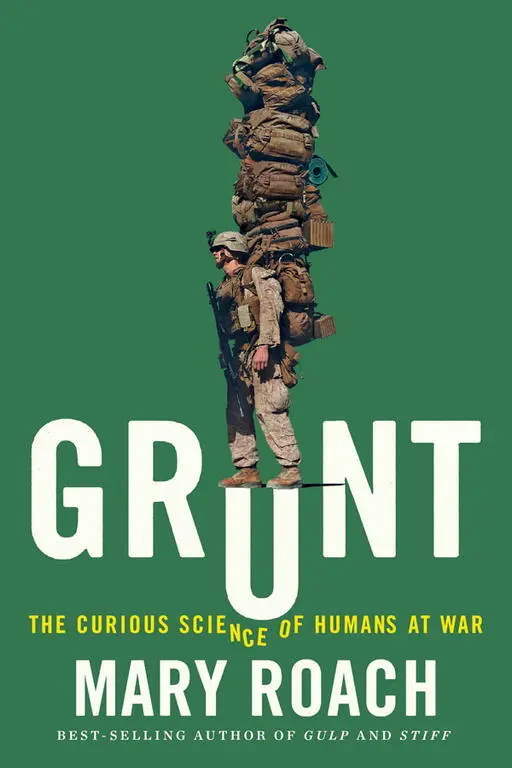
- Название:Grunt
- Автор:
- Издательство:W. W. Norton
- Жанр:
- Год:2016
- Город:New York
- ISBN:978-0-393-24544-8
- Рейтинг книги:3 / 5. Голосов: 1
-
Избранное:Добавить в избранное
- Отзывы:
-
Ваша оценка:
Grunt: краткое содержание, описание и аннотация
Предлагаем к чтению аннотацию, описание, краткое содержание или предисловие (зависит от того, что написал сам автор книги «Grunt»). Если вы не нашли необходимую информацию о книге — напишите в комментариях, мы постараемся отыскать её.
Grunt
Tennessee
An Amazon Best Book of June 2016:
Amazon.com Review It takes a special kind of writer to make topics ranging from death to our gastrointestinal tract interesting (sometimes hilariously so), and pop science writer Mary Roach is always up to the task. In her latest book,
, she explores how our soldiers combat their non-gun-wielding opponents—panic, heat exhaustion, the runs, and more. It will give you a new appreciation not only for our men and women in uniform (and by the way, one of the innumerable things you’ll learn is how and why they choose the fabric for those uniforms), but for the unsung scientist-soldiers tasked with coming up with ways to keep the “grunts” alive and well. If you are at all familiar with Roach’s oeuvre, you know her enthusiasm for her subjects is palpable and infectious. This latest offering is no exception.
—Erin Kodicek,
“A mirthful, informative peek behind the curtain of military science.” (Washington Post)
“From the ever-illuminating author of
and
comes an examination of the science behind war. Even the tiniest minutiae count on the battlefield, and Roach leads us through her discoveries in her inimitable style.” (Elle)
“Mary Roach is one of the best in the business of science writing… She takes readers on a tour of the scientists who attempt to conquer the panic, exhaustion, heat, and noise that plague modern soldiers.” (Brooklyn Magazine)
“Extremely likable … and quick with a quip…. [Roach’s] skill is to draw out the good humor and honesty of both the subjects and practitioners of these white arts among the dark arts of war.” (San Francisco Chronicle)
“Nobody does weird science quite like [Roach], and this time, she takes on war. Though all her books look at the human body in extreme situations (sex! space! death!), this isn’t simply a blood-drenched affair. Instead, Roach looks at the unexpected things that take place behind the scenes.” (Wired)
“Brilliant.” (Science)
“Roach … applies her tenacious reporting and quirky point of view to efforts by scientists to conquer some of the soldier’s worst enemies.” (Seattle Times)
“Covering these topics and more, Roach has done a fascinating job of portraying unexpected, creative sides of military science.” (New York Post)
“Having investigated sex, death, and preparing for space travel,
best-selling Roach applies her thorough—and thoroughly entertaining—techniques to the sobering subject of keeping soldiers not just alive but alert and healthy of mind and body during warfare.” (Library Journal)
“A rare literary bird, a best selling science writer … Roach avidly and impishly infiltrates the world of military science…. Roach is exuberantly and imaginatively informative and irreverently funny, but she is also in awe of the accomplished and committed military people she meets.” (Booklist (starred review))
Grunt — читать онлайн бесплатно полную книгу (весь текст) целиком
Ниже представлен текст книги, разбитый по страницам. Система сохранения места последней прочитанной страницы, позволяет с удобством читать онлайн бесплатно книгу «Grunt», без необходимости каждый раз заново искать на чём Вы остановились. Поставьте закладку, и сможете в любой момент перейти на страницу, на которой закончили чтение.
Интервал:
Закладка:
Even better if the baggy shirt is white. Light-colored clothing reflects some of the sun’s radiation, so you get hit with less of it. Going shirtless in the sun makes a person hotter, not cooler. In Edward Adolph’s “‘nude’ men in the sun” study, subjects sitting on boxes wearing nothing but shoes, socks, and underwear suffered the equivalent of a ten-degree rise in air temperature. Adding to their discomfort, the control—a fully clothed man—was seated beside them. It’s not the heat, it’s the humiliation.
You can imagine how heat illness experts feel about sunbathers: people who willingly lie in direct sun, on hot sand, nearly nude. Small wonder it’s done in close proximity to the big blue tub known as the ocean. Just don’t get up off your towel and start lifting weights. Overworking a set of muscles puts you at risk for a potentially fatal condition called rhabdomyolysis. If the body can’t keep pace with a muscle’s extreme demand for fuel, eventually the muscle becomes ischemic. Heat exacerbates the scenario, because of the competing demand for plasma for making sweat. The cells of the oxygen-starved muscle tissue begin to break down, and their contents spill into the bloodstream. One of these breakdown components is potassium; high levels of it can cause cardiac arrest. Another, myoglobin, damages the kidneys—sometimes to the point of failure. Now you are a very buff and picturesque corpse.
Bodybuilding has been the number one pastime on bases in Afghanistan, where it is even hotter than in Venice Beach. The bodybuilding supplements soldiers take to bulk up more quickly exacerbate the risks. They often contain potentially dangerous compounds: stimulants that spur muscle contractility, thermogenic agents that rev the metabolism, and creatine, which accelerates dehydration. All of these increase the competition for the body’s limited blood supply. CHAMP runs an online resource, Operation Supplement Safety, that reviews the dangers of different products; however, with more than ninety thousand different supplements for sale on the Internet—and Amazon.com delivering to the major air bases—it’s a Sisyphean challenge. For those unfamiliar with the myth, Sisyphus was that Greek guy the gods punished by condemning him to roll an enormous boulder uphill forever, or until rhabdomyolysis set in. During 2011, there were 435 cases of exertional rhabdomyolysis among US service members.
Even simple protein supplements amplify the risks. Protein is deliquescent: It draws water from the body’s tissues into the bloodstream to help flush the protein breakdown products, which are tough on the excretory system. If you’re dying of thirst in the desert, drinking your urine won’t help you. The proteins and salts are by that point so concentrated that the body needs to pull fluid from the tissues to dilute them, which puts you back where you began, only worse, because now you are saddled with the memory of drinking your own murky, stinking pee.
Rhabdomyolysis also turns up at the other extreme of the bodybuild spectrum. Morbidly obese patients immobilized on their backs—say, for lengthy gastric bypass surgery—run the risk that their bodies will press down on the muscles of their backsides so hard that circulation is cut off. After four to six hours, the dying cells of the muscle tissue break open and leak, and when the patient finally moves, or is moved, the blood rushes back in and sweeps the breakdown products into the bloodstream in a sudden, overwhelming gush. Being pinned under rubble in an earthquake or in the wreckage of a car poses a similar risk. As does passing out drunk and lying without moving for six hours. This was explained to me by rhabdomyolysis researcher Darren Malinoski, an assistant chief of surgery at the Portland VA Medical Center. He added that rhabdomyolysis is one reason people roll over in their sleep. “The muscles are getting ischemic, and they make you move.”
“Look: Even your thighs are starting to flush,” says Dianna. All that overheated blood being shunted to my skin. “Do you want to try to keep going a full half hour with the pack on?”
Not even slightly. “I think I get it.”
Dianna asks the lads how they’re feeling. Josh’s fellow instructor, whose name is Dan Lessard, replies that he’s bored. Josh doesn’t hear the question because he’s got earbuds in. He removes one, and a tinny musical aggression leaks out. It’s Five Finger Death Punch, a metal band that from what I can tell uses synthesized machine-gun fire in place of a drummer.
Josh says he and Dan plan to do “a real workout” later in the day.
“Mary stopped after seven minutes with the pack on,” Dianna volunteers. Hey!
Josh defends me. “You don’t come out of the womb with a rucksack on. The first time I put it on, I hated my life.” He seems like a good person who has been handed a lot. His frivolity, his pep, whatever innocence we’re all born with, became something tougher in Iraq. War denatures people.
At 11:30, we’re released from the cook box. “And now you can go take out your friend,” says a lab tech named Kaitlin, referring to the probe. Earlier, in the midst of a conversation about idiosyncratic sweating patterns, Kaitlin raised both arms as though she’d just won Wimbledon and announced, “My right armpit sweats way more.” This we confirmed. Which bring us to the point of Dianna’s work: Genetic differences in thermoregulation—efficient/inefficient, left side/right side, you name it—are surprisingly large and well worth paying attention to, given our seemingly permanent posture of fighting extremism in the Middle East.
Dianna suggests heading to a nearby Walter Reed cafeteria to continue the conversation. Josh seconds. “ Sustenance. Let’s get it.”
THE PIZZA at Warrior Café does not look healthy. By that I don’t mean that it’s unhealthy to eat it—though it possibly is—but rather that the item itself looks in poor health. The edemic crust. The sweating cheese. The scabs of pepperoni. I follow Josh and Dan to the salad bar. Like many in the US military, they are disciples of CrossFit, a workout that emphasizes real-world, or “functional,” strength over isolated muscle development. And lots of garden greens.
“Everybody wants to get big and look strong,” Josh says between mouthfuls, after we’re seated. He eats with purposeful intensity, the way he speaks or strides on a treadmill. By “everyone” he means today’s infantry. “There are different ways to do that. You can work hard, or you can do the bodybuilding thing, because you don’t care about anything other than looking good. Nobody wants to work. They experiment with steroids. They want to be bigger, faster.” The eyes fixed on the salad. “But that’s not functional strength. And they have to lug it around, that muscle, and they have to cool it…”
“And the supplements themselves increase the risk of heat illness,” I hear myself saying.
That’s not Josh’s concern. His concern is this: Unfit soldiers put the rest of the unit at risk. He places it in context for me: a hypothetical mission to clear and secure an insurgents’ compound. “How about this. In the middle of a firefight, where you’re already physically sucking, one of your buddies gets shot. You’ve got a casualty collection point in the first room that you cleared, but to get there, you have to drag him in his body armor. You’re already smoked, and now you’re dragging dead body weight, so now you’re really smoked.” He jabs at salad. Lunch is a syncopation of hunger and spite. Stab, shovel, chew, speak, stab. “Are you ready to deliver some first aid to this guy who’s depending on you to save his life after you just got your ass handed to you, because you wanted to go do some curls at the gym?”
Читать дальшеИнтервал:
Закладка:
Похожие книги на «Grunt»
Представляем Вашему вниманию похожие книги на «Grunt» списком для выбора. Мы отобрали схожую по названию и смыслу литературу в надежде предоставить читателям больше вариантов отыскать новые, интересные, ещё непрочитанные произведения.











Обсуждение, отзывы о книге «Grunt» и просто собственные мнения читателей. Оставьте ваши комментарии, напишите, что Вы думаете о произведении, его смысле или главных героях. Укажите что конкретно понравилось, а что нет, и почему Вы так считаете.