John Nichol - Tornado Down
Здесь есть возможность читать онлайн «John Nichol - Tornado Down» весь текст электронной книги совершенно бесплатно (целиком полную версию без сокращений). В некоторых случаях можно слушать аудио, скачать через торрент в формате fb2 и присутствует краткое содержание. Город: London, Год выпуска: 2008, ISBN: 2008, Издательство: Penguin Adult, Жанр: nonf_military, Биографии и Мемуары, на английском языке. Описание произведения, (предисловие) а так же отзывы посетителей доступны на портале библиотеки ЛибКат.
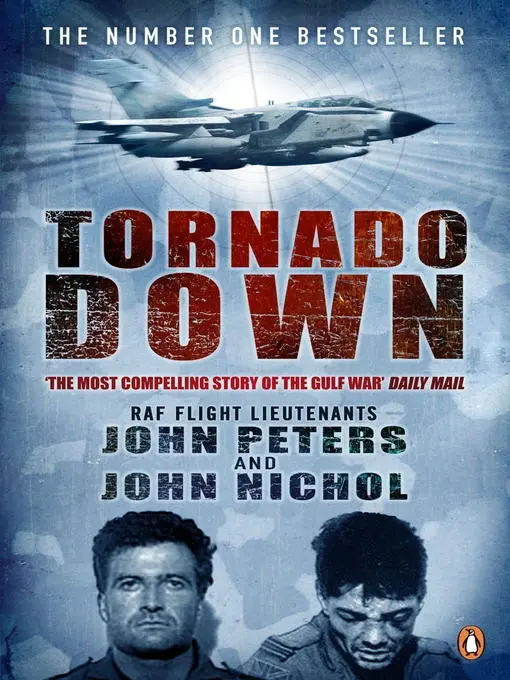
- Название:Tornado Down
- Автор:
- Издательство:Penguin Adult
- Жанр:
- Год:2008
- Город:London
- ISBN:978-0-14-193771-7
- Рейтинг книги:5 / 5. Голосов: 1
-
Избранное:Добавить в избранное
- Отзывы:
-
Ваша оценка:
Tornado Down: краткое содержание, описание и аннотация
Предлагаем к чтению аннотацию, описание, краткое содержание или предисловие (зависит от того, что написал сам автор книги «Tornado Down»). Если вы не нашли необходимую информацию о книге — напишите в комментариях, мы постараемся отыскать её.
In
, John Peters and John Nichol tell the incredible story of their part in the war against Saddam Hussien’s regime. It is a brave and shocking and totally honest story: a story about war and its effects on the hearts and minds of men.
Tornado Down — читать онлайн бесплатно полную книгу (весь текст) целиком
Ниже представлен текст книги, разбитый по страницам. Система сохранения места последней прочитанной страницы, позволяет с удобством читать онлайн бесплатно книгу «Tornado Down», без необходимости каждый раз заново искать на чём Вы остановились. Поставьте закладку, и сможете в любой момент перейти на страницу, на которой закончили чтение.
Интервал:
Закладка:
They led me outside; the dazzling sunshine made me blink. Food was laid out on a small table. Over the past forty-eight hours, we had had more food than in the previous two weeks. The ten of us who were being released had pitta bread, good cheese, and, best of all, tomatoes, with salt. I recognised none of the others, they were all Americans. Why was John Nichol not coming with us?
It was all very civilised. An elderly gentleman in glasses bumbled about, wringing his hands, as we gobbled down the food. He was like some sort of holiday tour operator, chatting amicably, holding a clipboard. ‘Your trip has been delayed, Sir.’ Then, when the transport arrived, ‘For your own protection, please do not look out of the coach.’
Despite this new cordiality, the guards still kept coming round and tapping our skulls from time to time; old habits die hard… We set off. Our ‘courier’ was chatting to us as we drove along, quite as if we were on a sightseeing trip of Baghdad, telling us about how he had lived in the US for several years, in Baltimore, which he loved. ‘Is New York still as dirty and horrible?’ he asked. He had travelled widely throughout Europe, and was a cultured and even courtly gentleman. Giving us our release schedule, he was chatting to us, skeletons that we were, as if none of the recent events had taken place. I could feel no resentment, now that the ordeal was almost over, towards him or any other Iraqi.
The bus pulled up in front of the Baghdad Novotel. An amazing sight met our eyes: in front of the hotel, in packed ranks a dozen deep, the serried legions of the world’s media were ranged to receive us. It was awesome. We were totally unprepared for it.
They were like a football crowd, heaving and shoving, jostling and pushing one another, frantically brandishing their cameras and their tape recorders in our direction. It was a fantastic shock to realise that it was us they were after. Looking at this sweltering multitude, I felt a wave of tiredness and nausea sweep over me. For this, I was just not ready. All I wanted was to get home, I was exhausted. My guts were still churning wildly from the unaccustomed food. I felt like getting under the seat of the bus, just lying down and curling up, in the hope that it would all go away. Getting off the bus was a nightmare. The media surged forward, elbowing and shouting, engulfing us and the guards in a welter of insane energy. Reporters screamed questions into our ears, in a hundred languages at once. It was impossible to answer, even to hear a coherent sentence in that scrum. On all sides, cameras clicked and whirred. To clear a path through this mayhem, the Iraqis began shoving everybody back, forcibly; it was, after all, what they were good at.
Inside the hotel, which we reached only after a struggle, was a Red Cross welcoming committee. It was set up at some tables in the centre of what looked like a ballroom, all done out in damask and chandeliers. At least it was relatively quiet, and there were chairs to sink down into. But even in here the noise of the crowd outside penetrated through to us. They were climbing up the windows, clinging on wherever they could, buzzing up against the glass, like human flies. The Red Cross officials hurried to close the curtains, plunging the room into gloom. They were apologising; there had been no warning, they said, it had all been done at the last minute. The Red Cross had been trying to get access to us for weeks, without the least success. And then suddenly we were there. They gave us an initial, if cursory, medical examination, to make sure we could all travel safely out of Iraq, questioning us about any current physical problems. The doctor, a Swiss, had huge flowing black moustaches and a copious beard. They offered us coffee, Coca-Cola and buns with a great dollop of greasy lamb in the middle, a truly horrible sight given my tender guts. ‘Here I am,’ I thought, ‘in a hotel of international repute, I am starving hungry and I cannot bring myself to eat the food!’ The Red Cross had known absolutely nothing of our release until that very morning, but they were whistling around, trying to get organised, doing their level best. Our reception had been cobbled together at the last minute. Still, it was miles better than anything we could have imagined. They asked us what we wanted. Almost to a man, we replied, ‘Chocolate.’ More than anything in the world, we wanted chocolate. Preferably Swiss chocolate! They went rushing around the hotel until they found a chocolate machine, brought us the little squares, and we wolfed them down with orange juice and Pepsi-Cola. Not the best thing for a queasy stomach. Predictably, I had to visit the toilet in a very few minutes.
As I turned into the corridor outside the reception room, I saw a woman. Being in captivity had put a complete stop to any feelings of desire: sexuality had been suspended for the duration. Now, it returned with a rush. For the whole time in prison, I realised, I had hardly thought once about sex. Now, it was like a switch nicking back to On, none of that stuff about psychiatric readjustment, and the need to take things easy, there it was, Bang! Straightforward lust, fully-formed (well, forming), instantaneous and crude as ever. Stupid, really, I thought. I looked at myself in the bathroom mirror. I was a sight. My hair was matted and standing on end; I looked hollow to the core, cheeks, eyes, body; I stank. It was clearly going to be some time before any woman returned the compliment of finding me desirable.
Back in the main room, the Red Cross said there was no way the press would let us out, or even let us sleep, unless we granted them a photo-call, at the very least. Most of us just wanted to lie down for a bit! To keep them happy we agreed to be photographed, but we all refused to say anything: we were still serving military officers. The Red Cross officials said, ‘What we’ll do is put you all on a long table, we’ll let the reporters in in groups of ten, and they can have thirty seconds apiece.’
We sat in there, while outside the journalists fought among one another for precedence. There were two other released British POWs in my group as we waited for the doors to open, and they were definitely not aircrew.
‘Just don’t smile,’ they told me, ‘don’t attract attention to yourself.’
What they meant was, ‘Don’t attract attention to us.’
The first group of reporters came rushing in. ‘Hi!’ yelled the one at the head of the queue, at the top of his voice, though the room was quiet. ‘I’m from NBC, I’m from California. Is anybody here American?’ Nobody responded.
The reporter behind shouted, ‘Hi! Would anybody like to be on the cover of Time magazine?’
That did it. ‘Yeah!’ cried what seemed like all the Americans at once. ‘Here! Over here!’
As for the instruction not to smile, it was difficult not to laugh out loud. With so little time allocated to them, these first ten reporters moved frenetically along the line of POWs. They were festooned with cameras, shoving the lenses into our faces, snapping continously, motor-winds whirring, shutters clicking. I suddenly realised they were much more apprehensive about the whole deal than we were. Almost without exception, they were trembling visibly, shaking, in some cases, from head to foot. These were obviously career photographs for them, this was big-time stuff. I almost felt sorry for them. Almost. Up to this point, I don’t think any of us, least of all John Nichol and me, had had any inkling of the interest in the POWs. Even though we knew we had appeared on television, several weeks had gone by, and in any case we had not realised the extent of the impact it had had. After all, we had not seen the pictures. The journalists’ and photographers’ nervousness made me realise, for the first time, how firmly we were all fixed in the public eye. Little did I realise quite how firmly.
Читать дальшеИнтервал:
Закладка:
Похожие книги на «Tornado Down»
Представляем Вашему вниманию похожие книги на «Tornado Down» списком для выбора. Мы отобрали схожую по названию и смыслу литературу в надежде предоставить читателям больше вариантов отыскать новые, интересные, ещё непрочитанные произведения.




Обсуждение, отзывы о книге «Tornado Down» и просто собственные мнения читателей. Оставьте ваши комментарии, напишите, что Вы думаете о произведении, его смысле или главных героях. Укажите что конкретно понравилось, а что нет, и почему Вы так считаете.