Hugh Mills - Low Level Hell
Здесь есть возможность читать онлайн «Hugh Mills - Low Level Hell» весь текст электронной книги совершенно бесплатно (целиком полную версию без сокращений). В некоторых случаях можно слушать аудио, скачать через торрент в формате fb2 и присутствует краткое содержание. Город: Novato, CA, Год выпуска: 2009, ISBN: 2009, Издательство: Presidio Press, Жанр: Биографии и Мемуары, military_history, на английском языке. Описание произведения, (предисловие) а так же отзывы посетителей доступны на портале библиотеки ЛибКат.
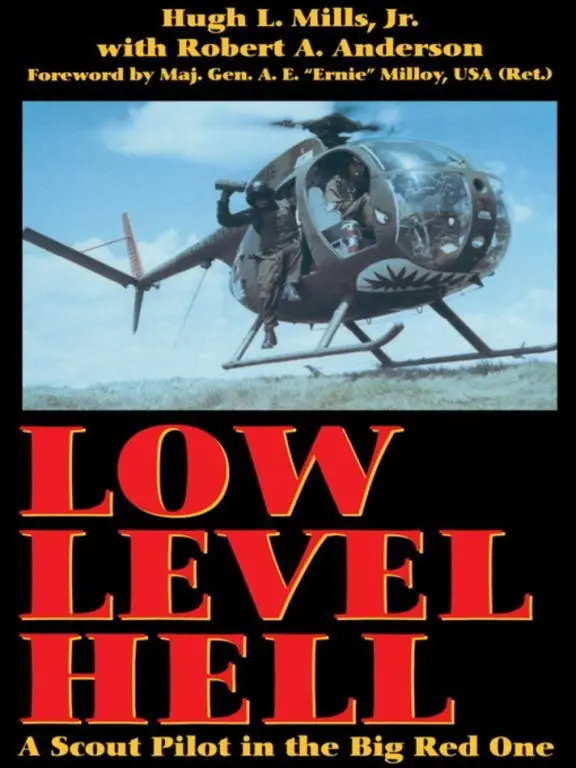
- Название:Low Level Hell
- Автор:
- Издательство:Presidio Press
- Жанр:
- Год:2009
- Город:Novato, CA
- ISBN:978-0-307-53792-8
- Рейтинг книги:4 / 5. Голосов: 1
-
Избранное:Добавить в избранное
- Отзывы:
-
Ваша оценка:
Low Level Hell: краткое содержание, описание и аннотация
Предлагаем к чтению аннотацию, описание, краткое содержание или предисловие (зависит от того, что написал сам автор книги «Low Level Hell»). Если вы не нашли необходимую информацию о книге — напишите в комментариях, мы постараемся отыскать её.
Low Level Hell — читать онлайн бесплатно полную книгу (весь текст) целиком
Ниже представлен текст книги, разбитый по страницам. Система сохранения места последней прочитанной страницы, позволяет с удобством читать онлайн бесплатно книгу «Low Level Hell», без необходимости каждый раз заново искать на чём Вы остановились. Поставьте закладку, и сможете в любой момент перейти на страницу, на которой закончили чтение.
Интервал:
Закладка:
“OK, you guys,” he said, as though he was already drifting off. “I’ll just see you… later.”
By that time, Willis had made it down to Bill’s bed. I had never seen him look so solemn. Rod reached down and gently patted the bed sheet. I knew he felt the same way Davis and I did—that we would probably never see Bill Jones again.
Flying back to Phu Loi, not a word was said. All three of us were deep in our own thoughts. We all realized that what had happened to Bill Jones could have happened to us. It could happen to any one of us, any day of the week. Every day, Charlie had his chance to send any one of us back in a body bag.
In a moment of honesty, I think every scout would have admitted that fear was with us constantly. Our ability to fly, in my opinion, came from our ability to recognize that we were afraid, to understand why we were afraid, and to continue to work through the fear.
Scout pilots understood their own mortality. The figures were there: If you were a pilot in the air cav and you were killed, you were probably a scout pilot. That’s the way it was. Sometimes it was a slick pilot. Very rarely a Cobra pilot. Usually a scout pilot.
The key was that we never thought about the odds. We dealt with the prospect of getting shot, getting burned, dying, by never allowing ourselves to think about the consequences. Instead, we rationalized, we immersed ourselves in our own illusions of immortality. Like Bob Davis, who used his sense of humor to wrestle with his own demons. Like Bill Jones, who drank more than he should have.
I had come to the conclusion that when it was time for me to chuck it in, there wouldn’t be a damned thing I could do about it. So I took the pragmatic view that I wasn’t going to worry about something I couldn’t control or influence. I never did totally crazy things, however; I never abandoned reason. But I felt that if I dwelled on the potential of getting hurt or killed, I would start getting too cautious. And when people get too cautious, they make mistakes—mistakes that get themselves and other people hurt. But if I ever wavered from my pragmatism, it was in those moments after seeing Bill Jones that day at the hospital.
We had lost Jim Ameigh. We had lost Chuck Davison. We had lost Pony One Six. We had lost two gallant crew chiefs. And I couldn’t even recognize Bill Jones—my toad-swallowing bar buddy, my scout teacher, my good friend.
But tomorrow was another day, and I was VR-1.
CHAPTER 15
BUT ROD WAS ROD
The rest of September passed in a blur. It was one of the hottest months we had in terms of flying hours and sustained enemy activity. The scout platoon was shorthanded because of the casualties we had taken. The rest of us flew more hours to make up the difference. I logged more than 138 combat flying hours in September, and the other scouts did much the same. It was a hectic and tiring pace.
October started out the same way. I ended up taking a few days off, however, during the first part of the month, but not because I planned it that way.
On 2 October, Rod Willis and I were working the early morning VRs out of Dau Tieng. We flew two hunter-killer teams up to Delta Tango, then took turns reconning the area around the western Trapezoid.
Willis (One Seven) was up first and started his VR along the east bank of the Saigon River heading south out of Dau Tieng. I stayed on the pad monitoring his radio transmissions and waiting for my turn to relieve him on station.
It wasn’t long before I heard that Willis had picked up some fish traps in a little tributary (Suoi Don) that headed off north and east of the Big Blue about three kilometers above our FSB Kien. Spotting the fish traps, Rod pulled in over the riverbank adjacent to them to see if there were footprints around. There were prints of sandals around the bank, and a trail showing recent moderate traffic. Dropping down to a couple of feet above the trail, One Seven determined that the latest foot tracks led away from the river and off through the jungle.
Willis followed the foot trail for four to five klicks into the jungle, where he discovered that it ended in the middle of an NVA base camp. He could see the outlines of the bunkers, the freshly washed clothes hanging on lines, the equipment and weapons leaning against trees. If those clues didn’t tell One Seven that the base camp was occupied, the bursts of enemy ground fire that suddenly erupted were conclusive.
The instant I heard Willis yell to his gun that he was taking fire, I cranked, took off out of Dau Tieng with my gun (Mike Woods—Three Five), and headed to the point of contact. It was less than ten kilometers down to where Willis was. I stayed down on top of the trees to get there fast.
About halfway to the point of contact, I called One Seven on Uniform to ask him what he had run into.
Willis answered, “I followed a foot trail up from the Big Blue and found myself in the middle of a hot NVA base camp. Several of the little sons a bitches tried to didi out the back door, and we got a couple of them with the door gun. Now they’re holed up in their bunkers and I’ve got Taxi on the way to blast ‘em out.” Taxi was an armored group out of FSB Kien. “They’re about three hundred yards out now. In the meantime, I’m taking a heavy load of ground fire.”
“Have you got anybody out in the open now, One Seven?” I asked.
“That’s a negative. They’re all in the bunkers. I’m trying to blast ‘em out, but my minigun just jammed and I can’t shoot. I’ve got to break station for Delta Tango and get my minigun cleared.”
A few seconds later I was on the scene, fell in on One Seven, and hit the radio again. “OK, One Seven, One Six is on your tail. What you got?”
“They’re getting a little skittish down there,” Rod said. “They can hear the armor coming and know they’re going to get their asses blown off, so they’re trying to knock the scout down to cut off our observation and keep us from guiding the armor guys in.”
“That’s a roger,” I came back. “I’ll try to keep their heads down while you go back to Delta Tango and get your minigun unjammed.”
Rod peeled off and I went into the bunker area in a slow hover to see if I could catch anybody in the open. Nothing doing. Not a soul showed his face as I made several slow passes with the mini and door guns blazing. Apparently Charlie felt safer at the moment in the bunker.
“Screw this, Jimbo,” I finally said to my crew chief. “Heat me up a CS. We’ll try and pop a gas down their chimney.”
Parker pulled the pin on a gas grenade and held it out the door as I skidded to a low-level quick stop over one of the bunkers. Just as I slid over the bunker entryway, Parker released the gas canister. “Well, I’ll be damned—bull’s-eye!” I hollered. Parker had pitched the gas canister squarely down into the bunker entrance.
Knowing that this would really piss off the bad guys, I immediately swung wide. I wanted to come around again for a minigun pass to dispatch anybody who stuck his head out for a breath of fresh air.
As I came back into the bunker area for the gun run, I miscalculated the wind direction and flew through some of the CS gas grenade residue. Parker and I both got our eyes full. Catching a snoot full of our own gas happened once in awhile, so I knew what to do. I kicked left pedal and swung the cyclic to the right rear to throw the Loach out of trim. That brought the nose left and immediately forced slipstream air into the right side of the aircraft. Then I leaned out my door and let the rushing air blow the gas out of my eyes.
That got rid of the gas all right, but it also took my eyes off the enemy bunker for just a fleeting second. That’s all it took for Charlie to pop up out of his hole and let go with an AK-47.
Читать дальшеИнтервал:
Закладка:
Похожие книги на «Low Level Hell»
Представляем Вашему вниманию похожие книги на «Low Level Hell» списком для выбора. Мы отобрали схожую по названию и смыслу литературу в надежде предоставить читателям больше вариантов отыскать новые, интересные, ещё непрочитанные произведения.












Обсуждение, отзывы о книге «Low Level Hell» и просто собственные мнения читателей. Оставьте ваши комментарии, напишите, что Вы думаете о произведении, его смысле или главных героях. Укажите что конкретно понравилось, а что нет, и почему Вы так считаете.