Hugh Mills - Low Level Hell
Здесь есть возможность читать онлайн «Hugh Mills - Low Level Hell» весь текст электронной книги совершенно бесплатно (целиком полную версию без сокращений). В некоторых случаях можно слушать аудио, скачать через торрент в формате fb2 и присутствует краткое содержание. Город: Novato, CA, Год выпуска: 2009, ISBN: 2009, Издательство: Presidio Press, Жанр: Биографии и Мемуары, military_history, на английском языке. Описание произведения, (предисловие) а так же отзывы посетителей доступны на портале библиотеки ЛибКат.
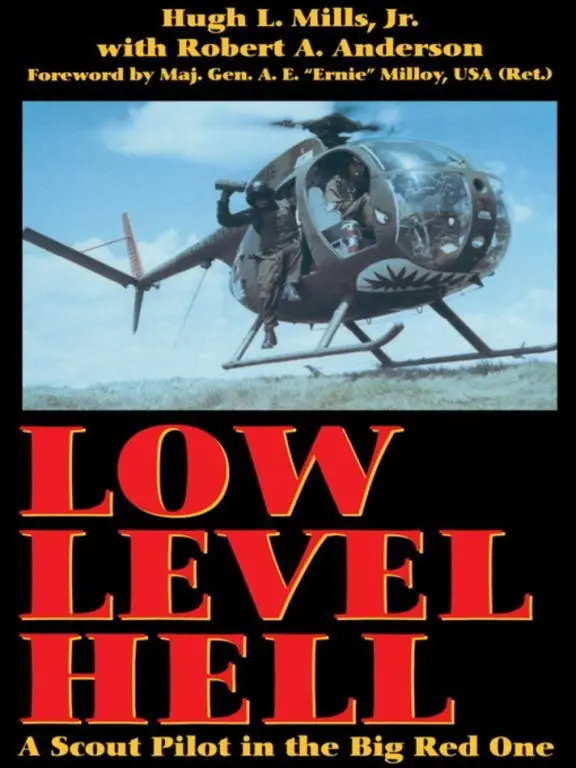
- Название:Low Level Hell
- Автор:
- Издательство:Presidio Press
- Жанр:
- Год:2009
- Город:Novato, CA
- ISBN:978-0-307-53792-8
- Рейтинг книги:4 / 5. Голосов: 1
-
Избранное:Добавить в избранное
- Отзывы:
-
Ваша оценка:
Low Level Hell: краткое содержание, описание и аннотация
Предлагаем к чтению аннотацию, описание, краткое содержание или предисловие (зависит от того, что написал сам автор книги «Low Level Hell»). Если вы не нашли необходимую информацию о книге — напишите в комментариях, мы постараемся отыскать её.
Low Level Hell — читать онлайн бесплатно полную книгу (весь текст) целиком
Ниже представлен текст книги, разбитый по страницам. Система сохранения места последней прочитанной страницы, позволяет с удобством читать онлайн бесплатно книгу «Low Level Hell», без необходимости каждый раз заново искать на чём Вы остановились. Поставьте закладку, и сможете в любой момент перейти на страницу, на которой закончили чтение.
Интервал:
Закладка:
Though painfully hurt in the crash—he was rammed in the kidneys by the butt of his M-60—Hayes crawled out of the wreck and pulled Davison out with him.
Davison’s accompanying Cobra, of course, rolled and fired, but he couldn’t get close with his rockets because he had no contact with his downed scout. An emergency radio was in Davison’s survival vest, but it had dropped out somewhere when Hayes pulled him out of the Loach.
The gun’s next reaction was to immediately call back to the troop and scramble the ARPs to the scene. Willis and I heard the transmission, and we flew off at flank speed to put a cover over the crash area. As we hit 120 knots down the road toward the scene, we could see Davison’s Cobra circling over the area. I radioed him and asked what the situation was.
The gun came back: “The scout is down, the crew is out of the aircraft, and they’ve got enemy all around them.”
Our first responsibility was to locate and cap the crew. We went straight to the crash site, pulled a skidding right turn, and found Hayes and Davison immediately. We could see that Davison was badly injured. Hayes was obviously scared and looked to be in pain himself. As Willis and I took up station right over them, Hayes looked up and gave us a weak thumbs-up.
Within minutes, the slicks bearing the ARPs showed up. Rod left to put them down into a nearby LZ. Shortly thereafter, the aerorifle platoon (now led by infantry Lt. Doug Veitch) was at the crash and tending to the crew.
As a medevac came in to get Davison and Hayes, Major Moore in his C and C ship suddenly appeared on the scene. Apparently he wanted to discuss the situation with his new ARP platoon leader.
As I circled overhead, a tactical conference was going on. Major Moore, Doug Veitch, and the rest of the ARP platoon were all standing around talking as though they were out on a training camp maneuver.
Suddenly VC popped up out of holes all around the gathered group and began firing RPGs and automatic rifles, and throwing grenades. The enemy fire came so quickly and with such intensity that no one had a chance to shoot back. All they could do was hit the ground and hope they didn’t get cut in two by the barrage of fire that had seemingly come out of nowhere.
Major Moore and the entire ARP platoon were standing on top of a major underground enemy tunnel system, located just a few thousand yards from our 1st Division field headquarters in Lai Khe. The enemy’s cunning was perfect. We’d expect their tunnels to be located in more remote jungle areas, or in hillier spots. But right under our noses within a stone’s throw of our division HQ? Right under a wide-open field with only scrub brush to provide cover for the entryway spider holes? Never! But there it was.
After incapacitating over fifty percent of the ARP platoon, the enemy disappeared back down into their spider holes. With no bad guys to shoot at, my first concern was to put a cap over the ARPs while they attempted to restore order. Then it took about forty minutes to shepherd the hard-hit unit away from the ambush site and back to the LZ where slicks returned them to base.
For us to learn of this enemy tunnel network cost us the following casualties:
Maj. Charles L. Moore, troop CO—hurt as he hit the ground diving for cover.
Lt. Douglas S. Veitch, ARP platoon leader—frag wounds in chin, hands, both thighs and legs.
WO Charles W. Davison, scout pilot—multiple bullet wounds in both the right and left upper arms.
Sfc. Harold R. Goatcher, ARP—shrapnel wounds in the right hand.
S. Sgt. James A. Broach, ARP—shrapnel wounds in the neck.
Sgt. Louis J. Baer, ARP—shrapnel wounds to the left knee.
Sgt. Russell H. Clark, Jr., ARP—deep shrapnel cut on his back.
Sgt. Thomas A. Maklary, ARP—frag wounds in both legs.
Sp. Robert A. Hawkins, aid man—shrapnel wounds on his left side.
Sp4. Clinton T. “Red” Hayes, scout crew chief—multiple cuts and bruises on the shoulder and right hip.
Pfc. Daryl J. Fisher, ARP—shrapnel wound of the left knee.
Pfc. Ronald C. Head, ARP—right leg broken, left arm broken, multiple frag wounds in legs and arms.
Pfc. Clarence Holloway, Jr., ARP—broken ear drum, frag wounds in the neck and right arm.
Pfc. Terry D. Houck, ARP—frag wounds in right arm, left leg, and thighs.
Pfc. Jerry F. Kolasinski, ARP—left leg broken and multiple frag wounds in the lower body.
Pfc. Robert A. Krehley, ARP—shrapnel wound in the stomach.
Pfc. David L. Littlefield, ARP—frag wounds in the left leg and right arm.
Pfc. Daniel P. Morrison, ARP—frag wounds in upper back.
Pfc. Larry W. Roop, ARP—frag wounds in left arm and leg.
Ho Van Tau, Kit Carson scout—multiple frag wounds in the back.
Hoang Van Nguyen, ARVN interpreter—frag wounds in the left thumb.
Nguyen Van Chinh, Kit Carson scout—bullet wounds in the head and stomach.
7 September 1969, a bad day for the ARPs and the entire Darkhorse troop.
CHAPTER 14
THE RAZORBACKS
Though the division G-2 didn’t have the faintest idea that a highly complex network of enemy tunnels existed in the backyard of his headquarters, he certainly was right about the Razorback Mountains. They were a thorn in our side.
The Razorbacks was our name; the name for them on the map was Nui Tha La. The Razorbacks were the perfectly located staging area for enemy troops coming down into Vietnam from Cambodia. Their supply trails wound from the Fishhook, the Parrot’s Beak, and the Angel’s Wing through the hills and jungle to this string of low mountains that lay at the northwestern corner of the Michelin rubber plantation. They provided excellent ingress into the Michelin, Trapezoid, and target points to the east, such as Thunder Road; in addition, the southwestern tip was less than a kilometer from the Saigon River above our base at Dau Tieng. That’s where all the enemy sampan traffic was coming from.
Because of the growing strategic importance of the Razorbacks, Darkhorse began to work the area on a regular basis, and we learned a couple of things really fast.
First, the area was indeed a major supply point for enemy forces: The high ground around the southeastern edge of the Razorbacks was the main base for enemy troops that were working out of there into the Michelin, the Trap, and points east.
It didn’t take us long, either, to learn that the Razorback area was hard to scout because of the many natural hiding places for the enemy, and that the whole damned place was hotter than a firecracker as far as enemy activity was concerned.
On early Thursday morning, 11 September, I was sitting in the operations bunker listening to the radios and having a cup of coffee. I was there because I was the designated Scramble 1. Besides that, the ops coffee was a lot better than the stuff they called coffee over at the mess hall.
My old scout mentor and toad-swallowing friend, Bill Jones (One Eight), was the scout pilot out on VR-1 that morning, and he and his Cobra were just arriving at their working area for the day at the Ra-zorbacks. Jones had a new citw chief with him, a sergeant by the name of James R. Potter. Jones’s gun was Mike Woods (Three Five), and Mike’s front-seater was Tom Chambers, a hootch mate of mine.
That’s the team I was listening to on the radios as I sipped my first coffee of the day in the ops bunker. Jones and Woods had just begun working their routine VR-1 scouting patterns down near the southern end of the Razorbacks.
As I listened to them work, I couldn’t hear what Jones was saying, just what the Cobra was transmitting. When a scout was down low, his signal wasn’t strong enough to get out very far, and the Cobra relayed anything important that the scout was saying.
Читать дальшеИнтервал:
Закладка:
Похожие книги на «Low Level Hell»
Представляем Вашему вниманию похожие книги на «Low Level Hell» списком для выбора. Мы отобрали схожую по названию и смыслу литературу в надежде предоставить читателям больше вариантов отыскать новые, интересные, ещё непрочитанные произведения.












Обсуждение, отзывы о книге «Low Level Hell» и просто собственные мнения читателей. Оставьте ваши комментарии, напишите, что Вы думаете о произведении, его смысле или главных героях. Укажите что конкретно понравилось, а что нет, и почему Вы так считаете.