Hugh Mills - Low Level Hell
Здесь есть возможность читать онлайн «Hugh Mills - Low Level Hell» весь текст электронной книги совершенно бесплатно (целиком полную версию без сокращений). В некоторых случаях можно слушать аудио, скачать через торрент в формате fb2 и присутствует краткое содержание. Город: Novato, CA, Год выпуска: 2009, ISBN: 2009, Издательство: Presidio Press, Жанр: Биографии и Мемуары, military_history, на английском языке. Описание произведения, (предисловие) а так же отзывы посетителей доступны на портале библиотеки ЛибКат.
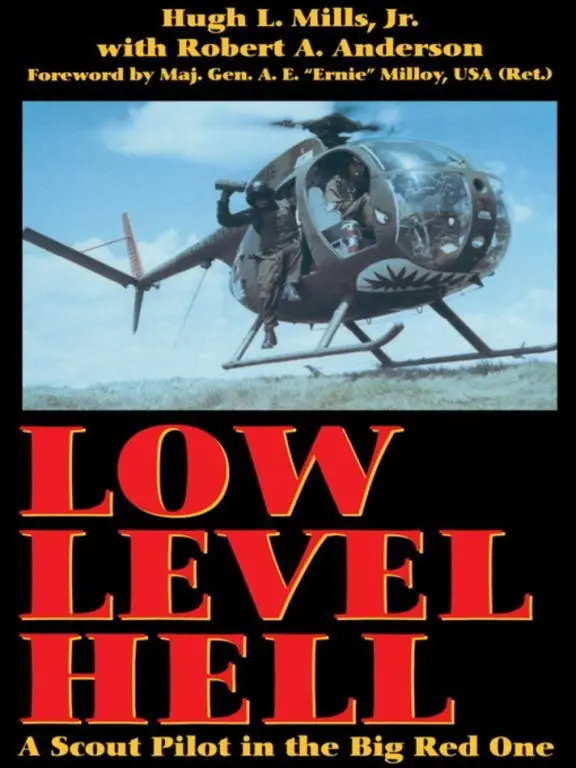
- Название:Low Level Hell
- Автор:
- Издательство:Presidio Press
- Жанр:
- Год:2009
- Город:Novato, CA
- ISBN:978-0-307-53792-8
- Рейтинг книги:4 / 5. Голосов: 1
-
Избранное:Добавить в избранное
- Отзывы:
-
Ваша оценка:
Low Level Hell: краткое содержание, описание и аннотация
Предлагаем к чтению аннотацию, описание, краткое содержание или предисловие (зависит от того, что написал сам автор книги «Low Level Hell»). Если вы не нашли необходимую информацию о книге — напишите в комментариях, мы постараемся отыскать её.
Low Level Hell — читать онлайн бесплатно полную книгу (весь текст) целиком
Ниже представлен текст книги, разбитый по страницам. Система сохранения места последней прочитанной страницы, позволяет с удобством читать онлайн бесплатно книгу «Low Level Hell», без необходимости каждый раз заново искать на чём Вы остановились. Поставьте закладку, и сможете в любой момент перейти на страницу, на которой закончили чтение.
Интервал:
Закладка:
“We’re not shitting you, One Three,” I said. “Oh, by the way, Dick said to tell you hello when I got back to Phu Loi.”
“You didn’t meet him. You really didn’t get to meet the president… come on, that’s ridiculous!”
“Sure we met him,” I answered. “We met him personally… got to shake his hand… even got our picture taken with him!”
That did him in. Davis spent the rest of that day kicking his butt for not getting to go on that mission… until he found out that Willis and I never got closer than a half kilometer from that VIP Huey, and couldn’t have recognized anybody on the ground if we had tried. Not even the president of the United States.
CHAPTER 10
COBRA DOWN
One Three (Bob Davis) was one of the most reliable scouts in the platoon. If he said he saw something on the ground, it was down there. He had good, quick eyes and could read sign like a book. But one day when we were working out of Lai Khe over the western Trapezoid, Davis ran across a bunker in an old enemy base camp that defied his best efforts to identify it.
When flying VRs out of the Trap, we generally took two scout teams to Lai Khe and used that as a base. On this day, Davis was out working an area northwest of FSB Lorraine when he radioed me at Lai Khe.
“Hey, One Six,” he said, “I’m on my way back in, but don’t you get off ‘til I get there. I need to talk to you. I’ve got something out here and I can’t figure it out. I’ll talk to you when I set down.”
A few minutes later Davis got in, and while his crew chief was refueling his ship, Davis trotted over to my bird. He told me he had found a bunker at X-Ray Tango 670420. “This thing is really big, probably twenty-five feet across and maybe forty feet long, a hell of a lot bigger than any VC bunkers we ever see.
“Besides,” he went on, “this thing’s got a corrugated tin roof on it—no camouflage, no logs and dirt on top like every other bunker we see.”
“Has it got gunports?” I cut in.
“Not exactly. There’re open spaces under the roof that look like observation slits, but no gunports. When I back the bird off to a side and try to look in under the tin, I can see something down in there, but I’ll go to hell if I know what it is!”
“OK,” I told him, “I’ll take a look. I’ll be out there in six to seven minutes and give you a call.”
When I got to the bunker, I saw what One Three meant. This thing was a hell of a lot bigger than anything we’d ever seen before, except for maybe a company or battalion bunker-type classroom. The enemy was known to have built some large bunkers where they were conducting training classes for their troops. They outfitted them with all sorts of American equipment and weapons that they had either stolen or picked up in the field, so their soldiers would have firsthand knowledge of our gear.
The enemy didn’t fight from bunkers like that, however; they used them just for training. And these classroom bunkers were never located in small base camps, only in the larger, major base camps that were more secure.
After a little discussion over the radio, Davis and I agreed that a classroom bunker was what we had. We were excited about finding it because it meant that we had probably located a big and important enemy base camp. But before calling for an air strike, the decision was made to bring in the ARPs to do some reconning. We needed to determine if the base camp was occupied or if there were any fresh traffic signs around, and what was going on with the big bunker.
By that time, One Three had come back up to join me for another look, and to mark the big bunker with smokes to guide the ARPs.
As Bob Harris’s aeroriflemen got on the ground and began to approach the strange-looking bunker, their Kit Carson scouts got very excited. They found that every approach to the bunker was heavily booby-trapped and mined. There was rio question now that the bunker was very important; otherwise Charlie wouldn’t have gone to all this trouble to protect it.
Davis and I listened in on FM while the Kit Carsons slowly moved in and began dismantling the booby traps. It took some time before the area was cleared and Harris’s men could get close to the tin-roofed pit.
Finally, Bob Harris’s voice boomed into our phones. “One Six, this is Four Six. You’re not going to believe what we’ve got down here in this friggin’ bunker!”
“Four Six, One Six. Whatcha got?”
“We got a tank, buddy!” he shouted.
“Say again, Four Six, what do you have?”
“We’ve got a tank—a tango alpha november kilo—down here, One Six!”
“You gotta be kidding me,” I ventured one more time.
“Believe it or not, you guys, there’s a complete tank underneath this tin roof. Looks like Charlie dug the pit, drove the tank into it, and then built the roof over it. I’m not fooling you!”
I had never seen an enemy tank in Vietnam. “What kind of a tank is it?” I asked Harris.
“I can’t tell,” he came back. “This thing is too heavily booby-trapped. I’m not going any farther until we can get some engineers in here.”
So our best guess had been completely out in left field. The bunker wasn’t an enemy classroom; it was a shed for a tank!
Later, some Civilian Irregular Defense Group (CIDG) troops and elements of our 16th Infantry were pulled into the area. They occupied the base camp and provided security while a couple of officers from the 11th Armored Cav were flown in to make an ID on the tank. It turned out to be an old American M-41 Walker Bulldog light tank. It was complete with its 76mm main gun, but its .30 coaxial and .50-caliber antiaircraft guns had been removed, probably to be used elsewhere. There were also some fifty-one rounds of main gun ammunition, two hundred rounds of .50 caliber, and seven hundred fifty rounds of .30-caliber ammunition still in the tank. This baby was really loaded for bear.
The tank had apparently been well maintained and appeared to be in excellent condition. The only questions left were where it had come from, and how it had ever ended up parked in an enemy jungle base camp.
These questions were ultimately answered when it was learned that the tank had originally been given to the ARVN forces by the United States early in the war. The enemy captured it from an ARVN cavalry outfit when their outpost at Ben Cat was overrun by the VC in May of 1966. The VC drove the tank away at that time and it hadn’t been seen since. Not until three years later, when Bob Davis spotted its unusual parking garage.
On 11 August a long-range reconnaissance patrol (LRRP) team went out of brigade HQ in Dau Tieng and was inserted up on the eastern edge of the Michelin rubber plantation. LRRP teams usually consisted of six to eight specially trained personnel. Their mission normally was to be inserted into the jungle, set up an observation post, and report enemy activities. They maintained concealed positions and absolute silence while in the field, except when executing an occasional ambush along an enemy trail. If they did execute an ambush, the LRRP unit had to be extracted immediately. As a general rule, the LRRPs tried to avoid heavy enemy contact because six to eight lightly equipped soldiers had no chance to prevail in a decisive encounter.
In this case, however, the LRRP team was hit and took casualties the moment they stepped off their Huey. That, in itself, was quite unusual because of the intensive planning that went into the missions and the precautions taken by the Huey in putting the LRRPs down into an LZ. The transporting Huey would always make several false insertions, landing and then taking off from several spots all around the area, so that enemy observers would not be able to pinpoint the real insertion location.
Читать дальшеИнтервал:
Закладка:
Похожие книги на «Low Level Hell»
Представляем Вашему вниманию похожие книги на «Low Level Hell» списком для выбора. Мы отобрали схожую по названию и смыслу литературу в надежде предоставить читателям больше вариантов отыскать новые, интересные, ещё непрочитанные произведения.












Обсуждение, отзывы о книге «Low Level Hell» и просто собственные мнения читателей. Оставьте ваши комментарии, напишите, что Вы думаете о произведении, его смысле или главных героях. Укажите что конкретно понравилось, а что нет, и почему Вы так считаете.