Ane Riel - Resin
Здесь есть возможность читать онлайн «Ane Riel - Resin» весь текст электронной книги совершенно бесплатно (целиком полную версию без сокращений). В некоторых случаях можно слушать аудио, скачать через торрент в формате fb2 и присутствует краткое содержание. Город: London, Год выпуска: 2018, ISBN: 2018, Издательство: Transworld Publishers, Жанр: Триллер, на английском языке. Описание произведения, (предисловие) а так же отзывы посетителей доступны на портале библиотеки ЛибКат.
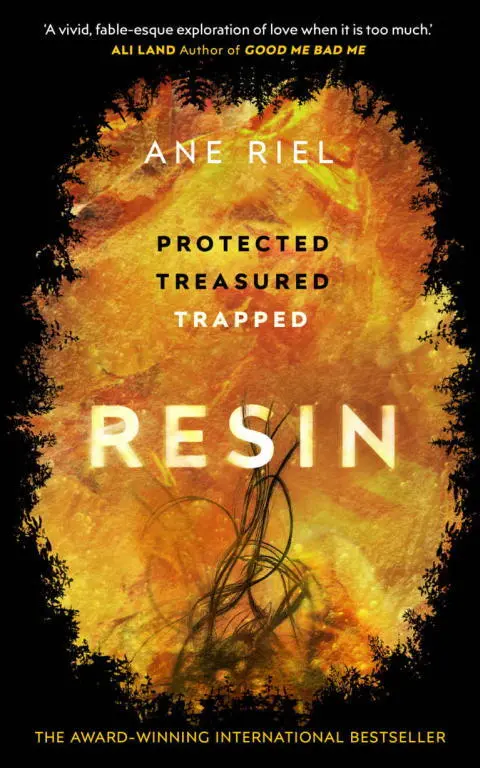
- Название:Resin
- Автор:
- Издательство:Transworld Publishers
- Жанр:
- Год:2018
- Город:London
- ISBN:978-0-857-52545-1
- Рейтинг книги:3 / 5. Голосов: 1
-
Избранное:Добавить в избранное
- Отзывы:
-
Ваша оценка:
Resin: краткое содержание, описание и аннотация
Предлагаем к чтению аннотацию, описание, краткое содержание или предисловие (зависит от того, что написал сам автор книги «Resin»). Если вы не нашли необходимую информацию о книге — напишите в комментариях, мы постараемся отыскать её.
But behind the boxes and the baskets crowding her dad’s workshop, Liv was hiding. This way, her dad had said, she’d never have to go to school; this way, she’d never have to leave her parents. This way, Liv would be safe.
Suspenseful and heartbreaking, Resin is the story of what can happen when you love someone too much – when your desire to keep them safe becomes the very thing that puts them in danger. For more information on Ane Riel and her books, see her website at
Resin — читать онлайн бесплатно полную книгу (весь текст) целиком
Ниже представлен текст книги, разбитый по страницам. Система сохранения места последней прочитанной страницы, позволяет с удобством читать онлайн бесплатно книгу «Resin», без необходимости каждый раз заново искать на чём Вы остановились. Поставьте закладку, и сможете в любой момент перейти на страницу, на которой закончили чтение.
Интервал:
Закладка:
As he walked back through the corridor he stopped for a moment and looked up at the small, rectangular basement window, which as usual was ajar, because fresh air was good for you. But surely no one could get in through that window. It was impossible.
The kitchen was closed for the next fortnight because, for the first time in twenty years, the chef had decided to take a proper holiday. He and his wife were taking a trip to the mainland but might return sooner than planned if they didn’t enjoy being away.
Given that the public bar and several of the first-floor guest rooms were in need of painting and various minor repairs, Roald decided to deal with that at the same time and pretty much close the pub in the meantime. He could carry out the work himself, thank God, which would bring the cost down. If he did find himself in need of help after all, he knew who to ask: the regulars were keen to return to their watering hole and were willing to don a boiler suit, if that was what it took. Especially if it also involved beer. Roald, however, had initially turned them down because he wanted some time to himself.
He made a quick decision. He took out a bag of flour and left it in the kitchen. Before he went to bed that night he would sprinkle a very fine layer across the floor. He could always sweep it up the next day. He intended to do this for the next few nights now that he knew that he was the only one going into the kitchen. Never mind the hassle of sweeping it up, Roald needed to know what was going on.
To add to the fun, he left a broken pencil, six liquorice pastilles and a deck of cards on the table. And he put exactly twenty-five slices of salami on a plate in the fridge, as well as ten slices of ham and five rings of red pepper.
The first five mornings he inspected the kitchen there were no signs of anything amiss. The sixth morning the pencil was gone, as were three of the pastilles, seven slices of salami, two slices of ham and one ring of red pepper. And there were footprints in the flour between the fridge and the kitchen table and the door to the basement corridor. Roald squatted down on his haunches and stared, baffled, at the clearest of the prints. It was very small. It had to be a child.
When he followed the footprints out into the corridor and below the window, the penny dropped. With a little bit of ingenuity, a child might be able to get in and out that way.
But a child? At night?
And why steal bubble wrap?
While Roald was repairing a strip of flooring in a first-floor guest room, his thoughts circled around the night-time visits. He wished more than anything that he could dismiss them as an innocent childish prank, but it was impossible. A child who regularly stole food and flour and saucepans and kitchen towels must be a child in need.
However, there were no children in need in Korsted. Judging by the size of the shoeprint, it was a young child. A boy, he imagined, without questioning why he thought so.
Roald wouldn’t claim to know every child in town, yet he knew quite a few and thought he had a fair idea of who they were and where they lived. Not one of them fitted the narrative playing out in the pub kitchen in any way. The baker’s three boys were fond of making mischief, but they couldn’t possibly be behind the break-ins. Roald’s reasoning was partly that he didn’t think any of them would be able to squeeze through the narrow window but, more importantly, he was convinced that they would have woken up everyone in the pub before they even reached the back of the house. The boys were much noisier than other people’s children. Even when they played sleeping lions, you had to press your hands over your ears. Whenever Roald encountered the three boys and the volume of the noise they made, he was overcome by spontaneous gratitude at being childless. He pitied the sixth-form teacher who would one day do battle with their hormones.
On the other hand, Roald’s heart nearly exploded with joy whenever he saw the police officer’s daughter. She was the loveliest, tiniest human being he knew. Always wore a dress and had her hair in plaits, as if she lived in a Little House on the Prairie, rather than a large, yellow-brick house in the middle of the high street. And her name was Laura; it was almost too good to be true. But apart from Roald’s heart, little Laura was unlikely ever to have stolen anything.
So who could it be? He went through the children one by one, and he couldn’t imagine any one of them sneaking out at night to go scavenging for food. Everyone had what they needed, as far as he was aware. And if they brought home stolen goods, surely their parents would start noticing eventually, for goodness’ sake.
Roald had always been very careful not to spread rumours in the public bar, and for that reason he had kept his knowledge of the thefts to himself. On one occasion he had asked some of the regulars in a roundabout way if there were people on the island suffering actual hardship, people who found it difficult to make ends meet.
The regulars had scratched their heads and suggested a slightly down-at-heel old woman with a pram who often wandered around the junkyard. And then there was the village idiot from the derelict farm with the Shetland ponies. And the three drunkards who lived in a lean-to near the ferry berth, or at least they had done so recently.
However, the regulars had soon agreed that none of these people were in dire need. The drunkards looked like they had enough to drink, the village idiot had enough to eat – at least, considerably more than his poor ponies. And it was believed that the old lady with the pram lived in a nice thatched cottage on the road to Sønderby – with a neatly trimmed box hedge and a fine little windmill in her front garden. Her husband was a retired bookkeeper. She was just crazy.
And then there was Jens Horder on the Head; now he had always been a bit odd and difficult to get close to. He drove around with a lot of junk, but that didn’t necessarily equal hardship, and he certainly had plenty of stuff at home. Nor was his wife thought to suffer serious hardship because, according to the postman, she had grown quite big. By the way, it was a very long time since anyone had seen her south of the Head.
Horder had a child, Roald remembered. Had . Everyone on the island knew that the poor girl had died at sea. Imagine being a parent struck by such a tragedy. It didn’t make it any less tragic that a few years earlier they had lost a baby, also in an accident. As far as Roald had gathered, it had been the girl’s twin brother. How cruel is fate allowed to be? So if you weren’t already a little odd, surely such experiences would make you so.
Roald remembered the sound of the helicopter restlessly criss-crossing the island and the shoreline during the search for the girl. If only they had found a body.
You would surely reach that point eventually. Wanting to find the body. At some stage, hope would die like a tired fire and become a small, glowing wish. It was better than nothing.
Imagine getting to that point.
The strip of flooring was in place, and he shifted back slightly to look at it. At least that wasn’t going anywhere.
So it couldn’t be Horder’s child, either. For obvious reasons.
Could it be a dwarf?
He dismissed the thought and got up. If a hungry dwarf with a penchant for bubble wrap lived somewhere on the island, he would undoubtedly have heard about it.
He needed a beer.
Roald flopped into the office chair and stared at the telephone. The curved black handle lay neatly across the cradle. The glossy Bakelite had grown a little dull from being held by sweaty hands, and the once so transparent dial had taken on a taupe hue of dust and dirt. Roald took a swig of his beer.
He knew that he ought to contact the police. He had built up an excellent relationship with the police officer, who was a sympathetic man, when you could get him off duty.
Читать дальшеИнтервал:
Закладка:
Похожие книги на «Resin»
Представляем Вашему вниманию похожие книги на «Resin» списком для выбора. Мы отобрали схожую по названию и смыслу литературу в надежде предоставить читателям больше вариантов отыскать новые, интересные, ещё непрочитанные произведения.












Обсуждение, отзывы о книге «Resin» и просто собственные мнения читателей. Оставьте ваши комментарии, напишите, что Вы думаете о произведении, его смысле или главных героях. Укажите что конкретно понравилось, а что нет, и почему Вы так считаете.