Ane Riel - Resin
Здесь есть возможность читать онлайн «Ane Riel - Resin» весь текст электронной книги совершенно бесплатно (целиком полную версию без сокращений). В некоторых случаях можно слушать аудио, скачать через торрент в формате fb2 и присутствует краткое содержание. Город: London, Год выпуска: 2018, ISBN: 2018, Издательство: Transworld Publishers, Жанр: Триллер, на английском языке. Описание произведения, (предисловие) а так же отзывы посетителей доступны на портале библиотеки ЛибКат.
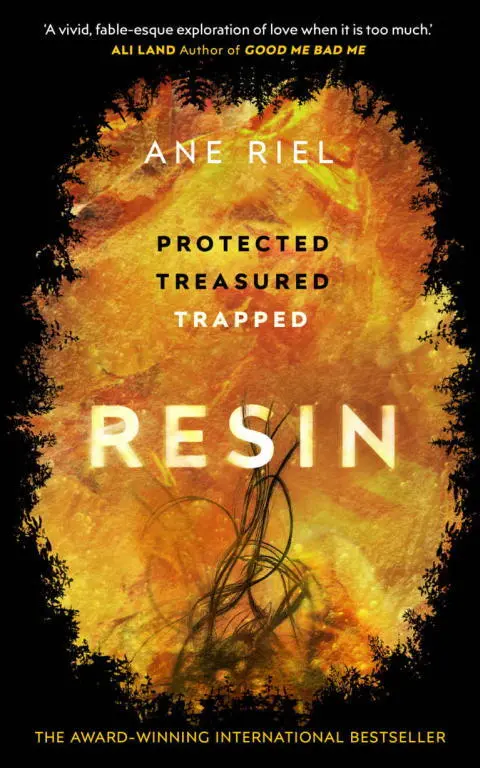
- Название:Resin
- Автор:
- Издательство:Transworld Publishers
- Жанр:
- Год:2018
- Город:London
- ISBN:978-0-857-52545-1
- Рейтинг книги:3 / 5. Голосов: 1
-
Избранное:Добавить в избранное
- Отзывы:
-
Ваша оценка:
Resin: краткое содержание, описание и аннотация
Предлагаем к чтению аннотацию, описание, краткое содержание или предисловие (зависит от того, что написал сам автор книги «Resin»). Если вы не нашли необходимую информацию о книге — напишите в комментариях, мы постараемся отыскать её.
But behind the boxes and the baskets crowding her dad’s workshop, Liv was hiding. This way, her dad had said, she’d never have to go to school; this way, she’d never have to leave her parents. This way, Liv would be safe.
Suspenseful and heartbreaking, Resin is the story of what can happen when you love someone too much – when your desire to keep them safe becomes the very thing that puts them in danger. For more information on Ane Riel and her books, see her website at
Resin — читать онлайн бесплатно полную книгу (весь текст) целиком
Ниже представлен текст книги, разбитый по страницам. Система сохранения места последней прочитанной страницы, позволяет с удобством читать онлайн бесплатно книгу «Resin», без необходимости каждый раз заново искать на чём Вы остановились. Поставьте закладку, и сможете в любой момент перейти на страницу, на которой закончили чтение.
Интервал:
Закладка:
Horder had managed to free the dinghy from the stones but lost it again when the current pulled it back out. He had called out for his daughter over and over, he said, and he had shone his strong torch at every inch of coastline. But there were no footprints anywhere to give him even the slightest hope that a child had crawled ashore.
He had searched the whole night until the sun had finally risen but had found nothing but a painfully familiar rabbit-skin glove which had been washed ashore. Again, the police officer could imagine the scene: how the glove had looked at the water’s edge, dark and glossy, like a drowned animal. The black despair that must have consumed Jens Horder when he realized its significance.
At last the desperate father had given up his search and returned to his wife with the devastating news. And now he was standing in front of the officer in his old coat, wrapped in woollen scarves and a shabby cap which looked like something from another age. His face was sunken and pale, and the beard he had grown in recent years made him look considerably older than he was. Not least because both his beard and hair had become remarkably grey this winter. The police officer had noticed it when he had bumped into Horder just after Christmas. People were even talking about it in the village store. How Jens Horder had suddenly gone grey.
And now this.
His prematurely aged hand clutched a small leather wristband.
‘We need to send a team out to look for her,’ the police officer said in a voice alien even to him. ‘I’ll contact the mainland right away. Perhaps they can dispatch a helicopter.’ He could see from the anguished face in front of him that his words did not rouse any hope at all.
‘I know my daughter,’ Jens Horder said. ‘If she was alive, I would know.’
He was a man who knew with absolute certainty that he had lost his only child. He hadn’t come to report her missing; he had come to report her dead.
When the police officer realized this he experienced a moment of all-consuming despair, as if he were the grieving father. He tried to pull himself together and play his role with the calm that it demanded. But everything he did or said felt wrong. In an attempt to show his sincere sympathy, he accidentally smiled. It was totally misplaced. It was a smile that had gone astray, and it was doomed because it didn’t belong in this moment. It had no place faced with this man and his tragedy.
But Jens Horder saw it.
‘Is your mother still visiting you, Jens? I saw her in town just before Christmas,’ the officer said, while the smile was dragged into a muddy darkness like a fawn in quicksand. His usually steady hand shook as he scribbled down a few lines on a notepad. Presumed drowned. North beach . With his other hand he tried to hide his trembling chin.
‘No, she went back. Before New Year.’
They dispatched a helicopter. People searched everywhere along the coast and in the forest, down along the Neck and the northern part of the main island.
Meanwhile, Liv Horder sat as quiet as a mouse in a locked skip behind her father’s workshop. Hidden behind cardboard boxes and tyres and newspapers and magazines and toys and sand bags and sacks of salt and sinks and blank cassette tapes and broken tools and gas flasks and crispbread and paint and bags of sweets and second-hand clothing and stacks of books and piles of blankets and things, all of which someone had lost and briefly wondered where it might have gone before soon forgetting all about it.
The parents didn’t want a memorial service. Nor did they want to be contacted by compassionate, nosy people from the main island, or a visiting psychologist who wanted to help them process their grief.
The parents wanted to be left in total peace.
And when the authorities’ envoy finally left, with a certain degree of horror at the messy conditions under which the poor girl must have lived, calm descended on the Head once more. Jens Horder put up a barrier where the gravel road took a sharp bend to the left before it continued a fair stretch up towards the house. And next to the barrier he put up a post box and a slightly bigger wooden box.
No entry read a new sign.
Not: No trespassing . Just No entry . That meant absolutely no one.
Should someone decide to defy the sign and follow the path around the barrier, they would soon encounter a tripwire, just one of many traps which from now on would safeguard the Horder family against unwanted intrusion.
These were bright months, despite the winter being as black as night. No one sent official letters about Liv having to start school. No one asked questions about the envelope from M which hit the bottom of their post box at the end of each month, regular as clockwork.
Jens Horder continued to pay any bills which, if left unpaid, would attract unwanted visitors. People noticed him when he turned up at the post office. Not because he drew attention to himself, he pretty much didn’t open his mouth, but because an unpleasant smell lingered about him, and his clothes bore evidence of not having been washed recently.
In the past people had admired his beautiful if rather odd shirts, which his wife made for him. And when the chemist’s mother, right up until her death, insisted that the back of Jens Horder’s shirt matched that of her missing slip, it was attributed to the old lady’s increasing dementia. After the tragic drowning accident, however, people only ever saw Jens Horder wear the same faded, grey sweater which was badly in need of washing and defluffing from pilling and wood shavings, just as his corduroy trousers were in desperate need of patching. He no longer changed his shoes but seemed comfortable in a pair of old rubber wellingtons whose shafts, for reasons unknown, he had rolled down, but he never bothered kicking the mud off before stepping inside. The cap was the same as always, even though a compassionate farmer had given him a new one.
Only the smell changed. And every time for the worse.
The two women who took turns being behind the till started arguing over who would serve him when they saw the pickup truck pull up outside. And customers in the queue started letting him walk straight to the front so that he would leave as quickly as possible. Anyone who didn’t know him would scrunch up their nose and wonder who this oddball was. And those who did know Jens Horder would exchange sad, knowing looks. Some tried to greet him amicably as he walked past, but they never got more than a fleeting smile in return, and in time the silent smile was reduced to a stare at the post-office floor.
The postman who served the Head also noticed the change. He had been used to delivering the sparse post to the house and would occasionally depart with a few letters from Jens or Maria to post, but now he had to settle for the impersonal post box down where the road bent. If there were parcels, a rare occurrence, he was to put them in the wooden box next to it. And if he had any messages for the couple, they should also be left in the box. A pen and paper had been left there for that very purpose.
The postman was especially intrigued by the barrier that had been put up, but as he himself was from a rather eccentric family on the main island, he didn’t regard the device as wholly out of the ordinary. He was convinced that he was the illegitimate son of the renowned and very handsome postmaster Nielsen from Korsted and not the ugly cross-eyed farmer who had raised him. That is to say, the postman had a certain appreciation for rumours as well as for family secrets.
He hoped that one day he would deliver a parcel that needed a signature to the Head so that he would have a reason to cross the barrier. As a postman, he was not only dutiful by nature – come rain, come shine, and so on – but also incurably nosy. Besides, he was desperate to bring news of the Horders to his friends at the pub. Not that he was a gossip, heaven forbid, but being able to imply that he knew something the others didn’t would make him very happy. It was a source of great anguish that he had not yet succeeded in convincing his friends, discreetly of course, of his real ancestry. He couldn’t say anything outright; it wasn’t the done thing. But he could hint, and he kept dropping hints, as if his life depended on it, without anyone so much as raising an eyebrow.
Читать дальшеИнтервал:
Закладка:
Похожие книги на «Resin»
Представляем Вашему вниманию похожие книги на «Resin» списком для выбора. Мы отобрали схожую по названию и смыслу литературу в надежде предоставить читателям больше вариантов отыскать новые, интересные, ещё непрочитанные произведения.












Обсуждение, отзывы о книге «Resin» и просто собственные мнения читателей. Оставьте ваши комментарии, напишите, что Вы думаете о произведении, его смысле или главных героях. Укажите что конкретно понравилось, а что нет, и почему Вы так считаете.