Ane Riel - Resin
Здесь есть возможность читать онлайн «Ane Riel - Resin» весь текст электронной книги совершенно бесплатно (целиком полную версию без сокращений). В некоторых случаях можно слушать аудио, скачать через торрент в формате fb2 и присутствует краткое содержание. Город: London, Год выпуска: 2018, ISBN: 2018, Издательство: Transworld Publishers, Жанр: Триллер, на английском языке. Описание произведения, (предисловие) а так же отзывы посетителей доступны на портале библиотеки ЛибКат.
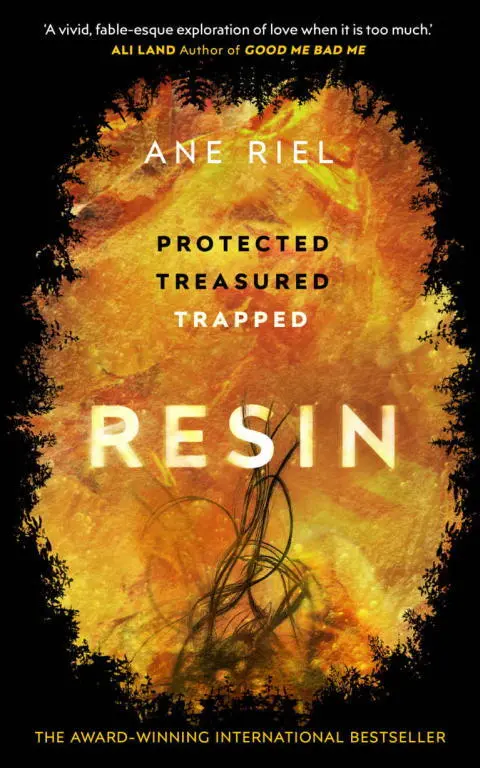
- Название:Resin
- Автор:
- Издательство:Transworld Publishers
- Жанр:
- Год:2018
- Город:London
- ISBN:978-0-857-52545-1
- Рейтинг книги:3 / 5. Голосов: 1
-
Избранное:Добавить в избранное
- Отзывы:
-
Ваша оценка:
Resin: краткое содержание, описание и аннотация
Предлагаем к чтению аннотацию, описание, краткое содержание или предисловие (зависит от того, что написал сам автор книги «Resin»). Если вы не нашли необходимую информацию о книге — напишите в комментариях, мы постараемся отыскать её.
But behind the boxes and the baskets crowding her dad’s workshop, Liv was hiding. This way, her dad had said, she’d never have to go to school; this way, she’d never have to leave her parents. This way, Liv would be safe.
Suspenseful and heartbreaking, Resin is the story of what can happen when you love someone too much – when your desire to keep them safe becomes the very thing that puts them in danger. For more information on Ane Riel and her books, see her website at
Resin — читать онлайн бесплатно полную книгу (весь текст) целиком
Ниже представлен текст книги, разбитый по страницам. Система сохранения места последней прочитанной страницы, позволяет с удобством читать онлайн бесплатно книгу «Resin», без необходимости каждый раз заново искать на чём Вы остановились. Поставьте закладку, и сможете в любой момент перейти на страницу, на которой закончили чтение.
Интервал:
Закладка:
It took only a moment.
Meanwhile, her granddaughter clutched an invisible hand in the darkness.
I didn’t know you were there until you told me so afterwards. You were never meant to be. I think I would have stopped him, had I known that you would be there.
But then, it had to be done. It was our only way out.
I want you to know, Liv. You are not an accomplice in this, even though you witnessed it. But I am. My only wish was to be left in peace. I knew what he had planned and I did nothing to stop him. More than anything it was my wishing which drove him to do it. He’s not a killer, Liv.
The Newcomer
The pub in Korsted was situated in the bend of the road right after the butcher’s and the undertaker’s when leaving the town heading north. It wasn’t a big pub, but it had been the only one on the island since the pub in the south was turned into a village store. During the winter months most of the rooms were empty, but loyal regulars made sure to keep the business alive. The islanders didn’t want to lose their local. Not only was the food in a class of its own, the pub also served a variety of other purposes: it was the social hub for this part of the island. It was where you would cycle to use the telephone, if you were one of those people who had yet to have one of their own installed, but more importantly people would stop by to catch up on the latest discreetly uttered gossip or to watch the colour television in the back room. Especially on Saturdays, when the pools football matches were on. Whenever the landlord rang the bell to signal that a goal had been scored in an English League game, it was time for another round in the public bar.
The pub held the locals together and the half-timber held the red bricks together, even those that were starting to crumble. The thatched roof was surely good for another twenty years or so, people thought. It was good straw. But the landlord really ought to clear the moss on the north side before the moisture got through.
Roald had taken over the pub when his uncle died suddenly of a heart attack. The opportunity had come as a godsend. When his aunt’s letter lay open on the kitchen table in his flat on the mainland, he realized that the feeling that had been nagging him these last few years could now be addressed. She was pleading with him, but without expecting a yes. I don’t want to sell the pub before I’ve asked you, Roald.
It was purely a question of daring: take the leap, man up, quit his job, pack his stuff, drive the car to the port and take the small ferry to a new life. He was divorced; they had no children and so there was no issue of custody. Sadly. If only his sperm had been more cooperative, he might have had both children and his wife today.
Now she was the mother of two small cherubs and irritatingly happy with a long-haired national treasure who sang sentimental songs about love and world peace. Roald hated himself for hating him.
As a desperate countermove Roald had decided to marry his job. He taught at a sixth-form college. It wasn’t a terribly happy arrangement, but it had the obvious advantage that it helped pass the time. In truth, his time was swallowed up by lesson planning, homework marking, staff meetings and inane gossip about the head teacher’s new house and his colleagues’ affairs with one another.
In time a small scab began to form on his wound.
If only it could get a little more air, this scab would harden and fall off. He was sure of it. And that was the thought which had been nagging him. He needed air. Any kind of air except the one inside the staff room or indeed anywhere in the whole town. That air was filled with smoke, and school routines ground him into the tarmac so that he had to drag himself, wheezing, up to his third-floor flat with his shopping bags and guilty conscience about the cigarettes and the whisky and all the lovely girls he didn’t have the energy to invite home and undress. He was starting to regret the time he never took, the delicious food he never cooked, the good books he never read, the dreams he could no longer remember. It was as if it had all come to nothing.
There was only one answer.
The ferry man with the grey beard scrutinized Roald discreetly when he declined the offer of a return ticket. His gaze also took in the car which was packed to the rafters with bags, a house plant, books, a ladder bookcase that had split and yellowed in the places where the books hadn’t kept the wood virgin pale. On the passenger seat was a box with a radio and a stack of cassette tapes. Was the driver of this car being categorized as the lost townie he was or deemed a potential asset for the island?
The ferry man gave nothing away. He merely took the money Roald passed through the car window and stuffed it into the black money belt he wore around his waist, then pointed backwards to the open deck with one hand and waved the next car forward with the other. The rust-red metal ramp rattled under the Simca when the new publican drove on board.
On a lonely road with crops as far as the eye could see, Roald stopped the car and got out. The warm island air hit him as if the sky had slipped into his lungs in that moment and inflated them. Soon the scent found its way to that place in his nose which harbours the strongest memories and tickled him with feather-light reminiscences of bicycle rides and cows and grown-ups skimming stones along the water’s edge and eating freshly caught fish as the sun went down.
He lay down on his back in a sea of barley and glowing poppies and took everything in. A lark singing energetically suddenly filled the world. He spotted it eventually, a tiny flickering dot suspended high up in the blue, carrying the whole sky.
They got used to him after a few years. The regulars.
They had turned up at the reopening, and his aunt’s heartfelt introduction of her nephew had evidently worked wonders. It was clear that she was well liked. And it was just as clear that the locals were sad that she was moving to the mainland to be near her family. But all those grandchildren exerted a strong pull, and her rheumatism was wearing her down. And she missed Oluf. People understood.
However, they didn’t understand why Roald arrived on his own. Divorce wasn’t done on the island. You stuck it out and slept in separate bedrooms if it made things easier and the house was big enough. You would never discuss personal problems openly, and certainly not with people you didn’t know well. Any talk of private matters would happen only between trusted friends, and confessions would limit themselves to a few muffled words that didn’t reveal too much.
For that same reason, it might not have been Roald’s smartest move to introduce himself as a divorced sixth-form teacher and talk frankly about how his open marriage hadn’t worked out. Perhaps he shouldn’t have revealed that he was thinking of writing a novel one day either, or that he was partial to skinny-dipping. But at the time he had thought it wise to lay his cards on the table from day one so that they knew what they were dealing with. Today he would have left most of it out.
Even so, the locals had given him a chance – mainly because they had nowhere else to meet. And in time they began to accept him. He even suspected a couple of them harboured considerable sympathy for him. It was mutual.
His undeniably best move on that first evening had been to assure them that everything would carry on as before, that the chef would be staying and that not as much as a comma would be changed on the menu, though the menu would, frankly, have benefited from having its punctuation revised and the ‘G’ replaced with a ‘C’ in ‘Gordon Bleu’. But irrespective of the spelling, the food was truly excellent, and the chef was a nice guy who didn’t say very much but one to whom laughter came easily. He turned out to be a distant cousin of Roald’s, but Roald didn’t realize it until the chef mentioned it the following year.
Читать дальшеИнтервал:
Закладка:
Похожие книги на «Resin»
Представляем Вашему вниманию похожие книги на «Resin» списком для выбора. Мы отобрали схожую по названию и смыслу литературу в надежде предоставить читателям больше вариантов отыскать новые, интересные, ещё непрочитанные произведения.










Обсуждение, отзывы о книге «Resin» и просто собственные мнения читателей. Оставьте ваши комментарии, напишите, что Вы думаете о произведении, его смысле или главных героях. Укажите что конкретно понравилось, а что нет, и почему Вы так считаете.