Ane Riel - Resin
Здесь есть возможность читать онлайн «Ane Riel - Resin» весь текст электронной книги совершенно бесплатно (целиком полную версию без сокращений). В некоторых случаях можно слушать аудио, скачать через торрент в формате fb2 и присутствует краткое содержание. Город: London, Год выпуска: 2018, ISBN: 2018, Издательство: Transworld Publishers, Жанр: Триллер, на английском языке. Описание произведения, (предисловие) а так же отзывы посетителей доступны на портале библиотеки ЛибКат.
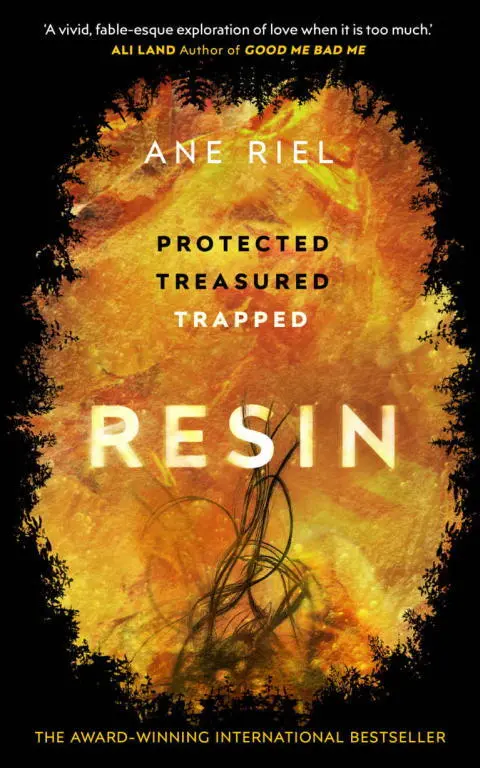
- Название:Resin
- Автор:
- Издательство:Transworld Publishers
- Жанр:
- Год:2018
- Город:London
- ISBN:978-0-857-52545-1
- Рейтинг книги:3 / 5. Голосов: 1
-
Избранное:Добавить в избранное
- Отзывы:
-
Ваша оценка:
Resin: краткое содержание, описание и аннотация
Предлагаем к чтению аннотацию, описание, краткое содержание или предисловие (зависит от того, что написал сам автор книги «Resin»). Если вы не нашли необходимую информацию о книге — напишите в комментариях, мы постараемся отыскать её.
But behind the boxes and the baskets crowding her dad’s workshop, Liv was hiding. This way, her dad had said, she’d never have to go to school; this way, she’d never have to leave her parents. This way, Liv would be safe.
Suspenseful and heartbreaking, Resin is the story of what can happen when you love someone too much – when your desire to keep them safe becomes the very thing that puts them in danger. For more information on Ane Riel and her books, see her website at
Resin — читать онлайн бесплатно полную книгу (весь текст) целиком
Ниже представлен текст книги, разбитый по страницам. Система сохранения места последней прочитанной страницы, позволяет с удобством читать онлайн бесплатно книгу «Resin», без необходимости каждый раз заново искать на чём Вы остановились. Поставьте закладку, и сможете в любой момент перейти на страницу, на которой закончили чтение.
Интервал:
Закладка:
And then it stopped.
It couldn’t do it. It was far too small to live.
Liv tried to cover Carl’s ears when their father screamed. He screamed like the owl, like the seagulls, like an injured hedgehog; like a deer screams for her lost fawn; like a badger screaming out of passion. He screamed like a child screams when he finds his father dead in the heather.
His scream was as high-pitched as it was possible to scream. A shade of white so blinding and luminous that it was like looking straight at the sun at noon and seeing nothing and everything at once.
But more than anything, Jens Horder screamed as he had screamed on the inside when he discovered his baby boy under the cradle with his skull broken – and at that moment realized the unbearable truth: that in his rush of expectant joy he had forgotten to put in the final screws, that he had failed as a carpenter and a father, that he had killed his own son. And that he would never ever be able to share that truth with his darling wife out of sheer terror of also losing her.
With numb hands he had picked up the side piece and screwed it in place so that no one could tell the two cradles apart. Then he had knelt in front of the lifeless child on the floor. He hadn’t touched it; he had stared at the small head in the scarlet halo and finally screamed at the top of his lungs until Maria had come running and picked up the child and held it tight and screamed in unison with him.
The back of Carl’s soft head had hit one of his father’s toolboxes as he fell. A merciless, steel-grey corner.
That was how Jens screamed now. And Liv recognized her father’s scream from an early memory.
Maria cried herself to sleep with soft vowels, and Liv washed her bloodstained mother while her father disappeared with the small, lifeless body.
‘It was a girl,’ was all he said as he walked away with the child in his arms.
Dear Liv
We should never have tried to give you a baby sister or brother, but your dad insisted. We must have two, he said. Just like before. Just like he had had a brother, and you should have had a twin brother. We would restore the balance, he said, and after all, I loved him. I still do.
But perhaps that child was never intended to live because we wouldn’t have been able to look after it, not properly. I was scared of giving birth to it. Scared of giving birth to it far too soon and scared that it would be alive when it got out of me. I was frightened of the child. Frightened for the child.
So I didn’t press it out as I should have; I tried to keep it inside me. I squashed it; perhaps it suffocated. Perhaps I killed my own child.
Or perhaps some children aren’t meant to live. Perhaps your baby sister wasn’t meant to live, and perhaps it isn’t my fault.
I don’t know, Liv.
I’ve also tried to come to terms with Carl’s accident, but I’ve failed. I suspected your granny because she was on medication, which made her unpredictable at times. It mostly made her drowsy, but she could also suddenly become irascible, wild. It frightened me, and deep down I think it frightened her as well.
Carl cried a great deal, and perhaps she couldn’t handle it. That’s what we think happened. She couldn’t handle his crying, and so she took him from the cradle, shook him, and dropped him on the toolbox on the floor. Perhaps she did it on purpose? We think so. That’s why it was a relief when she moved. And yet I cannot find peace because I will never know what really happened.
Perhaps it wasn’t her at all. What if it was me? I got so little sleep the days blurred into one another, and I too was sick in my own way, in my head. Exhausted and frightened for the future. At times I couldn’t remember what I had just done. Might I have hurt your twin brother?
If I had, could you forgive me?
All my love, MumThe Pub and the Child
When a brutal storm grabs a big chunk of coastline, people notice. Men with pipes and briefcases tucked under their arms stand in far too smart shoes for the harsh landscape, narrowing their eyes before taking measurements with too long strides in the morning fog and making notes about the direction of the wind and the risk of mudslide on lined notepads with blue ballpoint pens before they drive back and drink coffee. But when a peaceful sea decides to lick its way quietly through a headland, no one pays attention, at least not to begin with. Who would notice if a little sand disappears on each side? How the sea intrudes inconspicuously, adding inch after inch to itself.
The Neck grew a little slimmer every year, but only a little. The gravel road’s parallel universes of seaweed and stones and sand and box thorn diminished proportionally, but unobserved. And the gravel road itself was being suffocated by weeds that lived in very little danger of being flattened by cars. The most frequent traffic these days was a solitary child running off at night with an empty rucksack, only to return home with a full one.
Roald scratched his head as he studied the contents of the fridge. He was pretty sure there had been two foil trays of Dauphinoise potatoes rather than just one. He was also fairly sure that he had put a bottle of fizzy lemon pop near the front of the shelf before going to bed. He looked about him. There were no other signs to indicate that someone had been in the pub kitchen.
His initial conclusion was that one of the guests must have sneaked down to the kitchen and helped himself to a late-night snack. But it still didn’t add up. This had become a regular occurrence, every few days at times, and in between he would notice that things other than food had gone missing. Odd things. One morning he had searched in vain for a deck of cards he was certain he had left on the kitchen table the night before; another time, the chef discovered that a saucepan was missing. By now there had been countless incidents, all of which defied explanation.
Now, the chef himself might be the culprit, but it seemed highly unlikely. He simply wasn’t like that. Roald couldn’t think of a more trustworthy man than his culinary-skilled distant cousin, and he refused to believe that the man would jeopardize his trusted position through impulsive and insignificant petty thefts.
Besides, the chef reacted with total composure whenever he discovered that something was missing. He simply laughed it off. He laughed everything off. Then again, to claim that he was in complete control of his kitchen and the items in the stock room would be something of an exaggeration. In fact, the chef probably suspected Roald of sneaking down at night to scoff the leftovers. When he hinted at this with a glint in his eye, Roald would protest vociferously, but he couldn’t help laughing too, and that was always the end of that.
But then who could it be? Who on earth would want to help themselves to leftovers and decks of cards and ballpoint pens and fizzy pop and tinned tuna from the stock room? And how did they do it?
That night there had been no guests staying over at the pub so the possibility that the thief might be a guest was now completely eliminated.
Roald left the kitchen and walked down the short back stairs to the small corridor that led to the stock room. It took him some time to realize that some rolls of kitchen towel, a few packets of crispbread and crackers, several tins of tomatoes, some sausages, possibly a jar of honey and definitely a large bag of biscuits… and some bubble wrap were missing. Yes, there had definitely been a lot of bubble wrap in the big cardboard box in which the new trouser press had been delivered. And now it was gone.
Bubble wrap? Who would nick that? The gloves that Roald wore whenever he handled frozen goods were also gone.
Читать дальшеИнтервал:
Закладка:
Похожие книги на «Resin»
Представляем Вашему вниманию похожие книги на «Resin» списком для выбора. Мы отобрали схожую по названию и смыслу литературу в надежде предоставить читателям больше вариантов отыскать новые, интересные, ещё непрочитанные произведения.











Обсуждение, отзывы о книге «Resin» и просто собственные мнения читателей. Оставьте ваши комментарии, напишите, что Вы думаете о произведении, его смысле или главных героях. Укажите что конкретно понравилось, а что нет, и почему Вы так считаете.