Timothy Johnston - The Current
Здесь есть возможность читать онлайн «Timothy Johnston - The Current» весь текст электронной книги совершенно бесплатно (целиком полную версию без сокращений). В некоторых случаях можно слушать аудио, скачать через торрент в формате fb2 и присутствует краткое содержание. Город: Chapel Hill, Год выпуска: 2019, ISBN: 2019, Издательство: Algonquin Books of Chapel Hill, Жанр: Триллер, на английском языке. Описание произведения, (предисловие) а так же отзывы посетителей доступны на портале библиотеки ЛибКат.
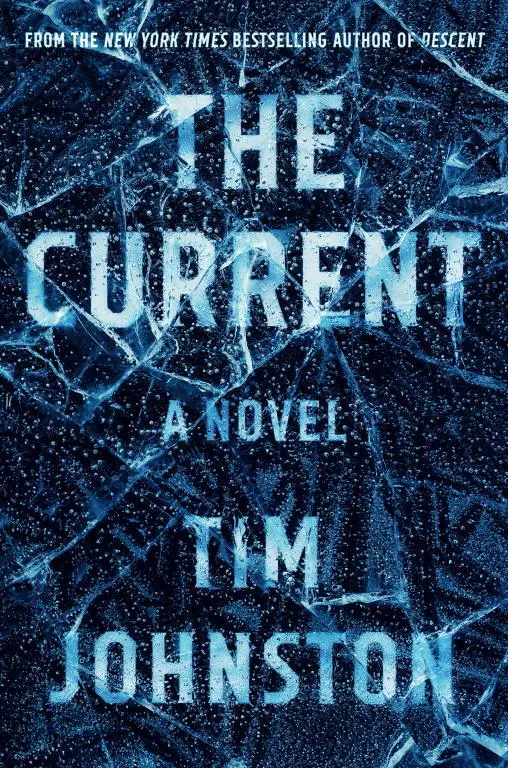
- Название:The Current
- Автор:
- Издательство:Algonquin Books of Chapel Hill
- Жанр:
- Год:2019
- Город:Chapel Hill
- ISBN:978-1-61620-889-9
- Рейтинг книги:4 / 5. Голосов: 1
-
Избранное:Добавить в избранное
- Отзывы:
-
Ваша оценка:
The Current: краткое содержание, описание и аннотация
Предлагаем к чтению аннотацию, описание, краткое содержание или предисловие (зависит от того, что написал сам автор книги «The Current»). Если вы не нашли необходимую информацию о книге — напишите в комментариях, мы постараемся отыскать её.
The Current — читать онлайн бесплатно полную книгу (весь текст) целиком
Ниже представлен текст книги, разбитый по страницам. Система сохранения места последней прочитанной страницы, позволяет с удобством читать онлайн бесплатно книгу «The Current», без необходимости каждый раз заново искать на чём Вы остановились. Поставьте закладку, и сможете в любой момент перейти на страницу, на которой закончили чтение.
Интервал:
Закладка:
“Glass of water?” she said.
“Water, OK, sure.”
“Sit down, if you want.”
In the kitchen she ran the tap into two clean-looking tumblers and carried them back to the living room and handed him one where he sat on the sofa. He was sitting forward, forearms on his knees. She knew he’d picked up the revolver and checked it. If there’d been bullets, someone had kept them.
She sat in the armchair opposite him and crossed her legs.
“How’s that arm doing?” he said.
She lifted the cast from her lap. “Itches like crazy.”
“Bet it does. My dad fell off a ladder once and broke his shinbone. He had one of those backscratcher things he’d wiggle on down there.”
She raised the tumbler and drank, lowered it again. Outside in the dusk Mr. Larkin scraped the powder from his drive. He’d scrape one way across the drive, pause, scrape back the other way.
Moran looked around the room again, and she looked too: the hodgepodge of wooden chairs and little tables. The small walnut dining table where he sat to pay his bills, do his taxes. Stacks of unopened envelopes there. An electric printout calculator. An ashtray. A coffee mug. Vials of prescription pills. She followed his gaze to the fireplace mantel, where paperbacks stood racked between two leaping bass that were the cast-iron bookends she’d gotten him one Christmas. Antiques, supposedly. The framed photographs to either side of the books: her father and her mother, both young, on their wedding day. Herself as a newborn in her mother’s arms, still at the hospital. She and her father in Granddad’s johnboat on the river, her first fish, a perch, swinging from her pole. Her high school graduation picture, which she hated.
Moran’s eyes came back around to the coffee table and the items lined up there. He sat staring at them. Then he drank from his water and looked for something to set the tumbler on and finally set it on the table, matching it to one of the rings already there. He cleared his throat and looked up at her.
“Audrey, I just want you to know I thought the world of your dad. He was a good lawman and a good man. When I lit out of here he didn’t hold any kind of grudge about it like some other man might have, and he didn’t say anything against me to Sheriff Gaines down in Iowa either, and I’ll never forget that.”
She said nothing, and Moran went on talking, but she was thinking about a time years ago when she’d run from her father in tears, because he’d snapped at her… and he’d snapped at her because she’d asked why Deputy Moran was leaving the department and he’d said it was none of her concern, which only made her more curious, of course, pestering him until finally he turned on her and said, What did I just say? and she’d run from him in tears. Because she was his deputy too, and she understood then that that was just for play and there were things she would never know about—grown-up things. Real sheriff and real deputy things.
“…so I just want you to know,” Moran was saying, “you need anything, and I mean anything, you give me a call.” He unsnapped a breast pocket flap and plucked out his card and set it on the table and snapped the button again. She saw the bright gold star of the card.
“Thank you, Sheriff. I will.”
He laced his fingers in the space between his knees and seemed to study them. Then he said, “Shoot, there’s just no good way to get into this, especially so soon after…”
“I’m all right, Sheriff,” she said. “You drove all the way up here so you might as well just say it. Is it about those boys?”
“It is. It surely is. It’s about one of them anyway.”
She waited. He looked up.
“Did you know your dad headed down there, two nights ago?”
“Down where?”
“Iowa.”
She shook her head.
“Well, he did. He went looking around, asking questions at that gas station, and then he spent the night in a motel and in the morning he went looking around some more.”
She watched him. Waiting.
“And so now I gotta ask you, Audrey: Did you tell your dad anything about that night, about those boys, that you didn’t tell me? Anything you might’ve remembered after I left the hospital?”
She knew what he was after and she didn’t pretend she didn’t. She told him about the backscratcher, and how she thought she’d scratched the one boy’s face with it.
“You said at the hospital you never got a good look at their faces,” he said. “That it was too dark.”
“It was. But I felt it when I got him. And he yelled, and yanked it out of my hand. So I knew I got him.”
He was watching her face, her eyes, her hands. As he would anyone he was questioning.
“Did he find it?” she said. “When he went down there?”
“No. It would seem not. If he had, he might not have shot that boy through the hand.”
Audrey said nothing. She knew at once that it was true.
Moran raised his own right hand and pointed at the palm with his opposite forefinger. “Right there. Close range. Then left him bleeding in a parking lot.”
She looked at the old .38 on the coffee table.
“He didn’t use that,” Moran said. “It was the boy’s own .45.”
Audrey was silent, staring at the .38. “Was it him?” she said at last.
“Was it who?”
“That boy. From the gas station.”
Moran watched her with those eyes of his. “How am I supposed to know that?”
She stared at him. She couldn’t think. “I mean—didn’t you talk to him?”
“I did. Talked to him this morning, but all he said was he wasn’t talking to any more cops without his lawyer. Said he knew who shot him and wanted him arrested. That’s why I was on my way up here.”
“To arrest him?”
“No, I couldn’t do that up here—I’d have to go through the whole extradition process and…” He waved his hand. “I was coming just to talk to him, to see how he wanted to go about it.”
Audrey began to get up but then sat down again. Her legs wouldn’t do it.
Moran stood and collected the tumbler from her and walked into the kitchen. The tap ran, and he returned and handed her the glass and took his seat again on the sofa.
“Do you mind if I hold on to this?” He’d just finished thumbing through the little black notebook and he was holding it up.
“Will I get it back?”
“Of course. I’ll make copies of anything of relevance.” He slipped the notebook into the same breast pocket from which he’d taken his card.
Audrey took another long drink and when she was finished he said, “I know he was sick, Audrey. I mean, I know the cancer had come back and that it was… that there was nothing…” He looked at the coffee table and shook his head. “I think between that and what happened to you, and to Caroline Price… Well, heck. I think it pushed him over some kind of edge.”
He stopped. He seemed to study the remaining items on the table one by one: The watch. The Zippo lighter. The gun. She would like to have it in her hand, she realized—the good familiar weight of it. The silver finish rubbed off the forward edge of the cap by his thumb, and by hers too, flicking the cap in play for as long as he’d let her: the sound and the feel and the sparky smell of the flintwheel, the burning fuel.
“You remember that girl ten years back who was pulled out of the river up here?” Moran said. “Holly Burke?”
“Yes.”
“I guess it’s the same river, isn’t it?”
She waited.
“Well. We had a boy we knew did it sure as shit smells like shit—excuse my language. We had him in the same bar as her on the same night, and we had him drunk-driving in the same park later, Henry Sibley Park, where she went into the river. We had everything but hard evidence and a living witness, so what did we do?”
Читать дальшеИнтервал:
Закладка:
Похожие книги на «The Current»
Представляем Вашему вниманию похожие книги на «The Current» списком для выбора. Мы отобрали схожую по названию и смыслу литературу в надежде предоставить читателям больше вариантов отыскать новые, интересные, ещё непрочитанные произведения.


Обсуждение, отзывы о книге «The Current» и просто собственные мнения читателей. Оставьте ваши комментарии, напишите, что Вы думаете о произведении, его смысле или главных героях. Укажите что конкретно понравилось, а что нет, и почему Вы так считаете.