Timothy Johnston - The Current
Здесь есть возможность читать онлайн «Timothy Johnston - The Current» весь текст электронной книги совершенно бесплатно (целиком полную версию без сокращений). В некоторых случаях можно слушать аудио, скачать через торрент в формате fb2 и присутствует краткое содержание. Город: Chapel Hill, Год выпуска: 2019, ISBN: 2019, Издательство: Algonquin Books of Chapel Hill, Жанр: Триллер, на английском языке. Описание произведения, (предисловие) а так же отзывы посетителей доступны на портале библиотеки ЛибКат.
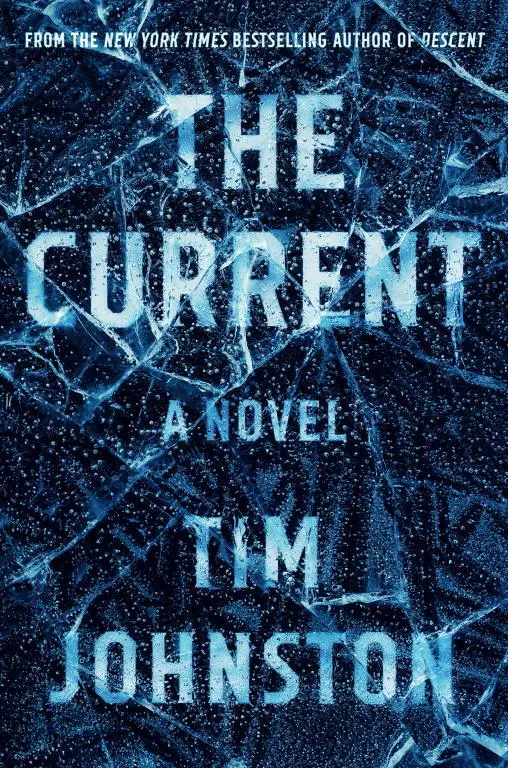
- Название:The Current
- Автор:
- Издательство:Algonquin Books of Chapel Hill
- Жанр:
- Год:2019
- Город:Chapel Hill
- ISBN:978-1-61620-889-9
- Рейтинг книги:4 / 5. Голосов: 1
-
Избранное:Добавить в избранное
- Отзывы:
-
Ваша оценка:
The Current: краткое содержание, описание и аннотация
Предлагаем к чтению аннотацию, описание, краткое содержание или предисловие (зависит от того, что написал сам автор книги «The Current»). Если вы не нашли необходимую информацию о книге — напишите в комментариях, мы постараемся отыскать её.
The Current — читать онлайн бесплатно полную книгу (весь текст) целиком
Ниже представлен текст книги, разбитый по страницам. Система сохранения места последней прочитанной страницы, позволяет с удобством читать онлайн бесплатно книгу «The Current», без необходимости каждый раз заново искать на чём Вы остановились. Поставьте закладку, и сможете в любой момент перейти на страницу, на которой закончили чтение.
Интервал:
Закладка:
“You let him go.”
“We let him go. Made a whole lot of folks just mad as hell too. Her father most of all. As you can imagine. Gordon Burke. Who has not said one decent word about your dad or any of us ever since, I can promise you that.”
Audrey looked down into the water of her glass. When she looked up again Moran was watching her. He said, “I don’t believe your dad ever got over that, Audrey. Letting that boy go. Never making an arrest. No trial. That boy walking free today, doing God knows what. I think your dad had that on his mind too, when he drove down to Iowa. I mean he was thinking about you, of course, and Caroline Price. But he was thinking about that other girl too, and it all just…” He shook his head again. Looking at her as if she might explain it to him. She said nothing.
“I don’t even know what to say about it,” he said. “It just beats everything. On top of kidnapping and shooting that boy, he has gone and screwed the pooch on any kind of case we might have made against him for your assault, and maybe even Caroline’s death. The whole thing’s just a great big cluster-mess, that’s all. I don’t even know how I’m going to explain it to that girl’s family down in Georgia.”
He fell silent. Mr. Larkin had finished with his driveway, or else stood as before, watching, listening. Her father’s watch lay ticking on the table. Then, like an old memory, she remembered the hospital—was it just that morning? Waiting for him in the wheelchair. The long walk through the halls. His body under the sheet. So thin. So gray…
“How did he find him?” she said, and her voice seemed to snap the sheriff out of his own thoughts, whatever they were. He drew a sharp breath through his nostrils and shook his head again.
“Looks like he just went driving around to the local garages, looking for some young grease monkey with scratches on his face. Found one. Waited to get him alone. Interrogated him. Shot him through the hand.”
“But he had the scratches on his face?”
“He had scratches on his face,” said Moran. “And a story for how he got them.”
He watched her and she could see the anger in his eyes at all her father had done to his investigation. To his authority. To even more than that. Leaving him nothing but this daughter, this girl, to answer for it.
He sat on the edge of the sofa, fingers laced again and mashing his palms together as if to crack a nut.
“What’s his name?” she said. “The boy with the scratches.” She wanted the notebook back, suddenly. She could see its shape in the breast pocket of his shirt. She knew he would not give it back now.
“I think I’d better not give you a name just yet,” he said.
She thought a moment. “Because I might look him up online.”
“Yes, ma’am. And that could bias you one way or another.”
She tried to see him again: his face under the shadow of his cap. She could smell—taste—his hand over her mouth, the grease. His hot beer breath. The burning taste of pepper spray. But she could not see his face. She saw the other one rolling around on the concrete, hands to his face.
“Can you say if he has a friend named Bud?” she said.
“No, I can’t.”
She watched him. “Can’t or won’t?”
“Can’t. I have not found one person so far who admits to knowing any young man by the name of Bud.” He opened up his hands, palms to the ceiling, brought them together again. “Bud as in ‘buddy,’ it looks like.” He watched her. She saw him take her in as if he’d not looked closely before. He said, “Did they say anything else before then—before that moment outside the ladies’ room?”
Something fluttered in her chest. She held his gaze. “I’m not sure I understand the question.”
“I’m asking did you talk to them before—in the parking lot? Something like that?” Moran the sheriff, sitting there. Watching her with those eyes.
“I’d have told you if I had,” she said.
“Maybe you forgot. Like the backscratcher.” He gave a kind of smile, but it came too late.
“I didn’t talk to those boys at all, Sheriff.”
“It’s no crime if you did. Girls talk to boys, boys talk to girls.”
She stared at him.
“I’m just saying,” he said, “it would make more sense if there’d been some kind of… interaction, before they just showed up outside that ladies’ room.”
She blinked at the sting in her eyes but she would not cry.
“There was no interaction, Sheriff. They just showed up.”
He raised one hand and said, “All right. I’m just making sure, that’s all.”
She watched him. Then she looked away, toward the window. Night had fallen, and the room was repeated in the glass like a painting in its frame, their two seated figures the painting’s subject: Moran sitting there looking at her, she looking out at the viewer, who was herself.
She turned back to him. “Is there anything else, or…?”
He said nothing. Then he sat up straighter and said, “Matter of fact there is,” and popped the snap on the other breast pocket of his shirt and wiggled something free—a short stack of white rectangles—and sat squaring them up in his hands as if about to deal them out. And so he was. “By the book I should bring you back to the station for this,” he said, “with witnesses other than myself. But under the circumstances…” He dealt out the rectangles; they were pictures, printed on photo stock, and he placed them one at a time on the coffee table all in a row, parallel to her father’s things and oriented so that she didn’t have to do anything but lean forward and look.
“I just need you to look at these real careful, real slow, and tell me if you think any one of them is that boy who grabbed you.”
Five pictures, and they made a poor hand: five young men of about the same age, all poorly shaven, blond to brown hair, eyes of all colors and all staring into the camera with the same dumb criminal emptiness.
“What’s the tape on them for?” It was a little square of masking tape stuck to each of the pictures in the same place.
“One of these boys has scratches on his face. Or what’s left of them. So I had to put tape on all of their pictures. Just try to ignore that. Look at their features. Their eyes.”
She studied them one at a time, right to left. She wanted so badly to peel off the pieces of tape, to see the face that bore the scratches.
“Anything?” he said.
“It was dark,” she said.
“Take your time.”
She looked again, left to right, while her heart slid. She’d seen him so clearly, or believed she had, when she was in the hospital bed—when she’d seen him through Caroline’s eyes. Now she waited for one of the faces, one of the sets of eyes, to bring that vision back, to put the boy’s face together with the feel and the taste of his hand over her mouth. Instead, the more she stared at the faces in the pictures the more that vision, that clarity, slipped away from her, and when she closed her eyes it was not to give up but to hold on, to keep that feeling of Caroline—of being Caroline—alive in her heart.
Moran said her name. And said it again before she opened her eyes.
“Nothing?” he said.
She shook her head.
“You’re sure?”
She would not look at the pictures again. “Yes.”
He sat watching her. Then he leaned forward and swept the pictures into a stack again and fit them back into his pocket and snapped the button to. He tapped his forefinger on his business card where it lay on the table. “You call me, Audrey. I mean it. Anything you need.”
He stood then from the sofa and picked up his jacket and hat, and she stood to see him out and it was all a dream: the two of them in that living room, her father’s gun on the coffee table, even her voice when she heard it ask him what would happen next.
Читать дальшеИнтервал:
Закладка:
Похожие книги на «The Current»
Представляем Вашему вниманию похожие книги на «The Current» списком для выбора. Мы отобрали схожую по названию и смыслу литературу в надежде предоставить читателям больше вариантов отыскать новые, интересные, ещё непрочитанные произведения.




Обсуждение, отзывы о книге «The Current» и просто собственные мнения читателей. Оставьте ваши комментарии, напишите, что Вы думаете о произведении, его смысле или главных героях. Укажите что конкретно понравилось, а что нет, и почему Вы так считаете.