Timothy Johnston - The Current
Здесь есть возможность читать онлайн «Timothy Johnston - The Current» весь текст электронной книги совершенно бесплатно (целиком полную версию без сокращений). В некоторых случаях можно слушать аудио, скачать через торрент в формате fb2 и присутствует краткое содержание. Город: Chapel Hill, Год выпуска: 2019, ISBN: 2019, Издательство: Algonquin Books of Chapel Hill, Жанр: Триллер, на английском языке. Описание произведения, (предисловие) а так же отзывы посетителей доступны на портале библиотеки ЛибКат.
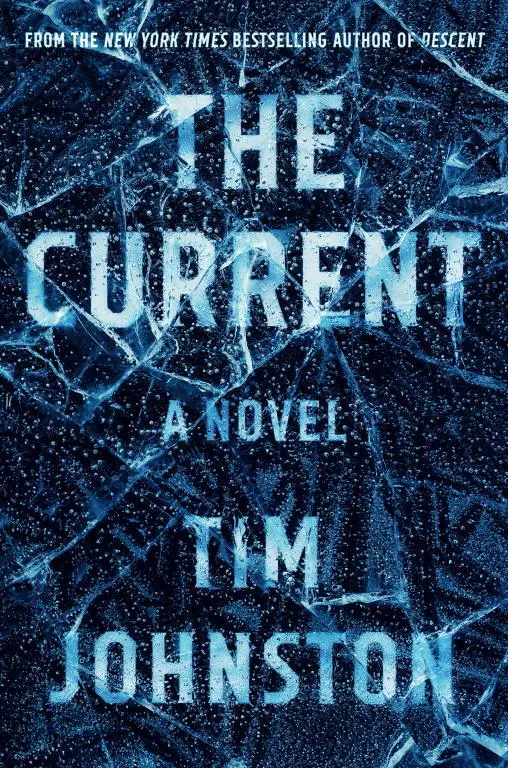
- Название:The Current
- Автор:
- Издательство:Algonquin Books of Chapel Hill
- Жанр:
- Год:2019
- Город:Chapel Hill
- ISBN:978-1-61620-889-9
- Рейтинг книги:4 / 5. Голосов: 1
-
Избранное:Добавить в избранное
- Отзывы:
-
Ваша оценка:
The Current: краткое содержание, описание и аннотация
Предлагаем к чтению аннотацию, описание, краткое содержание или предисловие (зависит от того, что написал сам автор книги «The Current»). Если вы не нашли необходимую информацию о книге — напишите в комментариях, мы постараемся отыскать её.
The Current — читать онлайн бесплатно полную книгу (весь текст) целиком
Ниже представлен текст книги, разбитый по страницам. Система сохранения места последней прочитанной страницы, позволяет с удобством читать онлайн бесплатно книгу «The Current», без необходимости каждый раз заново искать на чём Вы остановились. Поставьте закладку, и сможете в любой момент перейти на страницу, на которой закончили чтение.
Интервал:
Закладка:
“With what?”
“With the case.”
“Well, we’ll finish our investigation, our interviews, and then we’ll take everything to the county attorney and see what she says.”
“What might she say?”
“She might say let’s prosecute this SOB, for the assault at least. Or she might say we haven’t got enough even for that.”
“I might know him if I saw him in person,” Audrey said.
“Might,” said Moran.
She opened the wooden door, and he pushed open the stormdoor and put on his hat. The snow had stopped. Mr. Larkin was gone, the light of his television playing now on the living room curtains and Larkin himself standing in the dark of some other room watching to see would that Iowa sheriff ever leave that house. What did he imagine was going on in there? Did he even know her father had died?
“And what about my father?” she said, and Moran paused with one boot down on the first step.
“What about him?”
“I mean what he did down there.”
Moran adjusted his hat. He squinted up at something in the night sky. “Well,” he said, his breath smoking. “They might pursue monetary compensation, I suppose. But as for criminal charges, under the circumstances…” He didn’t finish, and didn’t have to.
“Thank you, Sheriff,” she said, and Moran nodded.
“You have my card,” he said.
“Yes, sir. I have your card.”
28
AND THEN IT was Sunday—a long day of sobbing and sleeping. Of dreaming and waking and remembering and sobbing again. Of finding him in everything she touched and smelled, from the paperbacks on the mantel to the stained coffee mug in the sink to the rounded cake of soap in the shower.
Grandma Sutter and her husband, Kent, spent most of the day trying to take care of her, but then Kent told her they couldn’t stay, he had to get his wife away from this house for a while, just too many reminders of her son… and they were not gone fifteen minutes before the other son, Uncle John, arrived—but he was so restless and talky, so determined to keep her distracted, that finally she pretended to fall asleep on the sofa, then fell asleep for real, and when she woke up he was gone.
Others came too: the same mothers of childhood friends who’d visited her in the hospital, bringing this time casseroles, bringing lasagna, Just put it in the oven at three-fifty, sweetie, or do you have a microwave…?
Lastly came another lawman, the man who’d replaced her father when he retired: Sheriff Wayne Halsey. The sheriff looking so awkward on the porch that she didn’t even bother inviting him in; she thanked him for checking on her, promised to call if she needed anything, watched him walk back to his cruiser, waved when he waved, then shut the wooden door again and locked it.
The sofa was still warm, and she lay staring at her father’s things on the coffee table, listening to the ticking of his watch, and when she woke again it was morning—Monday morning. The weekend was over.
SHE’D REMEMBERED TO charge his phone, at least, and the first thing she saw when she lifted it was his face, next to hers—the two of them red-faced and smiling in their black knit caps.
Audrey, this is a bad idea… Her father, the sheriff, mincing out onto the ice in the rented skates. He was from Illinois and had not played hockey as a kid, and had not been on any kind of skates since he was ten years old, he said.
It’s like riding a bike , she said.
Have you ever, in your life, seen me on a bike?
She wiped her eyes, her face. Then she found the number she was looking for, and a woman answered the phone and put her on hold—no music, just fizzy silence. The phone smelled like smoke. The woman came back and told her yes, he could see her at ten thirty this morning, would that be all right?
She was in the shower a long time, lathering and scrubbing and shaving all one-handed, a plastic bag rubber-banded over the cast, and afterwards she found socks and underclothes in her dresser and she stepped into a pair of old jeans once too tight and now too loose and she took an old flannel shirt from the hanger it had hung on untouched for maybe three years, and lastly she brushed out her hair and bound it tightly in a damp ponytail at the back of her head.
The canvas jacket was too big and too heavy and it reeked of smoke, but her cast slipped right into it, and she loved it. She stood outside on the porch, squinting in the sunlight and rooting up the sunglasses from the breast pocket and putting them on, the glasses loose at her temples and heavy on her nose. Dark- green tint. The aviators he’d worn for years.
The Ford sat where it always sat. A male nurse from the hospital had driven it while another nurse, a woman, had driven Audrey in a little car that stank of the nurse’s gym bag, both nurses making sure she got inside all right, that she would be all right—could they get her anything, was she sure they couldn’t call someone?—before leaving her alone in the house at last.
Now, climbing into the Ford, she thought she’d cry again from the smell of it—the smokiness, yes, but also something beneath that, or within it, some old sheriffy scent or combination of scents that was the very smell of—what? Of safety.
She didn’t cry. She scooted the seat forward, buckled up, made an adjustment to the rearview mirror, and put the Ford in gear, and with each of these movements her father’s watch slipped and swung on her wrist like a heavy bracelet.
It had snowed but not enough to bring out the plows, and the river when she crossed it was snowy at its bends but clean at its center—glassy black ice maybe a foot thick, maybe more depending on the currents underneath, how fast or slow, and was there an equation for that, such as the rate of descent for a projectile depending on its weight and its speed? For ice thickness you’d have to figure temperature too. And the temperature over how many days. The ice on her river—their river, the Lower Black Root—had been thick but not thick enough. The current too fast there, rushing toward the dam where the water never froze.
Oh, Audrey, sometimes I just love you .
I know. It’s the same with me .
She fed the meter with quarters from his console and crossed the sidewalk toward an image in the glass she took to be someone else altogether, someone on the other side of the glass coming out, before she realized it was her, and she removed the sunglasses and stowed them in the breast pocket of the canvas jacket and opened the glass door and stepped inside. Ten minutes later by her father’s watch the lawyer came up to her in his shirt and tie and took her good hand in both of his as she stood from the chair. “Audrey, I am so sorry. I am so sorry.” Holding on to her hand, looking into her eyes. “I came to see you at the hospital but you were absolutely conked out. How’s your arm?”
“It’s fine, Mr. Trevor, thanks.”
“Please, call me Tuck. What can I get you?” Letting go her hand and turning to the counter. “Debbie, is there yet some coffee back there?”
She’d known him since she was young, tagging along with her father to the courthouse, or he’d show up at a campaign rally when her father had to campaign, or she’d see him at school, where his girls were in the class ahead of hers, the Trevor twins, a double dose of pretty and mean. Call me Tuck , he always said but she couldn’t do it.
He walked her back to his office and told her to please sit, and before he’d even settled into his own chair behind his desk he said, “I don’t know where to begin, Audrey. All you’ve been through. Your friend Caroline. And now your father. I have to say I’m surprised to see you up and about at all.”
Читать дальшеИнтервал:
Закладка:
Похожие книги на «The Current»
Представляем Вашему вниманию похожие книги на «The Current» списком для выбора. Мы отобрали схожую по названию и смыслу литературу в надежде предоставить читателям больше вариантов отыскать новые, интересные, ещё непрочитанные произведения.







Обсуждение, отзывы о книге «The Current» и просто собственные мнения читателей. Оставьте ваши комментарии, напишите, что Вы думаете о произведении, его смысле или главных героях. Укажите что конкретно понравилось, а что нет, и почему Вы так считаете.