Питер Геллер - The River
Здесь есть возможность читать онлайн «Питер Геллер - The River» весь текст электронной книги совершенно бесплатно (целиком полную версию без сокращений). В некоторых случаях можно слушать аудио, скачать через торрент в формате fb2 и присутствует краткое содержание. Город: New York, Год выпуска: 2019, ISBN: 2019, Издательство: Alfred A. Knopf, Жанр: Триллер, Путешествия и география, на английском языке. Описание произведения, (предисловие) а так же отзывы посетителей доступны на портале библиотеки ЛибКат.
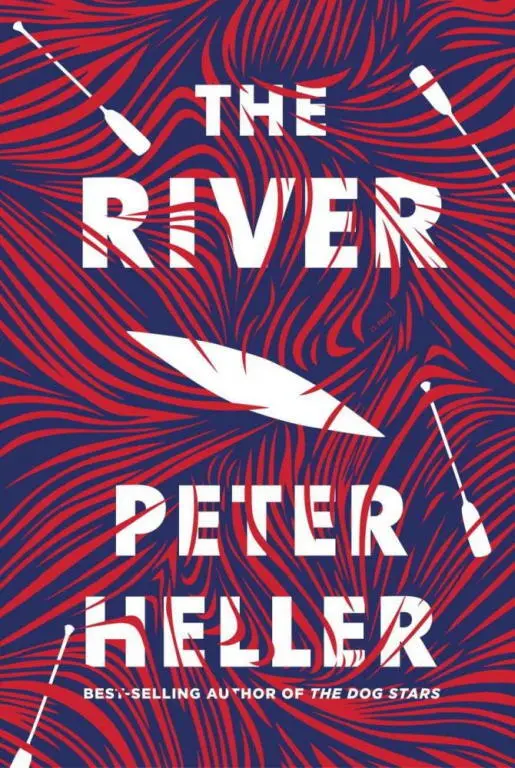
- Название:The River
- Автор:
- Издательство:Alfred A. Knopf
- Жанр:
- Год:2019
- Город:New York
- ISBN:978-0-5255-2187-7
- Рейтинг книги:4 / 5. Голосов: 1
-
Избранное:Добавить в избранное
- Отзывы:
-
Ваша оценка:
The River: краткое содержание, описание и аннотация
Предлагаем к чтению аннотацию, описание, краткое содержание или предисловие (зависит от того, что написал сам автор книги «The River»). Если вы не нашли необходимую информацию о книге — напишите в комментариях, мы постараемся отыскать её.
Wynn and Jack have been best friends since freshman orientation, bonded by their shared love of mountains, books, and fishing. Wynn is a gentle giant, a Vermont kid never happier than when his feet are in the water. Jack is more rugged, raised on a ranch in Colorado where sleeping under the stars and cooking on a fire came as naturally to him as breathing. When they decide to canoe the Maskwa River in northern Canada, they anticipate long days of leisurely paddling and picking blueberries, and nights of stargazing and reading paperback Westerns. But a wildfire making its way across the forest adds unexpected urgency to the journey. When they hear a man and woman arguing on the fog-shrouded riverbank and decide to warn them about the fire, their search for the pair turns up nothing and no one. But: The next day a man appears on the river, paddling alone. Is this the man they heard? And, if he is, where is the woman? From this charged beginning, master storyteller Peter Heller unspools a headlong, heart-pounding story of desperate wilderness survival.
The River — читать онлайн бесплатно полную книгу (весь текст) целиком
Ниже представлен текст книги, разбитый по страницам. Система сохранения места последней прочитанной страницы, позволяет с удобством читать онлайн бесплатно книгу «The River», без необходимости каждый раз заново искать на чём Вы остановились. Поставьте закладку, и сможете в любой момент перейти на страницу, на которой закончили чтение.
Интервал:
Закладка:
She was moaning. Good. She had not choked. Her injured arm had come free, lost the sling, it lay useless beside her. Wynn rolled her over and a burning twig hit her face; her face was wet, thank God, it hissed, he cursed and turned her on her side and said loudly in her ear, “Listen, we will rest soon, we’ve got to get back in the boat. Got to go now.”
Wynn rose and turned and screamed. A burning mat struck the left side of his face. Jack spun. Leaf or bark in flame, and whipped where it fell by the back-gusting wind, it struck the side of Wynn’s face and stuck like a burning hand and he slapped his palms to his cheek and screamed again and stumbled into thigh-deep water and fell in. Jack ran. Wynn was wallowing upward back onto the bank and he was cursing and trying not to touch his face where a raw strip exactly like the sear of a wide grill and curdled with blood cut his cheek from lip to the outside corner of his eye. Jack had grabbed him as he stumbled and Wynn stood and said, “I’m all right. It shocked me. I’m okay. Let’s get the fuck out of here.” He didn’t look okay, but Jack thought, He has all his limbs, let’s blow.
The canoe was awash, scraping rock—lucky it had not broken against a boulder. They left Maia where she lay and hauled the boat up on wet stones and under a rain of burning needles and branches managed to roll it and dump the water. The strapped bag and box and slung rifle had stayed in, thank God, but they’d lost the blueberries. There was the little steel pot swinging and knocking against the thwart. Wynn attacked the last few inches of water and bailed fast. Enough. The burning debris rained down, they swiped it off of arms, shoulders, and Jack had to hustle to Maia to kick a burning limb away from her leg—an inconstant blizzard of sparks, bunches of pine needles flaming like flares, birch leaves ignited to molten lace rained down, but the wind had gone quiet, it eddied as if confused, circled around them like a dog settling for sleep, the dense smoke had lightened, the jet roar had yielded to the crackling and shirr of a thousand campfires, it was eerie.
It scared Jack more than the full-on assault, he didn’t know why. He did know: it was because the flash had burned through, the front line had stampeded past, they were just at the edge of a thousand square miles of new fuel ready to ignite, barely behind it, like standing at the tail of a T. rex. The fire was beginning to take hold in the new woods, it was beginning to crown in the tops of the new trees, they had to go. They slid the boat back into the shallows and carried Maia and shoved back into the smaller waves of the tailwater.
They did not look behind them now. They could hear again the gathering whispers, the swooshes and squeals, the cracks, almost as if the fire were questioning its own intentions and the woods were answering: “We have been waiting for you our whole lives.” Less extreme violence now, more a difficult but cathartic conversation. That would change. Jack knew that soon the fire would rediscover its passion for death. They paddled. They did not ferry but angled downstream and across, and when they neared the far shore and Wynn began to turn her straight downstream Jack yelled, “Go to the bank!”
“What!”
“We’re not safe on the river!”
Wynn was beyond questioning. In the wavering light from the burning behind them he saw on the left bank a country out of the Inferno, a shadowed world of stubs and spikes of blackened trunks still running with blue flame, or flaring, a ground charred to mineral dirt and scintillant with embers, and the bank itself was wholly strange: the exposed roots that ran over all these cut banks had burned and where they had embedded were now channels of blackened dirt like the remains of some horrible ant farm. He ruddered hard on the left and reset the angle and took them into a narrow gravel bar. Jack hopped out. He hauled the bow up on the rocks, which were strangely powdered with ash like snow and still hot.
“No rain,” he called. “Not tonight. The river won’t rise—we’re safe leaving it.”
“Leaving it?” Behind them two explosions. They did not turn to look, but the little beach was illuminated.
“Not safe,” called Jack. “Not here.” He did turn now to witness the new slaughter across the water: a straight stretch of river, how the fire was consuming the wall of trees in pockets that ran together, how different pieces surged and died. It reminded him of the aurora borealis he had seen the other night, the great forest beneath the stars seeming compelled to answer.
Wynn climbed out, glanced at Maia, she was awake, good, her eyes were wide and in them he could see a reflection of flames. He stepped up to Jack. On this side were only low hisses, a ticking and chirping, a simmering crackle like a million crickets, hellfire crickets, singing of apocalypse and char.
“What do you mean?” Wynn said. “Where do you think we should go?”
Jack pointed inland.
“There? Are you crazy?”
Jack took Wynn’s shoulders and turned him around. The sections of fire all along the far bank were running together with increasing speed, and they could see the concatenate crownings as treetops burst into flame, see it quickening, the flames jetting higher.
“She will do again what she did on this side of the river,” Jack said. “The fucker’s getting hotter over there, she’s just getting started. Once she makes her own weather she can do all sorts of crazy shit. Like back fully around. She can try to flash back. How wide is the river? A hundred thirty yards? It’s not enough.”
“Fuck.” Wynn blew out the word. “Really? You really think so?”
Jack didn’t answer. He let the spectacle across the water speak for itself. Finally he said, “Wildland firefighters call it running into the black. Back into the black. We won’t run, not with her, but we need to go in there. It’ll be uncomfortable but not so much as getting baked.”
He let it sink in. Wynn nodded, but almost as if he believed he was in a bad dream now and it didn’t matter what they did.
CHAPTER SEVENTEEN
Walking into the outskirts of hell is like: filling your rubber knee-high Wellingtons with an inch of water—just seemed like the right thing to do. He and Jack still had them, as Wynn had thought to shove them into the dry bag for the night paddle. In case. In case what happened happened. Had they been wearing them in the flip they would have lost them. So as they walked into the embered wasteland of a burned forest they sloshed with every step. Maybe because the moon was not up, and the light there was cast from exploding trees across the river—the sense again of pulse like blood or breath, like something alive. The scorched landscape throbbed with light. Otherwise black and red: black ground, black stumps, red embers, black distances between the flaring stumps. It was hot. They walked through charred spindles and spears—the simple skeletons of the old-growth trees. They wound around the hollowed broken rounds of trunks, some twenty feet tall, that speared the night and whispered with small flames that ran up and down the edges. They passed a stump sheared ragged at the top and still, incredibly, barked, if charred, and streaked with resin. They passed one patch of spruce, maybe ten trees, singed but standing. How? Like retracing the tracks of fate. And if it was hellish at first, within a few minutes it felt holy. They held Maia upright between them to help her walk and they stepped slowly and nobody spoke. They avoided still-burning roots and feared those that burned beneath a layer of dirt. They sweated, and the ground was mostly very hot but it did not melt their boots more than a little. They coughed. Their sinuses burned but the smoke was mostly gone. They were aghast and awed. Nobody said a word but now and then one gasped.
Читать дальшеИнтервал:
Закладка:
Похожие книги на «The River»
Представляем Вашему вниманию похожие книги на «The River» списком для выбора. Мы отобрали схожую по названию и смыслу литературу в надежде предоставить читателям больше вариантов отыскать новые, интересные, ещё непрочитанные произведения.

Обсуждение, отзывы о книге «The River» и просто собственные мнения читателей. Оставьте ваши комментарии, напишите, что Вы думаете о произведении, его смысле или главных героях. Укажите что конкретно понравилось, а что нет, и почему Вы так считаете.