Питер Геллер - The River
Здесь есть возможность читать онлайн «Питер Геллер - The River» весь текст электронной книги совершенно бесплатно (целиком полную версию без сокращений). В некоторых случаях можно слушать аудио, скачать через торрент в формате fb2 и присутствует краткое содержание. Город: New York, Год выпуска: 2019, ISBN: 2019, Издательство: Alfred A. Knopf, Жанр: Триллер, Путешествия и география, на английском языке. Описание произведения, (предисловие) а так же отзывы посетителей доступны на портале библиотеки ЛибКат.
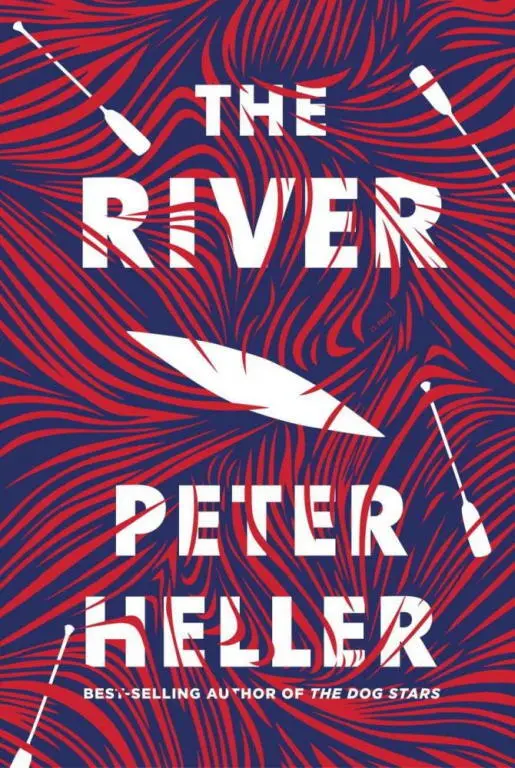
- Название:The River
- Автор:
- Издательство:Alfred A. Knopf
- Жанр:
- Год:2019
- Город:New York
- ISBN:978-0-5255-2187-7
- Рейтинг книги:4 / 5. Голосов: 1
-
Избранное:Добавить в избранное
- Отзывы:
-
Ваша оценка:
The River: краткое содержание, описание и аннотация
Предлагаем к чтению аннотацию, описание, краткое содержание или предисловие (зависит от того, что написал сам автор книги «The River»). Если вы не нашли необходимую информацию о книге — напишите в комментариях, мы постараемся отыскать её.
Wynn and Jack have been best friends since freshman orientation, bonded by their shared love of mountains, books, and fishing. Wynn is a gentle giant, a Vermont kid never happier than when his feet are in the water. Jack is more rugged, raised on a ranch in Colorado where sleeping under the stars and cooking on a fire came as naturally to him as breathing. When they decide to canoe the Maskwa River in northern Canada, they anticipate long days of leisurely paddling and picking blueberries, and nights of stargazing and reading paperback Westerns. But a wildfire making its way across the forest adds unexpected urgency to the journey. When they hear a man and woman arguing on the fog-shrouded riverbank and decide to warn them about the fire, their search for the pair turns up nothing and no one. But: The next day a man appears on the river, paddling alone. Is this the man they heard? And, if he is, where is the woman? From this charged beginning, master storyteller Peter Heller unspools a headlong, heart-pounding story of desperate wilderness survival.
The River — читать онлайн бесплатно полную книгу (весь текст) целиком
Ниже представлен текст книги, разбитый по страницам. Система сохранения места последней прочитанной страницы, позволяет с удобством читать онлайн бесплатно книгу «The River», без необходимости каждый раз заново искать на чём Вы остановились. Поставьте закладку, и сможете в любой момент перейти на страницу, на которой закончили чтение.
Интервал:
Закладка:
“Rivers change every year. Maybe—”
“Don’t count on it. We’d need half a mile of river to even stand a chance of staying out of the fire.”
“Yeah.”
Jack said, “Lemme see what you’ve been carving.”
Wynn worked three fingers into the pocket of his work pants and pulled out the chunk of wood and handed it to Jack. Just small enough to fit in the palm: a canoe. What else. The exact shape of their own—the exaggerated beam dead center, the sharply tapered bow and stern, the faintest rocker along her length. He had just begun carving out the shell—the outlines of the seats and thwarts were there in bare relief. Jack ran his fingers over the whittled planes of the hull and the pads of his fingertips seemed to relish the coarse rendering, the snags and chiseled edges. He handed it back.
“Is it a sex toy?”
“Fuck off.”
“What do you want to do?”
“Do we have a choice?”
“No.” Jack pulled out his tin of Skoal and took a sizable dip. It’s what he often did when they were about to put in. He spat in the fire. “Ready?”
Jack walked over the stepped rock to the boat and began strapping stuff down as tight as he could while Wynn gently woke her up.
CHAPTER SIXTEEN
This time they all three wore the life vests. They put her in Jack’s rain jacket and added more boughs to her seat to try to keep her out of the bilge water, but once they got into any kind of real rapids or even a feisty riffle she would get soaked. Not ideal, but then there was everything about the night that was not ideal. They did not bother dousing their fire: a tip of the hat, almost an acknowledgment of respect to the coming onslaught. They helped her into the canoe and launched. This time, without discussing it, they both got low. They were both on their knees, butts against the edge of the seats, and they picked up their paddles and stroked easily upstream to the top of the eddy and out into the main current and let the river send the bow around in a wide accelerating peel-out, and then they were heading downstream, paddling in tandem, steady, not fast, and they stared ahead intently at the unbroken surface until it seemed their eyes ached, and listened hard for a rush and sift that was of water not fire. The river between the phalanxed woods, the black bulwarks of forest, was something metallic, faintly luminous, and they each wished it would stay that way and knew that it wouldn’t.
The cracks were the scariest. The sounds with no apparent flames. They paddled through an S -turn to staggered gunshots grown closer like an advancing front, which were the bigger trees exploding, and almost immediately they hit a long rapid. They could see the whitewater ahead like the thin line of distant surf, but it was much closer than it seemed and before they could scout a line or intuit one they each felt the waft of cold air and the rush came with it and the bow rocked up into a breaking wave and Jack braced the blade of his paddle into the froth and they were in it. Smack in the middle of the whitewater. They took water over the right side in the first wave but not much, but when they hit the second they took more, the gunwale gulped and she was awash in a couple of inches of ice water. They were heading left, they accelerated. They’d both seen and heard the gnash of a large hydraulic almost straight off the bow, a cresting pale hump that thumped and hissed in a lower register—the trough would be behind it—and they sprinted now, both, Wynn setting the left angle, not in unison, each paddling madly for enough speed to make it past the sucking hole. Wynn thought of nothing but speed, but he watched, amazed, as Maia reached for the cookpot clipped to the strap of the dry bag behind her and freed it and began to bail. She scooped and threw water over the side with her one good arm, with almost professional speed. Damn.
The stern just cleared it. The current accelerated at the left edge of the hydraulic and Wynn ruddered hard off the right side to straighten the boat and swing the stern away and around and even in the dark he looked down into a deep gnashing trough. They were in what they knew to be a ramping rock garden whelmed with whitewater, and the rush was so loud it went silent and they braced to hit a sleeper, the thud of a boulder barely underwater, and the sudden sideways upending, the flip and maybe the awful crunch of Kevlar as the boat wrapped and buckled around the rock…
And then they were by. The fast current and chop funneled down the middle of the river and the gradient seemed to level and they knew without looking that they were in a wave train, a rolling succession of breaking haystacks, and they did look and they could see the pale froth at the tops of the standing crests like whitecaps, and the crashing of water diminished to the discreet song of each single wave, and then the waves were smooth rollers, and then they were released: into the calm flat water of the pool, the metallic sheen of river stretching ahead again, almost placid, an uncertain respite.
She had bailed. Throughout the length of the rapid, and she bailed with one arm now as the current spun them into the flat. Must be feeling a lot better, Jack thought. He turned and said, “Phew.” Loud enough they both could hear. Then: “Hand me the bailer, would ya?” She did. He reached for the soaked shirt stuffed with blueberries and untied a sleeve and funneled the pot full and handed it back. “Fuel,” he said. “We might need it for the next one.”
They let themselves drift, for now. Tugged northward. On their left rose a continuous muffled roar as of storm and turbines punctuated by the pitched whine and pops of pressure cookers as they explode. Nothing to see, still, but a thickening haze. Jack thought it was eerie—the chorus of harsh instruments that should never commingle—and every now and then rose a thin scream exactly like someone being squeezed to death. Squeezed and sizzled to a last tortured hiss and then maybe the crack of a spirit being loosed to the heavens. It was terrible. The wind had backed west-northwest and it brought the bedlam along with rolling smoke that stung their eyes and made them cough. The water was swift and flat for now, at least there was that. Without talking the two picked up their paddles and began pulling the boat forward.
In the last couple of miles the river had widened, it was maybe a hundred and fifty yards across, and almost instinctually they hugged the right bank, away from the fire. Their hands were stiff with cold. Motionless tall trees on either side, still dense with darkness, except over the left treetops now fluttered a glow not bright but bright enough to erase the lowest tiers of stars. Jack held up his hand and Wynn rested. They listened. The jet roar was no longer muffled but rose and fell as if buffeted. Almost as if breathing.
Their throats burned. Jack almost had to yell. “It should lay down at night, but it’s not. That’s weird. It’s plenty cold.”
They drifted. Jack said, “If anything, the wind is stiffer.”
They waited. Both knew he wasn’t done, and both sensed he himself wasn’t sure what he wanted to say. That was almost scarier than the sense of a mega-giant beast thumping closer beyond the wall of trees. Wynn thought of Jurassic Park. He said, “What rough beast…?”
“What?”
“Nothing.”
“It happens,” Jack called. “A fire disobeys every rule. Anyway, it’s close. No sparks yet or flying shit, there’s that.” Pause. Then: “The river isn’t wide enough.”
He’d said it. With a fire this big, the river wouldn’t act as a firebreak. Nobody had to ask what he meant.
“You can hear it. It’s just big as shit, the biggest fucking forest fire on earth. Right now that’s a fact.” He shook his head, trying to clear it maybe of the truth. “So it’s coming across and the heat makes these crazy swirling gusts and it’ll make its own weather. Little cyclones and windstorms. That’s maybe the gusts we’re feeling now. The head of it. The smoke will get thicker and that’s gas and it’ll roll across the river and if it ignites…well.”
Читать дальшеИнтервал:
Закладка:
Похожие книги на «The River»
Представляем Вашему вниманию похожие книги на «The River» списком для выбора. Мы отобрали схожую по названию и смыслу литературу в надежде предоставить читателям больше вариантов отыскать новые, интересные, ещё непрочитанные произведения.


Обсуждение, отзывы о книге «The River» и просто собственные мнения читателей. Оставьте ваши комментарии, напишите, что Вы думаете о произведении, его смысле или главных героях. Укажите что конкретно понравилось, а что нет, и почему Вы так считаете.