Питер Геллер - The River
Здесь есть возможность читать онлайн «Питер Геллер - The River» весь текст электронной книги совершенно бесплатно (целиком полную версию без сокращений). В некоторых случаях можно слушать аудио, скачать через торрент в формате fb2 и присутствует краткое содержание. Город: New York, Год выпуска: 2019, ISBN: 2019, Издательство: Alfred A. Knopf, Жанр: Триллер, Путешествия и география, на английском языке. Описание произведения, (предисловие) а так же отзывы посетителей доступны на портале библиотеки ЛибКат.
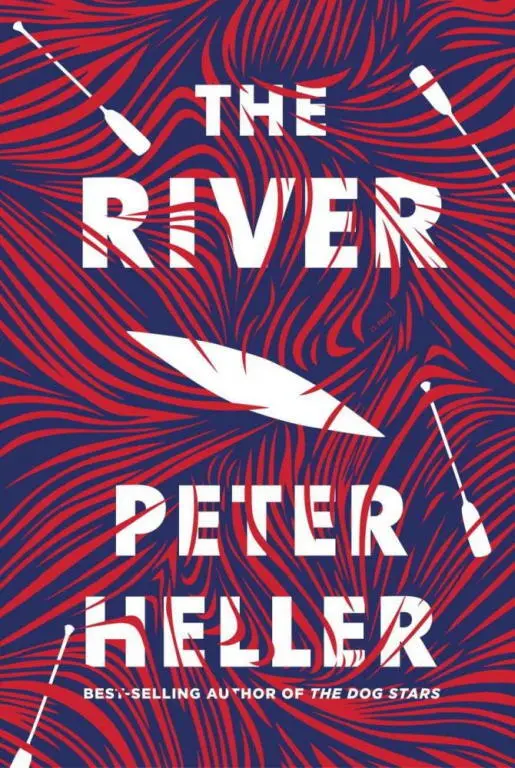
- Название:The River
- Автор:
- Издательство:Alfred A. Knopf
- Жанр:
- Год:2019
- Город:New York
- ISBN:978-0-5255-2187-7
- Рейтинг книги:4 / 5. Голосов: 1
-
Избранное:Добавить в избранное
- Отзывы:
-
Ваша оценка:
The River: краткое содержание, описание и аннотация
Предлагаем к чтению аннотацию, описание, краткое содержание или предисловие (зависит от того, что написал сам автор книги «The River»). Если вы не нашли необходимую информацию о книге — напишите в комментариях, мы постараемся отыскать её.
Wynn and Jack have been best friends since freshman orientation, bonded by their shared love of mountains, books, and fishing. Wynn is a gentle giant, a Vermont kid never happier than when his feet are in the water. Jack is more rugged, raised on a ranch in Colorado where sleeping under the stars and cooking on a fire came as naturally to him as breathing. When they decide to canoe the Maskwa River in northern Canada, they anticipate long days of leisurely paddling and picking blueberries, and nights of stargazing and reading paperback Westerns. But a wildfire making its way across the forest adds unexpected urgency to the journey. When they hear a man and woman arguing on the fog-shrouded riverbank and decide to warn them about the fire, their search for the pair turns up nothing and no one. But: The next day a man appears on the river, paddling alone. Is this the man they heard? And, if he is, where is the woman? From this charged beginning, master storyteller Peter Heller unspools a headlong, heart-pounding story of desperate wilderness survival.
The River — читать онлайн бесплатно полную книгу (весь текст) целиком
Ниже представлен текст книги, разбитый по страницам. Система сохранения места последней прочитанной страницы, позволяет с удобством читать онлайн бесплатно книгу «The River», без необходимости каждый раз заново искать на чём Вы остановились. Поставьте закладку, и сможете в любой момент перейти на страницу, на которой закончили чтение.
Интервал:
Закладка:
“Buffering,” she said. She closed her eyes and said sleepily, “The capacity of subarctic rivers and lakes to absorb acid rain. We’re geochemists.” She said it as if she’d said it a hundred times before. Which she probably had.
Jack skinned the calf quickly and boned her out, and they started a fire on the bedrock and roasted the backstraps first, which were the size of a summer sausage, then random cuts off the hindquarters. Surprisingly little meat, maybe twenty pounds. She had been a baby. They’d talked about the risk of the campfire, but it seemed the risk of being ambushed here, on a random bank, was much lower than the risks of gradually growing weaker. So they roasted the meat in strips draped across forked saplings and in skewered chunks and they all ate. The woman winced a few times as if the meat hitting her stomach caused her pain, but she kept tearing off small morsels and chewing slowly. They all badly wished they had some salt but no one spoke it. When they were done they boiled river water in the pot and made weak tea with one bag and added sugar. They had enough brown sugar for maybe two more pots. The tea and the protein and the calories revived them, Jack and Wynn. Her lids grew heavy and she nodded off. They fetched the sleeping bags and wrapped her and laid her on a Therm-a-Rest as they had before, and she slept. At their backs, away from the fire, the night was cold. In the swath of sky between the trees, the stars smoldered less through haze than through a screen of smoke. A clear night, and for the first time their eyes stung. At first they thought it was the smoke from their own fire, but the wind was carrying their sparks upstream. Jack coughed. Whatever it was chafed his throat.
They needed to paddle out of there in the cold and they did not have neoprene gloves and for the first time they said it out loud: they were fools.
“We’re fools,” Jack said.
Wynn was carving the knot of driftwood he’d found at the last lake camp. He cupped it tightly in his left hand and poked and worried the wood with the point of his clip knife as if he were using a chisel. “Why didn’t we? Bring paddling gloves? Not much fabric for a whole lot of insurance.”
“Because we’re fools?”
“Right.”
“Because we’re minimalists. Which is a synonym for idiots.”
“Right,” Wynn said.
“Because you’re a minimalist.”
“Hold on a sec.”
“I suggested we bring pogies, remember.” They were tubes of neoprene that Velcroed around the paddle shafts like gauntlets and protected the hands. “And you said it was August.” Wynn winced.
“What’re you making?” Jack said.
Wynn shrugged. “Not sure.”
Jack narrowed his eyes. “How do you work on something and not be sure?” He was razzing him. In truth, it was one of the things he admired about Wynn: how often he started a piece of art—with stones, with wood, even with paints—and had no idea.
Wynn looked up. “It’s like cooking. You have a pile of ingredients and you start cooking and don’t have a clue what you’re making. Haven’t you ever done that before?”
“No. Anyway, it’s not like that. If you have a pile of ingredients and cook it it’s going to be food. One way or another. That thing—it’s a bird, or an elephant, or a boat. If you don’t know what it is, how can you carve? You’ll end up with a pile of shavings.” That seemed to really bother Jack.
Wynn smiled. He held up a finger and said, “Ah, Grasshopper.”
“Fuck you.”
“You’ve been saying that a lot lately.”
“I’ve been meaning it.”
Wynn smiled and continued to carve whatever. He turned sideways a bit more to the fire to cast more light on the wood, and as he did the wind also shifted and blew the smoke crossways into the trees and they heard the surf. Crashing surf far off, buffeted and torn by wind. They both sat up, turned their heads. The surf surged and sifted back like breathing. They listened hard and could hear that it was punctuated with explosions like the crash of larger waves on rocks. And beneath it was a groan. A deep groan at a frequency lower almost than their ears could register, like something geologic. Like layers of bedrock rumbling over each other.
“Holy fuck,” Jack whispered.
They could still see nothing, no change in the pallor of the night, which seemed, now that they stared, faintly illuminated by more than starlight. Maybe not. And then they heard a crack. Out of the roar of distant waves a shot like the spar of a giant ship breaking.
Jack cocked his ears as if he were receiving some alien broadcast. “The big ones,” he said, “they talk. That’s what my cousin said, the hotshot firefighter in Idaho.”
“Talk?”
“The biggest fires. They talk, just like this. Listen.”
They listened. Who knew how far off. Not close enough yet to crown the wall of woods with light. There were other sounds: turbines and the sudden shear of a strafing plane, a thousand thumping hooves in cavalcade, the clamor and thud of shields clashing, the swelling applause of multitudes drowned out as if by gusts of rain. Rain. Downpours. Washing through a valley and funneling over a pass. Crackling through woods and sodding over the tundra. Wynn closed his eyes and could swear he heard the sweep of a coming rainstorm. As if the fire in its fury could speak in tongues, could speak the language of every enemy. And sing, too. Over the rush, very faint, was a high-pitched thrum, a humming of air that rose and fell almost in melody.
Wynn walked to the water. He peered into the dark. Between the tall trees on either bank was a swath of stars, a river of constellations that flowed heedless and unperturbed. Between the brightest, needling the arm of Orion and the head of the Bull, were distances of fainter stars that formed, as Wynn stared, a deep current, uninterrupted, as infused with bubbles of light as the aerated water of a rapid. Except that he could see into it and through it and it held fathomless dimensions that were as void of emotion as they were infinite. And if that river flowed, that firmament, it flowed with a majestic stillness. Nothing had ever been so still. Could spirit live there? In such a cold and silent purity of distance? Maybe it wasn’t silent at all. Maybe in the fires that consumed those stars were decibeled cyclones and trumpets and applause.
As in our own. Our very own voluble fire.
He looked straight across at the wall of trees: dark. A solid reassuring darkness. Not that reassuring. The rolling pops of trucks dumping gravel, the cracks of artillery, they were unnerving. How could they not see it? How could the sound travel and not the light?
What they didn’t realize is that it had. It had traveled. The entire sky was so suffused with firelight that the billion stars were as faint as they would have been under the dominion of the fullest moon.
Which had not yet risen.
Wynn walked back.
“We’re sitting ducks. Here. It’s too narrow. The fire’ll jump the river in a flash.” He sat next to Jack by the campfire. “All those animals. Those single birds. Nest-sitters, right? The last to leave.”
“What I was thinking.”
“What do you want to do?”
Jack said, “Seems like if we just sit here, we’ll die.”
They listened. The measly pops of their campfire seemed to be puling to the greater roar. Jack said, “Like falling asleep in the snow. Feels like that. Like if we camp, it’ll come.”
Wynn said, “I was looking at the map. The river must’ve changed a lot since they surveyed it. It’s been wider where I thought it’d be narrow, and there’s those wide coves that aren’t on the map.”
“Nineteen fifty-nine. Says beneath the legend. The survey’s sixty years old.”
Читать дальшеИнтервал:
Закладка:
Похожие книги на «The River»
Представляем Вашему вниманию похожие книги на «The River» списком для выбора. Мы отобрали схожую по названию и смыслу литературу в надежде предоставить читателям больше вариантов отыскать новые, интересные, ещё непрочитанные произведения.

Обсуждение, отзывы о книге «The River» и просто собственные мнения читателей. Оставьте ваши комментарии, напишите, что Вы думаете о произведении, его смысле или главных героях. Укажите что конкретно понравилось, а что нет, и почему Вы так считаете.