Питер Геллер - The River
Здесь есть возможность читать онлайн «Питер Геллер - The River» весь текст электронной книги совершенно бесплатно (целиком полную версию без сокращений). В некоторых случаях можно слушать аудио, скачать через торрент в формате fb2 и присутствует краткое содержание. Город: New York, Год выпуска: 2019, ISBN: 2019, Издательство: Alfred A. Knopf, Жанр: Триллер, Путешествия и география, на английском языке. Описание произведения, (предисловие) а так же отзывы посетителей доступны на портале библиотеки ЛибКат.
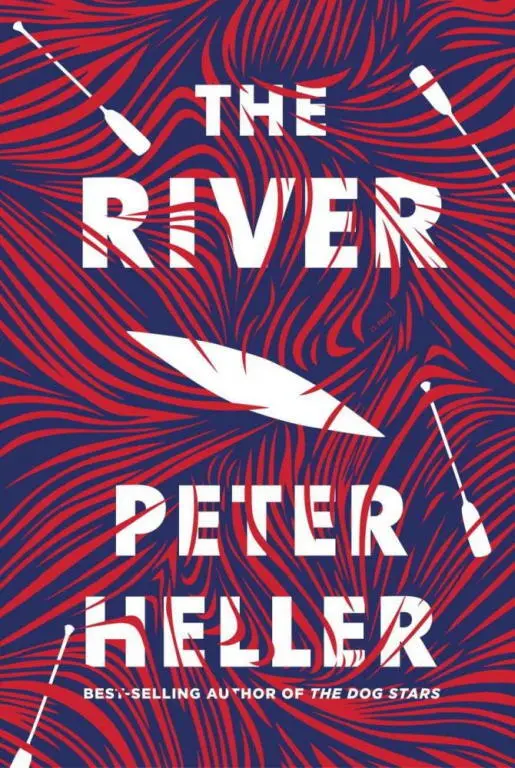
- Название:The River
- Автор:
- Издательство:Alfred A. Knopf
- Жанр:
- Год:2019
- Город:New York
- ISBN:978-0-5255-2187-7
- Рейтинг книги:4 / 5. Голосов: 1
-
Избранное:Добавить в избранное
- Отзывы:
-
Ваша оценка:
The River: краткое содержание, описание и аннотация
Предлагаем к чтению аннотацию, описание, краткое содержание или предисловие (зависит от того, что написал сам автор книги «The River»). Если вы не нашли необходимую информацию о книге — напишите в комментариях, мы постараемся отыскать её.
Wynn and Jack have been best friends since freshman orientation, bonded by their shared love of mountains, books, and fishing. Wynn is a gentle giant, a Vermont kid never happier than when his feet are in the water. Jack is more rugged, raised on a ranch in Colorado where sleeping under the stars and cooking on a fire came as naturally to him as breathing. When they decide to canoe the Maskwa River in northern Canada, they anticipate long days of leisurely paddling and picking blueberries, and nights of stargazing and reading paperback Westerns. But a wildfire making its way across the forest adds unexpected urgency to the journey. When they hear a man and woman arguing on the fog-shrouded riverbank and decide to warn them about the fire, their search for the pair turns up nothing and no one. But: The next day a man appears on the river, paddling alone. Is this the man they heard? And, if he is, where is the woman? From this charged beginning, master storyteller Peter Heller unspools a headlong, heart-pounding story of desperate wilderness survival.
The River — читать онлайн бесплатно полную книгу (весь текст) целиком
Ниже представлен текст книги, разбитый по страницам. Система сохранения места последней прочитанной страницы, позволяет с удобством читать онлайн бесплатно книгу «The River», без необходимости каждый раз заново искать на чём Вы остановились. Поставьте закладку, и сможете в любой момент перейти на страницу, на которой закончили чтение.
Интервал:
Закладка:
They steamed the brookies in an inch of water in the pot and wondered why they hadn’t thought to pack salt in the emergency box. Jack said, “Ten each? To start?” and they dug in. They speared each fish with their knives and at first laid it in their palms and unzipped the spine with its rows of needled bones. After a few they figured out how to dangle the small fish by the tail and strip the meat off the bones with their teeth. They started slowly and picked up speed. The first few hit their stomachs and it was only then they knew they were ravenous for protein, and they felt nauseous at the same time, which was novel. They were spitting errant bones into the fire and when they finished ten Jack counted and said, “Seven more,” and they finished them. They felt logy and bloated and Wynn gagged but managed to keep the food down, and they grabbed the rods and fished for another hour and made themselves eat again. They didn’t care if it took most of the morning. This time they tried making a grill of willow saplings and roasting the brookies over the coals but found they lost too much of the skin when it burned, so they went back to steaming. They ate another round. They lay back against the rocks groaning and looked at each other, sated and miserable, and Jack said, “You better not fucking throw up. I’m sick of fishing this morning.” And they started laughing so hard they almost did barf. Relief. Just the laughter. It was like a warm rain. A rain that would tamp and douse the forest fire and rinse away the sweat and the fear.
They did bathe. Before they launched again they stripped and rolled in the shallow water of the brook. It was dark but clear like brown glass and so cold they gasped.
They lay back on the rocks in the sun and let it dry them. Wynn liked to lay one cheek and then the other against a warm smooth stone and smell the mineral heat. A downstream wind poured over their wet skin and raised goosebumps. If one concentrated on one thing and then another—the good things in each moment—the fear wrapped deep in the gut seemed to unswell, like an iced bruise. Still there, but quieter.
As they lay drying, Jack said he understood now how Canadian trappers who had tried to survive through the winter on flour and rabbits had died. Starved for fat. It’s what he craved now. The ones in the camps who made doughnuts in lard lived. He’d give his frigging right arm for a doughnut. A Krispy Kreme glazed in sugar floated across his mind like an angel. It scared him, because they’d barely made a day and had at least a week to go.
But they could live on berries and trout for a week, no problem. Had they been at their leisure it would have been fun to forage every day, to fish for food.
When they were dry and dressed, they sat her up and Wynn held her against him and Jack asked her gently to wake up and eat a little. Drink. She did. They made another of the packet meals—they’d had five left, now four—beef stroganoff, and Jack spooned it into her and she ate half. She chewed slowly, as if in pain, and at one point her eyes flickered open and she saw them. She saw them. Her greenish eyes blurred over Jack, then focused. “Where?” she rasped. “The other?”
“He’s holding you up, ma’am,” Jack said. “Hold on.” Jack grasped one side of the sleeping bag and Wynn shifted from behind her and came around to the front, his arm still around her shoulders. She looked from one to the other. It took great effort. “Thank you,” she whispered. “Both.” Her eyes closed again and she drifted off. They carried her to the canoe and laid her on the bed of boughs. Jack levered the rifle to open the breech and checked one more time that a cartridge was chambered, and they shoved off.
The day was half gone. They paddled steadily without letup. The wind shifted around to the west and for the first time they could see the hazy thickening of air that was not yet rolling smoke and the birds in flocks that were smaller now, and many single birds, mostly duller-colored, the females, and Wynn posited that these were the mother birds with hatchlings who had refused to leave their nests until just before the flames. That was heartbreaking if you thought about it.
The cadence of the paddle strokes was high and it hurt after a couple of hours and so they weren’t thinking about a lot. Jack had pored over the map and there would be a few riffles and smaller rapids and nothing to portage for two days, so he was at a loss as to where to expect the next attack. They had passed a wide cove with a pair of loons, one was probably nested nearby, and when they stroked past, the one closest tilted back her head and loosed a pitched wail that must have moved the trees like wind. It pierced the haze and echoed off the waiting forest and rolled over the water like any scream, and seemed to carry a pathos so deep it was a wonder a mere world could support it. Maybe she knew what was coming. Maybe she had hatchlings in a nest and nowhere to go and she knew.
Others did. Because now as they paddled into the afternoon they saw the first moose. Two. A big female with a calf. The moose trotted to the open margin of the left riverbank and clattered over the broken shale on stiff legs and entered the water without pause, and she stretched her neck and let the water sweep her without concern and set a ferry angle and swam across. The calf mimicked the mother. They could hear the chuffs of their breathing. They were only yards ahead of them. The next was a bull moose, and then a black bear with two cubs. The cubs hesitated at water’s edge, they seemed frightened, and the mama bear snorted and waded out of the river and got behind them and drove them forward. They swam. The littler one lost ground in the current and Wynn thought he would get swept away, but the mother got below him and bumped and shouldered and goaded him across. Damn. They could hear the other cub, who had reached the far bank first, bawling and bawling. They saw mink cross, and squirrels. In late afternoon Jack had his head down, paddling hard, trying to maintain the tempo, and Wynn whistled and he looked up and saw what must have been a hundred mice. They’d never heard of such a thing. It was like a miniature herd. They swarmed a steep cut bank and fell or jumped or dripped off it into the water and they swam. Who knew how they kept track of the correct direction, but they did. They came across the current in a moil.
“Looks like Dunkirk,” Jack said.
“Fucking A.”
They saw woodland caribou, a small herd of bulls at first, three smaller and two with massive racks, who took to the river as the moose did, with zero hesitation. Toward the end of the afternoon they both sang out as one: they came down through a riffle of small waves and ahead was an entire string of caribou swimming the river in single file. They counted twenty-three. Jesus. Later Jack wondered why they hadn’t thought to shoot one for meat and could only think that they’d been smitten with awe. They had never seen anything like it.
And they could see smoke now. Real smoke. It was gray, not black, and it did not plume but hazed west to east across the river as the animals had done. Still they could not hear a thing but wind and their own paddles, and the river listing along the rocks of the banks and sifting in the deadfalls.
They paddled into the dusk because they could. They stuck to the middle of the river so as to be less of a target from either side. Jack did not think Pierre was a crack shot—just a feeling. They were drifting now, taking a break and drinking, tossing the filter bottle back and forth. They must both have been thinking the same thing, because Wynn said, “I feel pretty safe out here. In the middle. Maybe I shouldn’t.”
Jack said, “From the fire or the man?”
Читать дальшеИнтервал:
Закладка:
Похожие книги на «The River»
Представляем Вашему вниманию похожие книги на «The River» списком для выбора. Мы отобрали схожую по названию и смыслу литературу в надежде предоставить читателям больше вариантов отыскать новые, интересные, ещё непрочитанные произведения.

Обсуждение, отзывы о книге «The River» и просто собственные мнения читателей. Оставьте ваши комментарии, напишите, что Вы думаете о произведении, его смысле или главных героях. Укажите что конкретно понравилось, а что нет, и почему Вы так считаете.