Питер Геллер - The River
Здесь есть возможность читать онлайн «Питер Геллер - The River» весь текст электронной книги совершенно бесплатно (целиком полную версию без сокращений). В некоторых случаях можно слушать аудио, скачать через торрент в формате fb2 и присутствует краткое содержание. Город: New York, Год выпуска: 2019, ISBN: 2019, Издательство: Alfred A. Knopf, Жанр: Триллер, Путешествия и география, на английском языке. Описание произведения, (предисловие) а так же отзывы посетителей доступны на портале библиотеки ЛибКат.
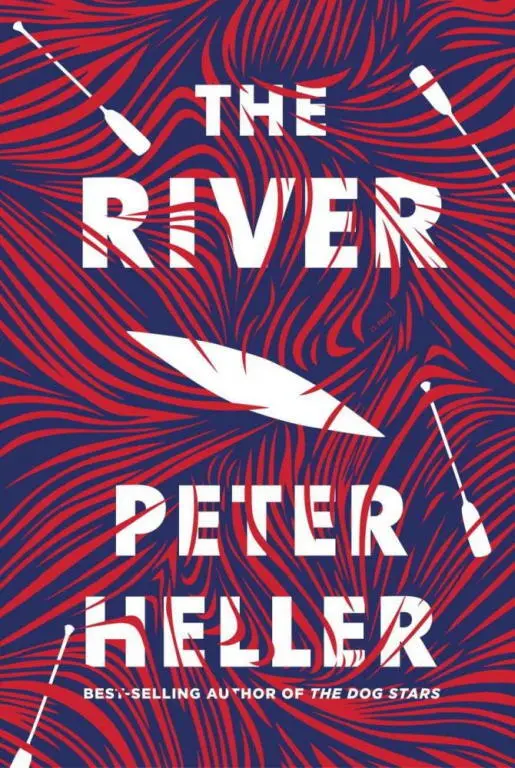
- Название:The River
- Автор:
- Издательство:Alfred A. Knopf
- Жанр:
- Год:2019
- Город:New York
- ISBN:978-0-5255-2187-7
- Рейтинг книги:4 / 5. Голосов: 1
-
Избранное:Добавить в избранное
- Отзывы:
-
Ваша оценка:
The River: краткое содержание, описание и аннотация
Предлагаем к чтению аннотацию, описание, краткое содержание или предисловие (зависит от того, что написал сам автор книги «The River»). Если вы не нашли необходимую информацию о книге — напишите в комментариях, мы постараемся отыскать её.
Wynn and Jack have been best friends since freshman orientation, bonded by their shared love of mountains, books, and fishing. Wynn is a gentle giant, a Vermont kid never happier than when his feet are in the water. Jack is more rugged, raised on a ranch in Colorado where sleeping under the stars and cooking on a fire came as naturally to him as breathing. When they decide to canoe the Maskwa River in northern Canada, they anticipate long days of leisurely paddling and picking blueberries, and nights of stargazing and reading paperback Westerns. But a wildfire making its way across the forest adds unexpected urgency to the journey. When they hear a man and woman arguing on the fog-shrouded riverbank and decide to warn them about the fire, their search for the pair turns up nothing and no one. But: The next day a man appears on the river, paddling alone. Is this the man they heard? And, if he is, where is the woman? From this charged beginning, master storyteller Peter Heller unspools a headlong, heart-pounding story of desperate wilderness survival.
The River — читать онлайн бесплатно полную книгу (весь текст) целиком
Ниже представлен текст книги, разбитый по страницам. Система сохранения места последней прочитанной страницы, позволяет с удобством читать онлайн бесплатно книгу «The River», без необходимости каждый раз заново искать на чём Вы остановились. Поставьте закладку, и сможете в любой момент перейти на страницу, на которой закончили чтение.
Интервал:
Закладка:
He and Shane had lost cattle twice in fires. He never again wanted to be on horseback and in the path of a burn while he and his father tried to haze cow-calf pairs off the mountain. All they had to worry about now was themselves. Themselves. His mind was wandering and he forced himself to scan the edge of the trees back of the clearing, which he could see well enough by starlight. And the head of the trail, which was only thirty feet away.
He scanned, but still he wondered what had really happened. Had the man really swung a rock at his wife’s skull in some rage, or in some more calculated blindside, and then chickened out from strangling or braining her and just covered her with moss and duff where she lay? They must have planned the trip together—they had been out for some days already, out on the lakes because he and Wynn had not heard any planes. So the couple were functional partners at least in the sense of the barest logistics, in moving the canoe over water, in making camp. They had planned the trip together, packed together, must have shared the route-finding, they were in God’s country, among moose and loons, had slept under benign constellations—what could have brought them to blows, to murder? No telling, truly. Nothing but woods, then taiga, then tundra and mudflats, then the sea, nothing but the cries of birds, maybe coyotes, maybe wolves, sweeps of rain, the mutterings of wind for hundreds, even thousands of miles in any direction. Whatever malevolence the couple had ignited they had brought with them. That puzzled him. Why come so far if you were doing so badly? As people, as husband and wife? Why come way the hell up here?
Fuck: was that something moving against the wall of trees? No? No. He needed to stay on top of it, he was getting drowsy. Exhausted muscles and not much food weren’t helping. He thought of the pale hungry Windigo that stalked this country: it flickered at the corner of the eye but could never be truly seen; no matter how many people it consumed, it was never satiated, it stayed gaunt and voracious. He reached for the sack of blueberries and ate another handful. How long could you live on these? How long could you shit your guts out every day? They needed some meat.
He stood, stretched his arms, slung the rifle, and stepped off fifteen feet to pee. He was facing the river and he could smell the crashing water, the sediment in it and the spray, and he could see what the sluice of turbulence was doing to the dark. It was shredding the night and maybe his peace of mind. At least the violence was keeping him awake.
His mind drifted to the other violent and beautiful river. He had forced himself to ride his quarterhorse Duke back up the canyon of the Encampment just once. It was the summer before college, seven years after his mother had died there, and he had taken his father’s truck and the little two-horse trailer that hitched to the ball, not the gooseneck, and he had loaded Duke and they had driven north through Steamboat to Walden and turned up the North Platte and then forked up into the Encampment, and he had taken the Highline Road through the steep hills of lodgepole and spruce woods to Horseshoe Park and the top of the canyon. He didn’t take a packhorse and he didn’t tell his father where he was going and Shane didn’t ask. He and Duke camped in the park as the family had seven years before, and he put the gelding out on a picket—he wasn’t worried about him getting tangled up in the line, he was a mellow camper—and Jack fell asleep in his bag in the back of the truck with the sound of Duke chomping wheatgrass and his occasional snort and a couple of crickets. The low slip of the river. He made himself think about nothing. In the morning he made a fire and made coffee and ate a power bar and then he saddled up and they rode. It was mid-August and the little river was low and green over the myriad colors of the stones. It flowed gently in the flats and in the riffles it fell with the capricious release of a man whistling as he rode. So different from the June highwater throb and surgings of that other time. He rode through the sage and grass clearings along the bank, the paintbrush and lupines, and into the big trees, and when they got to the true gorge and the river spilled away from the trail and they were high above it, he pushed Duke, carefully, but did not pause, and when he got to the sloping rock slab he was sure was the one and looked down into the gorge at the ledgy drop that was all boulders now—nothing like the white torrent—he clucked twice and urged his horse across and they rode out of the canyon. That was it. He did not make himself ride back up. He talked to a lady in Encampment who had two horses in her yard and she let him turn Duke in, and he hitched a ride with two fishermen back up to his truck. He took one more look at the river running low and clear and drove down to town to pick up his horse. He had hay and oats in the trailer and he fed and watered Duke and loaded him up and drove home. He cried on the way. Once or twice, maybe more. At Hot Sulphur Springs he cried so hard the road blurred. He didn’t know why, why then. He never told his father.
Now he blew out a long breath and shivered and zipped himself up. He stretched and looked up at the sky. Across the river and downstream, high up, somewhere over where the fire should be, there was a pale cloud that drifted and elongated and accordioned into a high curtain of softest light, and as he watched, it spread silently across the northern sky. It pulsed with inner radiance as if alive and then poured itself like a cascade to the horizon and shimmered with green. A pale green cataract of something scintillant that spread across an entire quadrant and sang as it fell with total absence: of sound, of substance, of water or air. In the week before, they had sometimes seen what looked like the faintest moving clouds, but not this. Now an arc of greener light shot from the top of the falls and jumped the current of the Milky Way and ignited a swirl of pink in the southeast that humped and crested like a wave. Jack shivered. The northern lights had just enacted what the heat and sparks would do when they jumped the river. It was like a portent—more: a preview—and it was as if every cantlet and breath of the night was filled with song—and silent. It was terrifying and unutterably beautiful.
Wynn had told him that the Cree and other northern peoples thought of the lights as the spirits of the dead who looked down in judgment of the living and so when the aurora appeared the people kept their bad children inside so as not to offend the ancestors. Jack thought that was funny. He figured a bad child, or adult for that matter, was just as bad inside as out, and that if the ancestors could pull off a show like this, then they probably had like thermal sensors or something that could image the bad kids hiding in the igloo or tent or cabin. Which made him think of the man Pierre.
He was bad. He had tried to kill them in all earnestness twice now. Once in dumping food and gear, once in brazen ambush. It boggled his mind that Wynn still reserved a final judgment. What was he waiting for? To get shot? Even then he might plead terror on the man’s behalf, he might insist that the man was convinced that they, Wynn and Jack, had abducted his wife.
Those ancestors up there, they knew. They were looking down on the man tonight, too, Jack had no doubt, and if they wanted to enact punishment, and if Jack was the instrument of their vengeance, he was glad to oblige. Fuck Pierre. He would put a bullet in him in happy reciprocity, and if he didn’t kill the man he’d be happy to truss him up like a calf at branding and tow him down the river on a log raft awash with waves. Happy to dump him before the elders or council or selectmen or whatever they were in Wapahk, where it sounded as if they might or might not call the Canadian Mounties. Tundra justice. Wife-killer. What was the word? Wynn had taken a single Latin class, he’d have to ask him.
Читать дальшеИнтервал:
Закладка:
Похожие книги на «The River»
Представляем Вашему вниманию похожие книги на «The River» списком для выбора. Мы отобрали схожую по названию и смыслу литературу в надежде предоставить читателям больше вариантов отыскать новые, интересные, ещё непрочитанные произведения.

Обсуждение, отзывы о книге «The River» и просто собственные мнения читателей. Оставьте ваши комментарии, напишите, что Вы думаете о произведении, его смысле или главных героях. Укажите что конкретно понравилось, а что нет, и почему Вы так считаете.