Питер Геллер - The River
Здесь есть возможность читать онлайн «Питер Геллер - The River» весь текст электронной книги совершенно бесплатно (целиком полную версию без сокращений). В некоторых случаях можно слушать аудио, скачать через торрент в формате fb2 и присутствует краткое содержание. Город: New York, Год выпуска: 2019, ISBN: 2019, Издательство: Alfred A. Knopf, Жанр: Триллер, Путешествия и география, на английском языке. Описание произведения, (предисловие) а так же отзывы посетителей доступны на портале библиотеки ЛибКат.
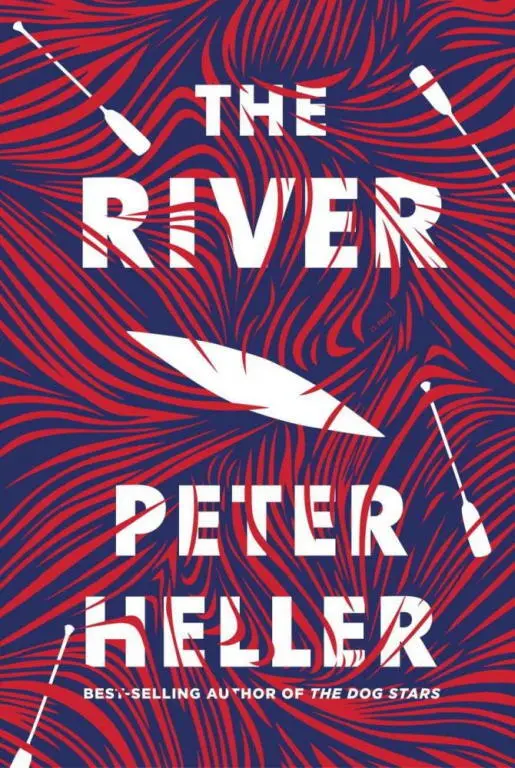
- Название:The River
- Автор:
- Издательство:Alfred A. Knopf
- Жанр:
- Год:2019
- Город:New York
- ISBN:978-0-5255-2187-7
- Рейтинг книги:4 / 5. Голосов: 1
-
Избранное:Добавить в избранное
- Отзывы:
-
Ваша оценка:
The River: краткое содержание, описание и аннотация
Предлагаем к чтению аннотацию, описание, краткое содержание или предисловие (зависит от того, что написал сам автор книги «The River»). Если вы не нашли необходимую информацию о книге — напишите в комментариях, мы постараемся отыскать её.
Wynn and Jack have been best friends since freshman orientation, bonded by their shared love of mountains, books, and fishing. Wynn is a gentle giant, a Vermont kid never happier than when his feet are in the water. Jack is more rugged, raised on a ranch in Colorado where sleeping under the stars and cooking on a fire came as naturally to him as breathing. When they decide to canoe the Maskwa River in northern Canada, they anticipate long days of leisurely paddling and picking blueberries, and nights of stargazing and reading paperback Westerns. But a wildfire making its way across the forest adds unexpected urgency to the journey. When they hear a man and woman arguing on the fog-shrouded riverbank and decide to warn them about the fire, their search for the pair turns up nothing and no one. But: The next day a man appears on the river, paddling alone. Is this the man they heard? And, if he is, where is the woman? From this charged beginning, master storyteller Peter Heller unspools a headlong, heart-pounding story of desperate wilderness survival.
The River — читать онлайн бесплатно полную книгу (весь текст) целиком
Ниже представлен текст книги, разбитый по страницам. Система сохранения места последней прочитанной страницы, позволяет с удобством читать онлайн бесплатно книгу «The River», без необходимости каждый раз заново искать на чём Вы остановились. Поставьте закладку, и сможете в любой момент перейти на страницу, на которой закончили чтение.
Интервал:
Закладка:
They walked maybe a quarter mile and Jack whispered, “This is probably far enough. We’ll just wait.” His voice was a croak. He felt tired beyond reckoning. They scraped a patch of ash and scorched soil away with their boots and stood mute as the embered edges of the spiked trees breathed around them. It was not real. Jack looked around and thought that the Inferno was not credible: not because the details of Hell were beyond the pale—they were—but because of the unshakable equanimity of Virgil.
They waited there for hours. They leaned together and held her and slept like horses, standing. The ground was still too hot to sit on. She was weak and she buckled between them and they held her up. A crescent moon clawed out of the smoke to the east, a dim moon, heavy with blood. When she collapsed again they decided to move. It was too much—they’d take their chances on the beach.
They walked slowly back. They were dreamwalking now. She was mumbling, inarticulate. Jack couldn’t look at Wynn; whenever they passed a stump still burning, the large sear on his face glistened with pus and blood. He kept his eyes on the retreating flames eastward, a dread stare, his arm gone numb from holding her up. Wynn held her belt and thought of nothing. He saw shadows passing, shaped like caribou, coyote, moose, fleet and weightless as smoke, he even saw a bear, and he knew they were ghosts. Or maybe his eyes were closed; he kept snapping them open.
They stumbled down the bank to the stony bar. The hulk of the canoe lay there unharmed and Jack startled with a jolt of adrenaline, the thought: What if the fire had flashed back and burned the boat? What would they have done then? No logs even to make a raft. He hadn’t thought it through. They would have stood stunned on the narrow beach like castaways and watched a red sun rise on their own deaths.
Fuck. No way to truly reckon the odds, ever. They had been lucky. Was all this lucky?
They slept on the rocks, oblivious of the cold. At least the heat of the burn had dried their clothes and warmed their chilled bones. At the first touch of grainy light they slid the canoe to the water without a word and helped her in and she lay down against the bag and passed out. They shoved off and picked up the paddles. They could see their breath. In the gray dawn the river smoked with tendrils of mist. No wind, the water glass-smooth. No sound but the current frilling the stones of the bank. No bird chatter, no crickets. The river and the burns on either side were very still, the only movement there the tatters of flame worrying the biggest fallen logs. Jack said, “Big, we need fuel. Food. There won’t be any berries for miles is my bet.”
“Do you want to fish?” Thank God they’d broken down the rods and packed them in the bag.
“We’d better.”
“Okay. I’ll aim for the first creek.” Wynn picked up his paddle and put it down again. The boat was still gliding from their first strokes—the silent slip and freedom from land like flight that they both so loved. “That was really close,” he said.
“Yep.”
“I feel relieved,” Wynn said.
“Me, too. I do.”
Wynn opened his mouth to speak, had nothing to say. Jack was half turned on the bow seat, watching him. “I know,” Jack said. Wynn’s face was torn open by the burn and smeared with black and runneled pale where the tears ran. “I know. We did good,” Jack said. “We did.” Jack felt his own tears spring and he turned in the seat and began to paddle.
It was exhaustion, Jack thought. The tears. Hunger, exposure, exhaustion. How long could they keep this up?
One good thing: the man would have no cover. Not up here. Had he survived the fire? He’d had maybe a day lead and might have missed it altogether. But then who knew how far down the river the fire ran? For all they knew it went to the delta, the coast. What would stop it? But they had to assume he still lived. In the burn they’d be able to see him way before they got into shotgun range. They still had the rifle, thank God. If the scope hadn’t been knocked too badly they could drift and find him and pick their shot. Not they, Jack. Wynn would still not sanction the long-shot kill. Well, maybe he would now. Jack thought that it didn’t matter—he would hunt and snipe the man the first chance, and as long as Wynn didn’t fuck with him and try to unbalance the boat, he would kill him.
They paddled. The sun rose and burned almost crimson through the smoke that lay over the eastern horizon like a weather front, not even visible as sun until halfway to the zenith, and even then it was a hot red disk that looked more like some molten planet than a star. All along the cut banks were the scribed traces in damp earth where embedded roots had been, blackened and forking lines like some inscrutable calligraphy. The topography revealed was desolate. So much of the country had been covered in lichen and moss sometimes feet thick, and it had all burned away in the night, and the underbrush, the fireweed and willows, all that was left was seared dirt and bedrock, the black spears of trees, sepulchral, and without the woods there was the much longer view, the slight rising and falling of ground in every direction, the humps of eskers mostly bare of stumps, the folds where creeks had run, dry as if boiled off. Not fun, Wynn thought. The earth stripped to its geography did not feel like home.
There was still a handful of power bars in the day box and when Maia woke and sat up Wynn thumbed open the latches and fished out three and they each ate one. They drifted. The sugar in the blood felt almost like a cup of strong coffee and each felt suddenly more awake, alert. They were starving, for sure, Jack thought. He looked up and down the banks and of course there was nothing, nothing to forage. And no wood, he realized now, to make a fire. Though the thought of touching match to wood almost made him shudder. They had the pot still. How would they cook the last of the freeze-dried meals? She could eat them soaked cold. How would they make tea to fortify themselves? Forest fires were always, always patchy, there would be spots along the bank that for whatever reason had been jumped over, there had to be—they’d have to keep their eyes out. For that, and for the man. Maybe it was the rush of protein and sugar, but before he could take back the words he spoke them: he said, “Maia. Maia, right? Your fucker husband was waiting in ambush back at the last falls. What are the odds he will keep this up? I mean if he’s not cinders by now.”
He could see only the back of her head. The wild hair unbound from the braid in the long swim. She’d also lost the wool hat and the bandage. “You mean trying to kill us?” she said softly. It surprised him. The ready, cogent answer. She must be healing somehow, even with all the trauma.
“Yes.”
Jack glanced at Wynn, who looked stricken. Jack felt like slapping him. What you don’t want to look at can still kill you, Big. What he wanted to say but didn’t. Well, he’d kill the man himself if it came to that.
She was very still. Not the stillness of passivity, but the stillness of holding oneself rigid in the face of some emotional wind. She was definitely getting her strength back. “He tried to murder me.”
“What I was thinking,” Jack said gently.
She said, “Unless we are very lucky, someone is going to die.”
They tried to make sense of the map. They had lost their bearings in the night paddle and were not sure which rapids they had passed. The river ran north but it meandered broadly, in places even bending south, and it had changed a lot since the survey in 1959, but the general contours must be the same. Still, it was hard to orient the map with the sun overhead. When it began to lower westward they’d have a better shot. Even better after dark. The last couple of nights had been clear, and tonight, with a long enough stretch of river visible ahead of them, they could probably get a bearing on the North Star and correlate the shape of the river they could see. It was important to put a pin in it. Jack said, “For one, we don’t want to get surprised by another rapid. For two, he’s operating under the same constraints: he can’t let us pass him. So he’ll be waiting again where he knows we’ll stop, at the top of a portage. Right at the top of the next big drop.”
Читать дальшеИнтервал:
Закладка:
Похожие книги на «The River»
Представляем Вашему вниманию похожие книги на «The River» списком для выбора. Мы отобрали схожую по названию и смыслу литературу в надежде предоставить читателям больше вариантов отыскать новые, интересные, ещё непрочитанные произведения.

Обсуждение, отзывы о книге «The River» и просто собственные мнения читателей. Оставьте ваши комментарии, напишите, что Вы думаете о произведении, его смысле или главных героях. Укажите что конкретно понравилось, а что нет, и почему Вы так считаете.