Джон Пристли - Benighted
Здесь есть возможность читать онлайн «Джон Пристли - Benighted» весь текст электронной книги совершенно бесплатно (целиком полную версию без сокращений). В некоторых случаях можно слушать аудио, скачать через торрент в формате fb2 и присутствует краткое содержание. Жанр: Триллер, на английском языке. Описание произведения, (предисловие) а так же отзывы посетителей доступны на портале библиотеки ЛибКат.
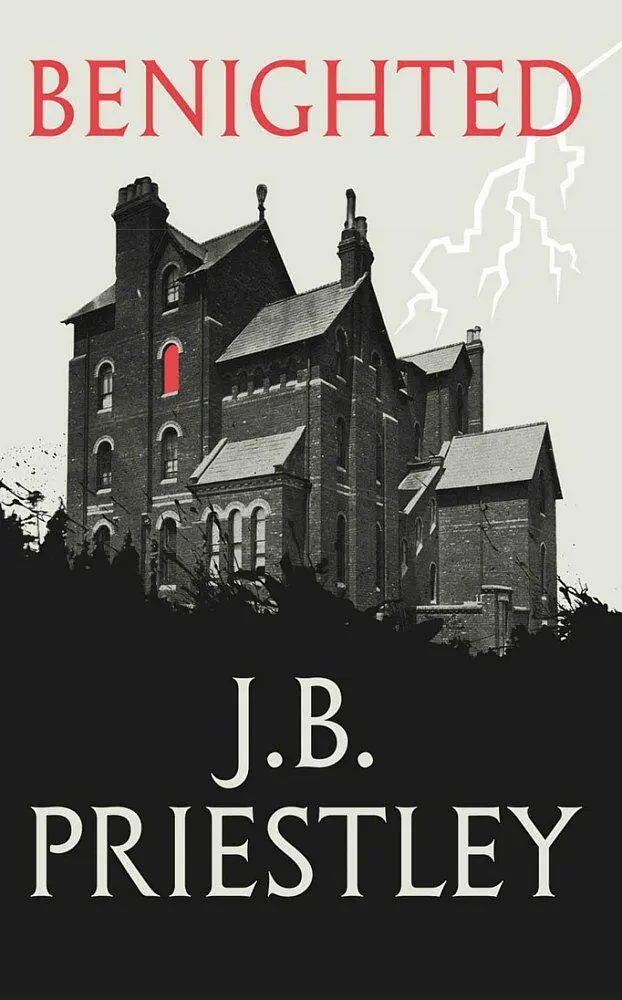
- Название:Benighted
- Автор:
- Жанр:
- Год:неизвестен
- ISBN:нет данных
- Рейтинг книги:3 / 5. Голосов: 1
-
Избранное:Добавить в избранное
- Отзывы:
-
Ваша оценка:
Benighted: краткое содержание, описание и аннотация
Предлагаем к чтению аннотацию, описание, краткое содержание или предисловие (зависит от того, что написал сам автор книги «Benighted»). Если вы не нашли необходимую информацию о книге — напишите в комментариях, мы постараемся отыскать её.
On the house's top floor are two locked doors; behind one of them lies the mysterious, unseen Sir Roderick Femm, and behind the other lurks an unspeakable terror. Which is more deadly: the apocalyptic storm outside the house or the unknown horrors that await within? And will any of them survive the night?
The book was written and published in 1927. And in 1932 it was adapted for the screen: "The Old Dark House" (1932) with Boris Karloff and Charles Laughton
Benighted — читать онлайн бесплатно полную книгу (весь текст) целиком
Ниже представлен текст книги, разбитый по страницам. Система сохранения места последней прочитанной страницы, позволяет с удобством читать онлайн бесплатно книгу «Benighted», без необходимости каждый раз заново искать на чём Вы остановились. Поставьте закладку, и сможете в любой момент перейти на страницу, на которой закончили чтение.
Интервал:
Закладка:
Margaret had heard and understood. "Yes, I'll get you some," she said, and taking up the glass from the little table, she went in the direction the hand had pointed and filled the glass from a carafe that she found on the top of a chest of drawers there. She still trembled slightly and felt a little heart-sick, but the action gave her a certain feeling of warmth and confidence. Returning with the glass, she put it into the awaiting hand, a frail curve of bone. "Can you take it yourself," she enquired gently, "or shall I give it to you?"
"I can – do it – myself, – thank you." The hand closed round the glass and slowly raised it. For one second the water caught and held the candle-light and became liquid gold. The old man's head came forward shakily, and they had a glimpse of a great curved nose, shaggy white brows, and wasted cheeks. Somehow it didn't seem difficult to believe that he had once been easily the tallest and strongest and handsomest of the family, a magnificent figure. He had been a great man once, they had said. No doubt it was true; and now he could hardly raise the glass to his lips, and when he did at last succeed in drinking some of the water, spilling it into his mouth, it seemed a triumphant achievement.
The water appeared to revive him, however, for he was able to replace the glass on the table, and though his head sank back again upon the piled pillows, into the deep shadow of the curtains, there seemed to be a faint trace of animation in his movements. But his voice remained the same, a ghostly whisper, a mere breath in the air. Yet it was he who spoke first, before Margaret could ask him if there was anything else he wanted.
"What was – the noise there?" he asked.
Margaret explained, very briefly and as lightly as she could, what had happened outside. She had stepped back now and was standing by the side of Philip.
"Morgan – is a savage," they heard. "It was – the drink though. We have had to keep him here" – and the voice trailed away into a long pause – "because of my brother. I must – apologise for him."
This was the master of the house, though he seemed to whisper to them across an open grave, and here were accents they had not caught before under this roof. It was queer how this little speech appeared to lift a weight, the pressure of something unnamed, from their minds.
"Did you say – you were husband and wife?" The whisper came again, after a brief silence, filled with departing images.
"Yes, we are," Margaret replied, very simply, like a child; and Philip felt her hand on his arm. She couldn't help it; answering that had somehow been like another marriage ceremony, graver than that other in the little church at Otterwell. She thought of that, and then innumerable little pictures flashed across her mind: the two of them dining together that night at the Gare de Lyon; then going through the dust and faerie of Provence; the tiny flat in Doughty Street, with Philip painting the fireplace; the Hampstead house and Betty in the garden; and with all that had not been shared since flitting darkly through her mind like a bad dream.
He spoke again out of the shadow. "You are fortunate – very fortunate. I never married. There was – so much to do – but I came – to be very lonely – at last." In spite of the frequent pauses, there was no gasping nor obvious effort in his speech, and its faint drip-drip of words gave it a strangely remote, oracular quality. He wasn't conversing, Philip felt; he was too old for that; there was only time to call faintly from the darkening hillside. Philip didn't want to move nor even to speak; he only wanted to stand there, staring across the flame of the candle, listening and wondering.
There was a slight stirring in the bed and the hand groped its way towards the little table. Margaret started forward out of her dream and gave him the glass again. This time he leaned further forward than before, and after he had sipped and the glass had been replaced he remained where he was, looking at them, with the light falling on his face. Years and disease had played havoc there, and his eyes were hidden by his thick brows; but, over and above all that, there was a marked difference between him and the other two Femms. They had only a moment, however, in which to return his scrutiny, that curiously impersonal stare of old age, for no sooner had he spoken again than he sank back into the shadow. "You shouldn't have come here," he whispered, and then vanished from the light.
"Oh, I'm sorry," said Margaret, hastily apologetic. "But we couldn't help it, you know. We were absolutely cut off and had no other place to shelter in." She flashed a glance at Philip.
"It wasn't a mere matter of comfort," he put in, "but of escaping from real danger. There was a landslide and a flood." He felt as if he were earnestly addressing nothing, as if Sir Roderick had departed and would not return until he was ready to make another remark.
He made another now. But first they saw the hand on the counterpane lifted, presumably to cut short their explanations and apologies. "I'm afraid – you misunderstand me," he said very slowly. "You make me – seem inhospitable. I was never that – never." Here they caught the dry husk of a laugh, a ghostly and incredible sound. "This house – was always filled with guests – at one time – years ago – many years." They could almost hear those years rustling by in the long pauses. And Margaret suddenly thought of Rachel Femm and the young men who came riding in and the women smothered in silks and scents who had laughed at Miss Femm. This room, the whole house, was dimmed and thick with presences, haunted.
"I wish – I could have – received you," the whisper, so curiously remote, began again. "But you see, I am – old – ailing – tired now. I have done – with life. No – not quite done. There is always something – we want. Now – it is – a drink of water."
"Do you want one now?" Margaret asked, reaching out for the glass. She did not choose to see beyond the simple need.
"Thank you," he said, without emphasis; and the hand went fumbling out. In that gesture, even more than in the two whispered words, Philip seemed to discover a deliberate and frugal irony, an irony that would have been simply terrifying at any other time. Now, after so many of his thoughts had gone down this dusty way, it came strangely to reassure him. He was able to cling to the fact that something looked out above the wreckage, unconquered, serene.
Once more refreshed by a sip or two of water their host returned to the shadows and spoke again. "No doubt – when you came – they told you. I don't know what – they told you."
"We were told," said Margaret, very quietly, "that you were an invalid and in bed."
"That is – only the beginning. Was that all?"
Remembering so many things, Margaret felt confused, and looked at Philip. But Philip, not knowing how to begin to answer the question, shook his head. He felt as if the old man were listening carefully to their silence and would soon reply to it.
This he did. "You have seen – my brother, Horace – and my sister? And Morgan – you have seen him. You have been thinking – this is a strange house – a strange family. You may have wondered – whether you did well – in coming – even for shelter – out of the storm – into this house – this old dark house. I should like – to tell you everything – to explain. But there's no time – no time to explain. I like to see you – standing there – very young, younger than you think – and I haven't seen – anybody like you – so young – for many a year. I had almost forgotten. . . ." His voice floated into a silence. They waited, unstirring, for him to come groping out of his reverie. Then he went on, more brokenly now: "I could have told you – a long story – but no time. And talking – tires me."
Читать дальшеИнтервал:
Закладка:
Похожие книги на «Benighted»
Представляем Вашему вниманию похожие книги на «Benighted» списком для выбора. Мы отобрали схожую по названию и смыслу литературу в надежде предоставить читателям больше вариантов отыскать новые, интересные, ещё непрочитанные произведения.


Обсуждение, отзывы о книге «Benighted» и просто собственные мнения читателей. Оставьте ваши комментарии, напишите, что Вы думаете о произведении, его смысле или главных героях. Укажите что конкретно понравилось, а что нет, и почему Вы так считаете.