Джон Пристли - Benighted
Здесь есть возможность читать онлайн «Джон Пристли - Benighted» весь текст электронной книги совершенно бесплатно (целиком полную версию без сокращений). В некоторых случаях можно слушать аудио, скачать через торрент в формате fb2 и присутствует краткое содержание. Жанр: Триллер, на английском языке. Описание произведения, (предисловие) а так же отзывы посетителей доступны на портале библиотеки ЛибКат.
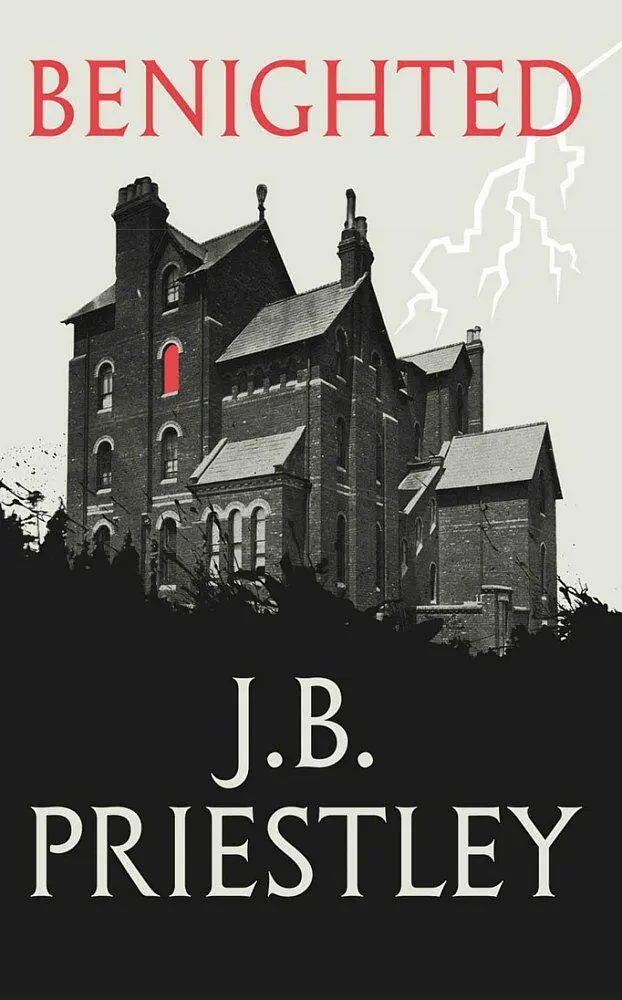
- Название:Benighted
- Автор:
- Жанр:
- Год:неизвестен
- ISBN:нет данных
- Рейтинг книги:3 / 5. Голосов: 1
-
Избранное:Добавить в избранное
- Отзывы:
-
Ваша оценка:
Benighted: краткое содержание, описание и аннотация
Предлагаем к чтению аннотацию, описание, краткое содержание или предисловие (зависит от того, что написал сам автор книги «Benighted»). Если вы не нашли необходимую информацию о книге — напишите в комментариях, мы постараемся отыскать её.
On the house's top floor are two locked doors; behind one of them lies the mysterious, unseen Sir Roderick Femm, and behind the other lurks an unspeakable terror. Which is more deadly: the apocalyptic storm outside the house or the unknown horrors that await within? And will any of them survive the night?
The book was written and published in 1927. And in 1932 it was adapted for the screen: "The Old Dark House" (1932) with Boris Karloff and Charles Laughton
Benighted — читать онлайн бесплатно полную книгу (весь текст) целиком
Ниже представлен текст книги, разбитый по страницам. Система сохранения места последней прочитанной страницы, позволяет с удобством читать онлайн бесплатно книгу «Benighted», без необходимости каждый раз заново искать на чём Вы остановились. Поставьте закладку, и сможете в любой момент перейти на страницу, на которой закончили чтение.
Интервал:
Закладка:
"Go on," said Philip, after they had waited a few moments. For that he received one of Margaret's fierce little nudges, always so surprising because they never seemed part of her. They belonged, in fact, to the other Margaret, the one inside. This was the first he had had for some months and it was so welcome that it tingled.
"I'll cut it short," said Penderel. "Well, the good fellows were nearly all gone, love was off, and the world was in a filthy muddle, but there was still work. That was the thing. I told myself I'd work like hell. I could have gone up to Oxford or Cambridge, but didn't want to go. I wasn't in the mood for listening to the patter of dry little men in spectacles and then going ragging with a lot of kids. I felt there was nothing a varsity could teach me that I wanted to learn. Pure arrogance, of course, but there you are. I didn't even want to play their games, their solemn good-form games. I'd go and work, find a man's job. There was an African scheme going, good land for ex-officers and all that, and so I scraped together every penny I had and went into it and out to Africa. I won't bore you with that. It was a swindle, and a particularly dirty swindle, the kind that sticks in your gullet. Africa didn't want me, at least the part I saw didn"t, and I came back broke. I drifted about town for some time and swapped drinks with other fellows in the same boat. The work idea was off, but I was still looking for a job, which isn't the same thing at all though. One or two of the fellows I knew joined the Black and Tans, and I nearly joined myself – nobody else seemed to want me – but I happened to like the Irish and I didn't like the sound of their prospective job. So I hung about, talking over schemes with other drifters and having too many drinks. I sold one or two things on commission but found it a poor, dirty game. Then I found I hadn't a bean, didn't want to borrow, so put in a spell of navvying, up North on some public works, got the job through pure influence. That did me good, but I haven't the navvy temperament and technique and it was about as hard as a spell of penal servitude. But I stuck it till we were paid off, came back to town and went round the bars, seeing if there was anything doing. There was – there always is, if you've got the stomach for it – but I couldn't do it. I tried to write – I'd got plenty of material – but could only make a rotten hack job of it, just spoiling the stuff. Then my mother died. She'd not had much to live for after father and Jim went. My one sister had married and was out in India, and I wasn't exactly a howling success as the prop and mainstay of the family. Some money came to me. It wasn't much and it didn't last long. I've seen to that. There's still a little tied up, but I've borrowed on the strength of that. When you've nothing to do, no aim of any kind, very few real friends, money doesn't last long. There are twenty-four hours in every day to be paid for, bought off, you might say. I'm one of the ugly ducklings of the War generation, the sort that will never become swans. Already another generation's come up, who understand this world, who don't let it take them in, kids soft enough in body and speech but really as hard as nails, all out for a damned good time. They know what they want and how to get it, and nothing's going to take them in. I'm out too for a damned good time – there's nothing else to be out for, nothing left – but I don't get it. And I never will."
He looked round at the faces turned to his. Mr. Femm appeared impassive, Sir William slightly uncomfortable, and the Wavertons and Gladys serious and sympathetic. Then suddenly he started up and broke into speech again, this time swiftly, vehemently.
"You think I've justified myself," he cried to them. "I haven't really. It's cant, though not the worst kind, but still it's cant. It's weak sentimentality merely turned topsy-turvy. I've realised that when I've heard other fellows explaining away their slackness. It's nearly as bad as being one of those creatures who, when they get put into the dock, begin snivelling about their War record. It's not the first time that boys have left school to be shot at, have lost their brothers and friends, have been jilted, have been swindled. If a man's got guts, he ought to be able to win through. That's what you ought to tell me. I know it. I know this disillusion or cynicism or bitterness or whatever it is is the new cant, an attitude, weakness trying to disguise itself. And that makes it worse for me. I say I ought to be able to win through, and then I ask myself 'win through to what?' I don't like being in this pit, but there's no motive-power to lift me out, or you might say there isn't even any 'out.' You can put it another way. I asked Waverton what he thought was the great snag in life, the catch in it. I asked that because I was curious. I wondered if his idea would agree with mine. But it didn"t. Mine's this. If you approach life in the old noble-silly fashion, then it'll simply cheat you and bump you badly. If you don"t, if you crawl into it with no grand illusions, then you'll come to terms with it, of course, and live easily, but you'll be nothing but a pig, and it's not worth having at all on those terms."
"That's not unlike mine, you know," said Philip. "Only I feel I could patch up your trouble, that a compromise is possible."
"And that's what I felt about yours," cried Penderel. "I felt it would be possible to find a safe seat somewhere between the horns of your dilemma, but not between those of mine. Of course, if you're a born pig, you don't feel it, but if you've merely turned piggy, it hurts for a time. I'm hoping it'll stop hurting soon. I've turned piggy, of course."
"You're a raging idealist," Margaret smiled at him, "or you wouldn't talk like that."
"That's it," said Sir William, complacent now. "He wants the moon."
"No, that's wrong," replied Penderel, eagerly. "That's something quite different. I know people like that, but if you think I am, you've missed the point."
"I don't know, Penderel," said Philip. "Surely it's really a matter of wanting better bread than can be made of wheat, as someone once said of somebody."
"No, it isn"t." Penderel was very emphatic. "It's worse than that. It's finding that bread made out of wheat isn't worth eating."
"That's the same thing," Philip told him.
"I don't mean it to be." He leaned forward on his elbow and frowned. "Wait a minute and I'll tell you what I mean."
"I know what you mean." Gladys's voice surprised them all, for somehow they had not expected her to speak. "Well, if I don't know what you mean, I know what's the matter with you. You've nothing to live for. You're just passing the time and it's rotten. Everything so far's been a washout, and now it's Monday morning all the week."
Both Penderel and Sir William opened their mouths to speak, but they were drowned by a new voice that was so shrill and unexpected that it startled them all. Miss Femm had returned and was approaching the table, shrieking at her brother.
"Morgan's at the bottle again," she was shrieking. "I knew he'd begin to-night. Where did he get it from?"
Mr. Femm bit his lips. "He did not get it from me. Can't you stop him?"
"There's no stopping him now. He's there in the kitchen, stupid already. I'll take these things away, the rest can stop where they are." And she bore away the remains of the joint and the cheese.
The others pushed back their chairs and rose to their feet. That entrance had obviously put an end to their talk, during which they had seemed to be sitting on a bank, watching life go by like a river and pointing out to one another its eddies and ripples and gleams; but now, with the opening of a door and the sound of another voice, life seemed to be roaring round them again; they were in the river.
Miss Femm was back again. "If he goes on, he'll have to be watched," she screamed. "It's getting worse outside too. We've not done with it yet." She departed with the bread and the butter.
Читать дальшеИнтервал:
Закладка:
Похожие книги на «Benighted»
Представляем Вашему вниманию похожие книги на «Benighted» списком для выбора. Мы отобрали схожую по названию и смыслу литературу в надежде предоставить читателям больше вариантов отыскать новые, интересные, ещё непрочитанные произведения.


Обсуждение, отзывы о книге «Benighted» и просто собственные мнения читателей. Оставьте ваши комментарии, напишите, что Вы думаете о произведении, его смысле или главных героях. Укажите что конкретно понравилось, а что нет, и почему Вы так считаете.