Джон Пристли - Benighted
Здесь есть возможность читать онлайн «Джон Пристли - Benighted» весь текст электронной книги совершенно бесплатно (целиком полную версию без сокращений). В некоторых случаях можно слушать аудио, скачать через торрент в формате fb2 и присутствует краткое содержание. Жанр: Триллер, на английском языке. Описание произведения, (предисловие) а так же отзывы посетителей доступны на портале библиотеки ЛибКат.
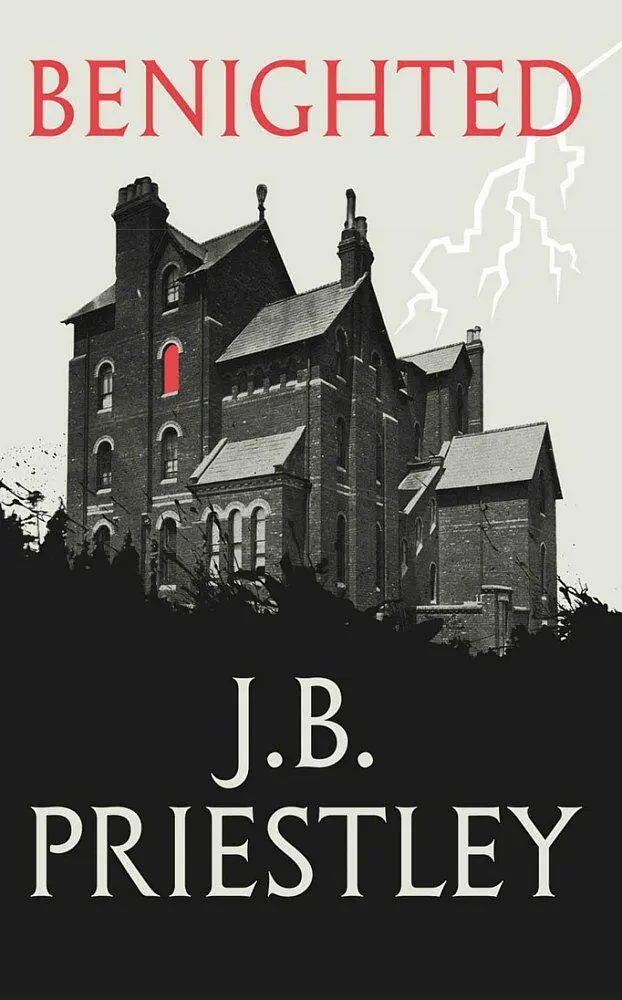
- Название:Benighted
- Автор:
- Жанр:
- Год:неизвестен
- ISBN:нет данных
- Рейтинг книги:3 / 5. Голосов: 1
-
Избранное:Добавить в избранное
- Отзывы:
-
Ваша оценка:
Benighted: краткое содержание, описание и аннотация
Предлагаем к чтению аннотацию, описание, краткое содержание или предисловие (зависит от того, что написал сам автор книги «Benighted»). Если вы не нашли необходимую информацию о книге — напишите в комментариях, мы постараемся отыскать её.
On the house's top floor are two locked doors; behind one of them lies the mysterious, unseen Sir Roderick Femm, and behind the other lurks an unspeakable terror. Which is more deadly: the apocalyptic storm outside the house or the unknown horrors that await within? And will any of them survive the night?
The book was written and published in 1927. And in 1932 it was adapted for the screen: "The Old Dark House" (1932) with Boris Karloff and Charles Laughton
Benighted — читать онлайн бесплатно полную книгу (весь текст) целиком
Ниже представлен текст книги, разбитый по страницам. Система сохранения места последней прочитанной страницы, позволяет с удобством читать онлайн бесплатно книгу «Benighted», без необходимости каждый раз заново искать на чём Вы остановились. Поставьте закладку, и сможете в любой момент перейти на страницу, на которой закончили чтение.
Интервал:
Закладка:
"Your turn to answer now, Miss Du Cane," Penderel told her. "You're in this, of course?"
Yes, she was in it, and looked eagerly at Sir William. "Come on," she cried, "let's know the worst."
"So it's your turn, Miss Du Cane, is it?" Sir William smiled rather grimly at her. The name itself suggested a question to him. "Suppose, then, you tell us exactly who you are."
"Well, if you're not the limit!" There was real anger in her fine eyes. "What d"you mean by your ' exactly who you are'?"
The others felt uncomfortable, but Sir William himself was not disturbed. "Nothing in that. I mean, give us a few biographical details, the sort of thing you find in 'Who's Who.' Think of the question I had to answer. Yours is easy." But there was a touch of malice in the smile he gave her.
Gladys stared at him, pushing out her full underlip, then gave a slight shrug and leaned back in her chair. "All right then. Here goes." But she stopped for a moment and looked in front of her with unseeing eyes. Then she seemed to give herself a little shake, lifted her chin, and spoke out briskly and bravely. "Well, to begin with my name's not Du Cane. Probably none of you thought it really was, but that doesn't make it easier to say right out that it isn"t. My real name's Hoskiss; the Gladys is all right. When I first thought of trying to get into the chorus, I wanted another name, and I happened to see a book called 'The Expensive Miss Du Cane.' That's me, I thought. I was only a kid, seventeen about, at the time. We lived down in Fulham, Walham Green, to be exact, just off North End Road. There were seven of us, three girls, two boys, and mother and father. Father's a joiner, when he's working. I don't suppose any of you know North End Road and district. You should go and have a look at it some time. It's not one of these absolutely poverty-stricken places, and it strikes you as being quite cheery, lively in fact – so long as you're half tight or don't have to live there. I used to run up and down North End Road fetching fried fish and bottles of stout for the family, and try to make enough to get into the gallery of the Granville – that's the little music-hall at the bottom. We'd only got half a house for the whole seven of us, and the house itself was no size at all, and we were always in one another's way, with everybody grousing and nagging like fury. We'd one little room for the three of us, the girls I mean, and you can imagine what that was like, each of us shoving the others" things out of the way or borrowing them to go out in. I was always doing that, being the youngest. Maggie, my eldest sister, got a job as a waitress, met a soldier on leave she liked who said he'd marry her when the war was over. She had a baby and he never came back, and that was that. The kid's at home now and Maggie's still a waitress, though not at the same place. Ethel, the one next to me, went to work in a laundry and then got married, married to something that looks like a rat and acts like one. The only thing you could say in his favour was that he was a great change after a laundry. Then I had to go out and work, and went through job after job, three months in one of those cheap sweet shops run by a dirty little Jew who was always putting his arm round me, another three months running about in a big draper"s, running round from morning till night, till I was fit to drop, then in other shops till I landed in the pictures, odd-job girl at one of the local picture palaces. That suited me all right, and at first I thought no end of myself, but the money was rotten, the manager got too friendly, and I couldn't stick being at home. After I'd been an hour in that house, I wanted to scream. Every time I went up West – to see a show at Daly's or the Gaiety or the Palace or the Palladium – I'd be awake half the night. And then one night I went to the Granville with two girls I knew and some boys, and they took us into the bar at the interval and gave us some port, and some people from the show came in and we all got friendly. One of the girls had dropped out of that show – it was a revue called 'Oh, my eye!"" absolutely fifteenth rate – and I dropped in. They'd been playing at some of the little London halls and were now going down into the country on one of the bread-and-dripping tours, you know the sort, All This Week in the Pier Pavilion or Three Nights Only at the Corn Exchange. I went with "em, Miss Du Cane, third from the right in the chorus of twelve. And that's how Gladys left home."
"Ever been back since?" asked Sir William.
"Course I have. But not to live, not likely. I used to look in sometimes when I was flush, and take something for mother or Maggie's kid. I like "em all and they like me. If you take any one of them away, get them into a quiet corner away from home and the others, put a drink in front of them, they come out then, you really get to know them. It's when they're all jumbled up together at home, nagging and grousing and snarling, that they get on your nerves, at least on mine." She looked across and met Margaret's level glance. "But that's enough of that. I'm not going to tell the story of my life, sir, not even to-night when we're all lost and far from home and Piccadilly Circus seems to be somewhere in New Zealand."
"Well, ask a question then," said Sir William. "Get your own back." He was enjoying this and was wondering what Gladys would demand of the rather pale but bright-eyed youngster on her right, Penderel, with whom she seemed to have struck up a friendship at once.
Gladys leaned forward and then turned her head so that she could look Penderel almost squarely in the face. He was telling himself that her eyes were like very old brown sherry, when she brought out her question. "What are you so bitter about?"
"Me!" It had taken his breath away.
"Yes, you." She nodded at him like a wise child.
"Why, am I bitter?"
"I think you are," she told him. She appealed to the Wavertons.
"I know what you mean," said Margaret. "It's not perhaps the exact word, but it will do." Then she addressed herself to Penderel: "Yes, you are bitter, you know."
"Of course you are, Penderel," said Philip heartily. "You're one of the worst post-War cases I know, a thundering sight worse than I am. Come on, admit it. You're the sort of bloke they denounce in little talks in Bright Sunday Evening Services." He grinned and pointed his pipe-stem across the table. "Stand up to your question and explain the wormwood."
Penderel made a comical little grimace. "Well, I never knew I was so obvious. I suppose I shall have to explain myself. I went into the War when I was seventeen, ran away from school to do it, enlisting as a Tommy and telling them I was nineteen. I'm not going to talk about the War. You know all about that. It killed my father, who died from over-work. It killed my elder brother, Jim, who was blown to pieces up at Passchendaele. He was the best fellow in the world, and I idolised him. It was always fellows like him, the salt of the earth, who got done in, whether they were British or French or German or American. People wonder what's the matter with the world these days. They forget that all the best fellows, the men who'd have been in their prime now, who'd have been giving us a lead in everything, are dead. If you could bring "em all back, fellows like Jim, hundreds and hundreds of thousands of "em, you'd soon see the difference they'd make in the place. But they're dead, and a lot of other people, very different sort of people, are alive and kicking. Well, I saw all this, took an honours course in it, you might say, for it was the only education I got after the fifth form. Then towards the end of the War I fell in love. I was convalescent in a country house and it was spring. She was staying there, and every time we went out walking every little gust of wind snowed down blossom on us. I've never seen a place so thick with apple blossom and cherry blossom. And she'd be waiting down there. We became engaged. The world was all made over again and I'd only got to see the War through to find it all waiting for me. I thought about nothing else, went back to France, went through the dust and the gas of the last push in the summer and autumn of "eighteen, thinking about nothing else. Then just after the Armistice I got a letter. It was all a mistake; we weren't really suited, too young to know then; she'd found someone else; we'd always be friends. All very reasonable, no doubt, but you see I'd been thinking about nothing else. I got out of the Army, went home and saw her once, and gave it up. But I remember I went down to the old place that spring, in "nineteen, and all the damned blossom was out again, miles of it, snowing through the air as it did before. It made me ache to see it. I told myself that it hadn't been there for me and only another kind of frost would stop it. I packed my traps and set off to look for work." He stopped and looked down at his fingers drumming on the table.
Читать дальшеИнтервал:
Закладка:
Похожие книги на «Benighted»
Представляем Вашему вниманию похожие книги на «Benighted» списком для выбора. Мы отобрали схожую по названию и смыслу литературу в надежде предоставить читателям больше вариантов отыскать новые, интересные, ещё непрочитанные произведения.





Обсуждение, отзывы о книге «Benighted» и просто собственные мнения читателей. Оставьте ваши комментарии, напишите, что Вы думаете о произведении, его смысле или главных героях. Укажите что конкретно понравилось, а что нет, и почему Вы так считаете.