William Bernhardt - Capitol Offense
Здесь есть возможность читать онлайн «William Bernhardt - Capitol Offense» весь текст электронной книги совершенно бесплатно (целиком полную версию без сокращений). В некоторых случаях можно слушать аудио, скачать через торрент в формате fb2 и присутствует краткое содержание. Жанр: Триллер, на английском языке. Описание произведения, (предисловие) а так же отзывы посетителей доступны на портале библиотеки ЛибКат.
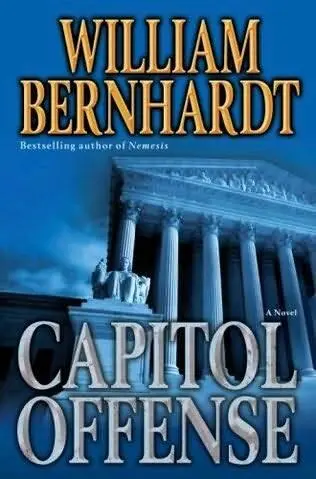
- Название:Capitol Offense
- Автор:
- Жанр:
- Год:неизвестен
- ISBN:нет данных
- Рейтинг книги:4 / 5. Голосов: 1
-
Избранное:Добавить в избранное
- Отзывы:
-
Ваша оценка:
Capitol Offense: краткое содержание, описание и аннотация
Предлагаем к чтению аннотацию, описание, краткое содержание или предисловие (зависит от того, что написал сам автор книги «Capitol Offense»). Если вы не нашли необходимую информацию о книге — напишите в комментариях, мы постараемся отыскать её.
Professor Dennis Thomas arrives at the law office of Ben Kincaid with a bizarre request: Thomas wants to know if Kincaid can help him beat a murder charge-of a killing yet to happen. The professor’s intended victim: a Tulsa cop who had refused to authorize a search for Thomas’s missing wife. For seven days, Joslyn Thomas had lain in the twisted wreckage of her car, dying a horrifically slow death in an isolated ravine. Now, insane with grief, Thomas wants to kill Detective Christopher Sentz. Kincaid warns him not to, but that very same day someone fires seven bullets into the police officer.
Suddenly Kincaid’s conversation with Thomas is privileged and Thomas is begging Kincaid to defend him. Thomas claims he didn’t shoot Sentz-even though he’d wanted to. Something about the bookish, addled Dennis Thomas tugs on Kincaid’s conscience, and against all advice, he decides to represent this troubled man in the center of a media and political firestorm.
But the trial doesn’t go Kincaid’s way, and a verdict of capital murder is bearing down on Dennis Thomas. That’s when Kincaid’s personal private detective, Loving, starts prying loose pieces of a shocking secret. Working in the shadows of the law, using every trick that works, Loving risks his life to construct an entirely new narrative about Detective Sentz, Joslyn Thomas, and madness in another guise: the kind that every citizen should fear, and no one will recognize-until it is too late.
Capitol Offense — читать онлайн бесплатно полную книгу (весь текст) целиком
Ниже представлен текст книги, разбитый по страницам. Система сохранения места последней прочитанной страницы, позволяет с удобством читать онлайн бесплатно книгу «Capitol Offense», без необходимости каждый раз заново искать на чём Вы остановились. Поставьте закладку, и сможете в любой момент перейти на страницу, на которой закончили чтение.
Интервал:
Закладка:
“How so?”
“His stress levels were off the charts. He was having trouble speaking and thinking clearly.”
“What would cause such a change?”
“He was desperately searching for his wife, and he felt he was the only one doing so. He had an intuition that she was in trouble and was frustrated that he could do nothing about it. Plus I suspect he was not eating properly or getting enough rest. If any.”
“How would you describe his mental state at this time?”
“I would say he was suffering from panic attacks and an extreme anxiety disorder. Which is hardly unusual, given the circumstances.”
Ben crossed the courtroom and positioned himself closer to the jury. He knew this would encourage Dr. Estevez to look at them occasionally.
It would also block their view of Guillerman and his overt expressions of disbelief.
“Did you see him prior to the time they found his wife?”
“No. I asked him to come in, but he said he couldn’t. He was spending every night and day looking for her.”
“When did you see him next?”
“I saw him in my office two days after she died. And I have seen him since he was arrested, of course.”
“Would you describe for the jury your observations about Dennis on these occasions?”
“After Joslyn died, he was in a bad way. He had suffered a total nervous breakdown. Was barely functioning. He looked terrible physically. Red eyes, pale complexion. Was totally consumed with grief for his wife. Grief, and perhaps guilt.”
“Why guilt? He had nothing to do with his wife’s death.”
“You and I know that. But he wasn’t thinking clearly. He was suffering from a form of survivor’s guilt, even though he had not been in the car with her and had nothing to do with the accident. Nonetheless, he knew she had suffered for seven days. He tried to find her, tried everything he knew. But he failed. So he blamed himself for her suffering.”
“In your opinion, was this a normal way for a bereaved spouse to respond?”
“Obviously not. The horror of what happened, coupled with his natural predisposition to experience stress, triggered something inside him. He became irrational.”
“Thank you, Doctor. When you saw him on these occasions, did he mention the police at all?”
“Oh, yes. Many times.”
“Did he blame them for his wife’s death?”
“Not exactly. He said they could have rescued her sooner. Which is obviously true. But I don’t know that he blamed them, exactly. It was more as if…” He thought for a moment. “… as if he blamed himself for not being able to motivate them into action.”
“Did he mention Detective Sentz?”
“Yes. He seemed to think Sentz had some reason for not opening an investigation, something personal or… well, I don’t know what. He was not really making sense.”
“Were you concerned about Dennis at this point?”
“Yes. An unbalanced mental state is always a cause for concern.”
“What action did you take?”
“I gave him a prescription. For Risperdal. It’s a stronger medication I thought would help calm him down. And I told him I wanted to see him the next day.”
“Why?”
“I felt that part of his problem stemmed from his feeling of helplessness, that there was nothing he could do about the situation. We have techniques for helping someone out of that mental state. Helping them turn their grief into something positive.”
“Did he show up for the next appointment?”
“He did not. And that night, on the news, I heard what happened.”
“Have you seen Dennis since his arrest?”
“Yes. Many times.”
“Have you drawn any conclusions about what happened?”
“Yes.”
“Would you share them with the jury, please?”
Estevez straightened up. “I believe that his mental capacity was severely diminished at the time of Detective Sentz’s death.”
“Is that all?”
“No. I also believe that he was motivated by an irresistible impulse to want to harm Detective Sentz.”
“When you say he had diminished capacity, what exactly do you mean?”
“That his ability to control himself was greatly reduced. That his ability to comprehend the nature and quality of his acts was all but eradicated. That he could no longer discern the difference between right and wrong.”
“How long did this condition last?”
Estevez thought a moment before answering. “I can’t say with certainty, but after the shooting occurred, Dennis suffered a blackout. I believe this was the brain shutting down, protecting itself from the overload caused by too much stress, too much guilt. With Detective Sentz’s death, the target of all that negative energy had been eliminated.”
“Are you saying this is the result of Dennis’s actions against Detective Sentz?”
“No, and perhaps I should make that more clear. I have no idea what happened in that hotel room. Neither does Dennis. From a psychological point of view, it makes no difference who did what. What matters is that Detective Sentz did in fact die, and when that occurred, the subject of Dennis’s abnormal fixation was gone. With nothing to fixate on, the obsession began to lose its hold. The blackout signals a sort of mental changing of the guard, if you will. The brain shut down so it could begin healing itself.”
“And did it?”
“Yes. He’s been getting better ever since the incident, and now I believe he has returned to the same mental state he was in before his wife disappeared. He’s still dealing with a great deal of stress, obviously, as a result of the charges and this trial. But he’s much better than he was before.”
“Does he present a danger to others at this time?”
“Objection,” Guillerman said, undoubtedly grateful to finally have an opportunity to break up the flow. “Not relevant.”
Technically, he was correct. The defendant’s current mental state didn’t matter; what mattered was his mental state at the time he allegedly pulled the trigger. But Ben wanted the jury to hear it, just the same.
“I’ll allow this,” the judge ruled.
“No. He is not a danger to anyone. The extreme circumstances that produced this anomalous situation will not and cannot recur.”
“Thank you,” Ben said, returning to his seat. “I’ll pass the witness.” And pray to God for deliverance from the barrage he knew was soon to follow.
28
Guillerman strode up to the witness box without missing a beat. He was coming on strong, and clearly he wanted everyone to know it. He couldn’t afford to let this witness step down without putting a few dents in his highly educated armor.
“Just so the jury knows where everyone stands, Doctor, are you being paid for your testimony today?”
“No. I’m being paid for my time.”
“So you are being compensated for being in the courtroom today.”
“Yes. Just as you are, counsel.”
Guillerman smiled. “I’ll bet you’re getting more. What’s your hourly rate?”
“I get two hundred dollars an hour normally, but I charge three hundred for court time. Obviously, there are more problems when I have to come to court.”
“Gosh, I’d hate to think of you being inconvenienced. What are the additional problems?”
“Having to drive downtown, find a parking place. And put up with cross-examination, of course.”
Even though his delivery was totally flat and dry, Estevez was managing to get in a few zingers. Ben had no idea how that would play with the jury, but he was enjoying it.
“Does that three hundred dollars an hour include time spent in preparation for appearing in the courtroom?”
“Yes.”
“How much of that time have you logged?”
Читать дальшеИнтервал:
Закладка:
Похожие книги на «Capitol Offense»
Представляем Вашему вниманию похожие книги на «Capitol Offense» списком для выбора. Мы отобрали схожую по названию и смыслу литературу в надежде предоставить читателям больше вариантов отыскать новые, интересные, ещё непрочитанные произведения.






Обсуждение, отзывы о книге «Capitol Offense» и просто собственные мнения читателей. Оставьте ваши комментарии, напишите, что Вы думаете о произведении, его смысле или главных героях. Укажите что конкретно понравилось, а что нет, и почему Вы так считаете.