William Bernhardt - Capitol Offense
Здесь есть возможность читать онлайн «William Bernhardt - Capitol Offense» весь текст электронной книги совершенно бесплатно (целиком полную версию без сокращений). В некоторых случаях можно слушать аудио, скачать через торрент в формате fb2 и присутствует краткое содержание. Жанр: Триллер, на английском языке. Описание произведения, (предисловие) а так же отзывы посетителей доступны на портале библиотеки ЛибКат.
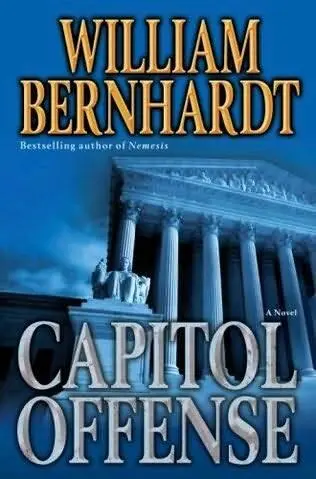
- Название:Capitol Offense
- Автор:
- Жанр:
- Год:неизвестен
- ISBN:нет данных
- Рейтинг книги:4 / 5. Голосов: 1
-
Избранное:Добавить в избранное
- Отзывы:
-
Ваша оценка:
Capitol Offense: краткое содержание, описание и аннотация
Предлагаем к чтению аннотацию, описание, краткое содержание или предисловие (зависит от того, что написал сам автор книги «Capitol Offense»). Если вы не нашли необходимую информацию о книге — напишите в комментариях, мы постараемся отыскать её.
Professor Dennis Thomas arrives at the law office of Ben Kincaid with a bizarre request: Thomas wants to know if Kincaid can help him beat a murder charge-of a killing yet to happen. The professor’s intended victim: a Tulsa cop who had refused to authorize a search for Thomas’s missing wife. For seven days, Joslyn Thomas had lain in the twisted wreckage of her car, dying a horrifically slow death in an isolated ravine. Now, insane with grief, Thomas wants to kill Detective Christopher Sentz. Kincaid warns him not to, but that very same day someone fires seven bullets into the police officer.
Suddenly Kincaid’s conversation with Thomas is privileged and Thomas is begging Kincaid to defend him. Thomas claims he didn’t shoot Sentz-even though he’d wanted to. Something about the bookish, addled Dennis Thomas tugs on Kincaid’s conscience, and against all advice, he decides to represent this troubled man in the center of a media and political firestorm.
But the trial doesn’t go Kincaid’s way, and a verdict of capital murder is bearing down on Dennis Thomas. That’s when Kincaid’s personal private detective, Loving, starts prying loose pieces of a shocking secret. Working in the shadows of the law, using every trick that works, Loving risks his life to construct an entirely new narrative about Detective Sentz, Joslyn Thomas, and madness in another guise: the kind that every citizen should fear, and no one will recognize-until it is too late.
Capitol Offense — читать онлайн бесплатно полную книгу (весь текст) целиком
Ниже представлен текст книги, разбитый по страницам. Система сохранения места последней прочитанной страницы, позволяет с удобством читать онлайн бесплатно книгу «Capitol Offense», без необходимости каждый раз заново искать на чём Вы остановились. Поставьте закладку, и сможете в любой момент перейти на страницу, на которой закончили чтение.
Интервал:
Закладка:
Estevez seemed resigned. Ben desperately wanted to know what was in that book.
“That’s correct.”
“Good. Let me read what you wrote specifically on the subject of the use of the insanity defense in criminal trials. You said, and I quote: ‘Too often, the definition of true insanity is muddied for the purpose of justifying mercy in criminal actions.’”
“Objection,” Ben said. “This book is not on the prosecution exhibit list.” It was a weak objection and he knew it, but he had to distract the jury and break up Guillerman’s flow.
Judge McPartland was unimpressed. “I don’t believe the prosecutor is planning to admit it as an exhibit. Are you?”
“No,” Guillerman answered. Because then he would have had to list it and Ben would’ve been alerted to this tactic. “Just using it to impeach the witness.”
“Very well. The objection is overruled.”
Guillerman continued reading. “You go on to say: ‘It is normal for persons in civilized societies to believe that certain individuals do not merit the harsh penalties dispensed for criminal actions. Consequently, the concept of temporary insanity was defined into existence in order to allow courts to absolve those who undoubtedly committed the crimes but whose circumstances are sympathetic and whose behaviors are unlikely to be repeated.’” Guillerman closed the book with a slam. “Is that true, Dr. Estevez? Was this whole idea of temporary insanity… what were your words… ‘defined into existence’?”
Estevez appeared supremely uncomfortable. “Every psychological diagnosis is an intellectual construction. We define terms so that we may treat real illnesses.”
“But according to you, Doctor, this one was ‘defined into existence’ in order to get criminals off the hook.”
“That’s not what I said.”
“That’s what it sounded like to me.”
Estevez leaned forward, straining. He was starting to look as if he was struggling to maintain his credibility, never a good sign. “You have to make a distinction between the psychiatric concept of temporary insanity and the legal concept of temporary insanity.”
“Why? Because one is real and the other is invented to get guilty people off?”
“Mercy is the best attribute of humanity. There is nothing wrong with it.”
“No, but there is something wrong with trying to pull a fast one on the jury. Let me ask you one final question, Doctor. Do you believe Dennis Thomas killed Christopher Sentz?”
Estevez was already flustered, and now it became worse. He pursed his lips and swallowed. “I wasn’t there.”
“I know you’re not an eyewitness. You’re a psychiatric expert. And based upon your examination of the defendant, your awareness of his mental state, not to mention his temper, do you believe he pulled the trigger and killed Detective Sentz?”
“Dennis was functioning under an extreme psychological-”
“You’re not answering the question, Doctor. Do you believe that Dennis Thomas killed Christopher Sentz?”
“I-I don’t know.”
Guillerman leaned forward, his frustration apparent. “What do you think? You’re an expert witness. Give us your expert opinion.”
Estevez looked across at Dennis, then returned his gaze to the district attorney. “I assume that he did.”
“Thank you. Finally. No more questions.”
And he sat down, with Ben still gritting his teeth. Guillerman had handled that brilliantly. If he had gone one question further, Ben would’ve been on his feet. But Guillerman hadn’t let it go that far. He’d made his point and sat down. He would return to the theme later, no doubt, in closing argument. When it really mattered.
Ben considered redirecting. He hated to leave it as it was, particularly as the last bit of testimony of the day, what the jurors were most likely to remember. But he couldn’t think of anything he could do to fix this. Better just to let it go and not make a bigger deal of it than it already was.
Judge McPartland recessed the trial for the day and the jury was dismissed to their sequestration hotel. Christina began packing up. She did not look happy.
Guillerman did. Their eyes met briefly and he winked at Ben. The message was all too clear. You tried for jury nullification, and I just killed it. Your move.
Dennis had a worried expression on his face. “That didn’t go as well as we had hoped, did it?”
“We’ll talk about it when we get back to the office.”
“I saw the looks on the jurors’ faces, and-”
“We’ll talk about it when we get back to the office.” Among other reasons, Ben needed more time to process what had happened. At this point, he wasn’t sure which was worse. Was it the suggestion of the affair, which gave Dennis an additional motivation to murder a cop and also suggested that he had a violent temper? Or the testimony indicating that the temporary insanity defense was a kind-hearted crock? Or the fact that, ironically enough, their own expert was the first witness who could actually portray Dennis pulling the trigger? None of them was good.
“We’ll get some dinner, then we’ll try to sort this all out.”
“Is-Is it too late to ask for a mistrial?”
“I’m afraid so. That ship has sailed.”
As they left the courtroom, Dennis said precious little. But the hollow expression in his eyes said it all.

29
They all needed sleep. And yet Ben could not make himself call it a day. Or a night, he supposed, since it was well after dark. The normal human diurnal cycles had little meaning during a trial. All the usual daily habits and procedures became meaningless. There was only the trial, omnipresent and all-absorbing. And a client who desperately needed him to succeed.
He stared out the window of their seventh-floor conference room at the slumbering city. Tulsa was lovely at night. He liked it during the day, too, but the day gave you not only the rolling hills and long lines of trees but also refineries and dirt and far too much pavement. At night all that faded away. The lights winked at you. The traffic moved slowly, oozing down Yale like neon gas in a very long tube.
A dramatic contrast to the turmoil roiling in his brain. No amount of visual tranquility was going to calm that, much as he might wish it would.
“We have to make a decision,” Christina said, trying once again to drag them back on topic. “Preferably before we all pass out from exhaustion.”
“We may have to spend the night at the office,” Ben remarked.
“I am not wearing this skirt to court again tomorrow.”
“I doubt anyone would notice.”
“I would notice.” She paused. “And you should notice.” She flipped a pencil into the air. “I hate trials.”
Dennis looked back at her with the same sad eyes he’d had all day. “Then why do you do it?”
“Because we’re making a difference,” Ben answered.
“Because we’re making a living,” Christina answered.
Dennis almost smiled. “And you two live together?”
Christina nodded. “We thrive on conflict.”
“That explains a great deal.”
Ben returned to the conference table. He looked at Dennis squarely. “Here’s the main problem with putting you on the witness stand. It’s not that I don’t think you can handle yourself. I’m sure you can, probably better than most. But Guillerman is very good. He will score points at your expense. And there will be nothing I can do to stop him.”
“I get that,” Dennis said earnestly. “But surely the potential benefits outweigh the harms.”
Читать дальшеИнтервал:
Закладка:
Похожие книги на «Capitol Offense»
Представляем Вашему вниманию похожие книги на «Capitol Offense» списком для выбора. Мы отобрали схожую по названию и смыслу литературу в надежде предоставить читателям больше вариантов отыскать новые, интересные, ещё непрочитанные произведения.



Обсуждение, отзывы о книге «Capitol Offense» и просто собственные мнения читателей. Оставьте ваши комментарии, напишите, что Вы думаете о произведении, его смысле или главных героях. Укажите что конкретно понравилось, а что нет, и почему Вы так считаете.