William Bernhardt - Capitol Offense
Здесь есть возможность читать онлайн «William Bernhardt - Capitol Offense» весь текст электронной книги совершенно бесплатно (целиком полную версию без сокращений). В некоторых случаях можно слушать аудио, скачать через торрент в формате fb2 и присутствует краткое содержание. Жанр: Триллер, на английском языке. Описание произведения, (предисловие) а так же отзывы посетителей доступны на портале библиотеки ЛибКат.
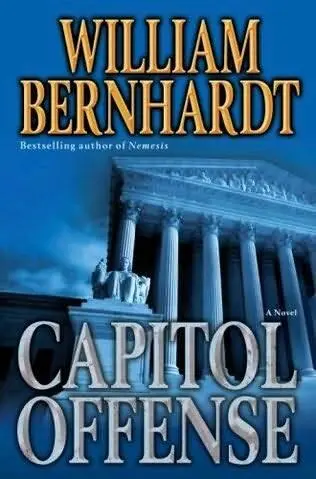
- Название:Capitol Offense
- Автор:
- Жанр:
- Год:неизвестен
- ISBN:нет данных
- Рейтинг книги:4 / 5. Голосов: 1
-
Избранное:Добавить в избранное
- Отзывы:
-
Ваша оценка:
Capitol Offense: краткое содержание, описание и аннотация
Предлагаем к чтению аннотацию, описание, краткое содержание или предисловие (зависит от того, что написал сам автор книги «Capitol Offense»). Если вы не нашли необходимую информацию о книге — напишите в комментариях, мы постараемся отыскать её.
Professor Dennis Thomas arrives at the law office of Ben Kincaid with a bizarre request: Thomas wants to know if Kincaid can help him beat a murder charge-of a killing yet to happen. The professor’s intended victim: a Tulsa cop who had refused to authorize a search for Thomas’s missing wife. For seven days, Joslyn Thomas had lain in the twisted wreckage of her car, dying a horrifically slow death in an isolated ravine. Now, insane with grief, Thomas wants to kill Detective Christopher Sentz. Kincaid warns him not to, but that very same day someone fires seven bullets into the police officer.
Suddenly Kincaid’s conversation with Thomas is privileged and Thomas is begging Kincaid to defend him. Thomas claims he didn’t shoot Sentz-even though he’d wanted to. Something about the bookish, addled Dennis Thomas tugs on Kincaid’s conscience, and against all advice, he decides to represent this troubled man in the center of a media and political firestorm.
But the trial doesn’t go Kincaid’s way, and a verdict of capital murder is bearing down on Dennis Thomas. That’s when Kincaid’s personal private detective, Loving, starts prying loose pieces of a shocking secret. Working in the shadows of the law, using every trick that works, Loving risks his life to construct an entirely new narrative about Detective Sentz, Joslyn Thomas, and madness in another guise: the kind that every citizen should fear, and no one will recognize-until it is too late.
Capitol Offense — читать онлайн бесплатно полную книгу (весь текст) целиком
Ниже представлен текст книги, разбитый по страницам. Система сохранения места последней прочитанной страницы, позволяет с удобством читать онлайн бесплатно книгу «Capitol Offense», без необходимости каждый раз заново искать на чём Вы остановились. Поставьте закладку, и сможете в любой момент перейти на страницу, на которой закончили чтение.
Интервал:
Закладка:
“About twenty hours.”
Guillerman whistled. “This little murder trial is turning into a real cash cow for you, isn’t it?”
Estevez’s reaction was cold. “I wouldn’t put it that way.”
“During this preparation, did you meet with the defendant?”
“Of course.”
“And you met with his attorney?”
“I talked with Mr. Kincaid and his partner, Ms. McCall.”
“And they told you what they wanted you to say?”
“Don’t be offensive. I told them what conclusions I had reached regarding the incident. They didn’t tell me anything.”
“And you pocketed about ten thousand dollars for your trouble.”
“Something like that.”
“I would imagine you could get most people to say just about anything for ten thousand dollars.”
“Objection,” Ben said. He kept it quiet. The objection had to be made, but he didn’t want to start a fuss. Expert witnesses got paid and the jury could do with that what they would.
“That’s all right,” Guillerman said. “I think I’ve made my point.”
Several times over, Ben thought.
“Dr. Estevez, you mentioned that at some point prior to the murder you prescribed medication for Dennis.”
“Yes.”
“You described it as a mild anti-anxiety drug.”
“Yes.”
“It sounded as if his anxiety levels were rather high, at least at the time.”
“Yes.”
“Why didn’t you prescribe something stronger?”
“This was the first time he had taken anxiety medicine. You don’t start anyone on the strongest medication. You start with something mild, then see if more is required.”
“But you could have prescribed something stronger, right?”
“I have the ability, if that’s what you mean.”
“And you chose not to. Tell me, sir-is it correct to say that if you had prescribed something stronger before all this happened, we might not be here today?”
“Objection,” Ben said. “Speculation.”
“I’ll allow it,” the judge ruled. “He is an expert.”
The witness answered, “I seriously doubt it. I mean, I suppose if I had given him something so strong that it knocked him out he couldn’t have done anything. But short of that, I don’t think it would’ve made any difference.”
“And that was because his anger was so intense, he was going to kill that cop no matter what.”
“Objection,” Ben said. Again, he played it weary, rather than angry. Better to give the impression the objection was obligatory, even though he knew no juror could be foolish enough to be swayed by it, rather than to act as if it were of great importance.
“Sustained.”
“Well, let me come at this a different way.” Guillerman rested his hands on the witness box and stared directly at Dr. Estevez. “That stuff you prescribed later-Risperdal. It’s actually used for a variety of reasons, isn’t it?”
“Yes.”
“And one of those reasons is that it’s supposed to improve impulse control. Or to put it another way, to suppress strong feelings. Violent impulses.”
“It is used sometimes for that purpose, but-”
“So what you actually prescribed was something to help the defendant control his violent and angry temper.”
“I had no reason to believe-”
“Tell me, Doctor. Is having a bad temper the same as being insane?”
“Of course not.”
“But the defendant does have a history of violent temper, right?”
“I would not agree with that statement.”
“He was in fact having troubles with his wife, the one whose loss supposedly drove him over the brink, right?”
Estevez took a deep breath. “Every marriage has its problems. Even the good ones.”
“And he had in fact been violent with his wife.”
“There was one incident that-”
“Dr. Estevez, isn’t it true that the defendant was angry, even before his wife disappeared, because he believed his wife was having an affair?”
“Objection!” Ben rose to his feet. This one would require more strength. Where had this come from? He glanced at Christina. She was just as puzzled as he. “This is not relevant.”
Judge McPartland tilted his head to one side. “I suspect it may be. Overruled.”
“Please answer the question,” Guillerman directed the witness.
“Dennis did believe that at one time.”
“And he was particularly angry,” Guillerman said, “because he believed she was having an affair with a cop, right? Isn’t that the truth?”
The courtroom buzzed with whispering and murmuring. Spectators moved back and forth as if a fire had been lit beneath them. Several reporters made for the rear doors.
Ben glanced at Dennis. He was doing an admirable job of not reacting to this latest bombshell. But Ben himself would like to know if this was true. Because if it was, it changed everything. The jury would never be satisfied until they knew the truth.
And the only one who could tell them about that was Dennis.
Even Estevez seemed surprised by this revelation. “He never mentioned that.”
“Did he mention an affair?”
“He had some suspicions, but-”
“And if his wife was cheating on him with a police officer, that would certainly give him additional motivation to kill a police officer, wouldn’t it?”
“I suppose, but-”
“So in fact, the defendant’s vendetta against police officers began even before his wife disappeared!”
“Objection!” Ben insisted.
Judge McPartland nodded. “This time I have to agree. The witness already said he hadn’t heard this before. Rein it in, counsel.”
“Of course, your honor.” Guillerman tucked in his chin. “I just want the jury to understand the source of the defendant’s anger.” He looked at the witness again. “Because it’s possible for someone to be so angry that he is driven to extreme action without being insane, isn’t it?”
“It’s also possible to have anger, frustration, guilt, and worry consume the normal personality and produce an aberrant psychological reaction.”
Ben was glad to see their witness earning his money.
Guillerman did not relent. “But it doesn’t always happen that way, does it? In fact, that would be the exception, not the rule.”
“True.”
“And isn’t it also true that insanity should not be assumed in cases of extreme or atypical action simply to grant mercy to sympathetic cases?”
Ben eased forward in his chair. He didn’t like where this was headed. He wanted to object, but he knew the judge would slap him down, since he had been implicitly asking the jury for mercy all along.
“I wouldn’t put it quite that way,” Estevez answered weakly.
“Oh, but Doctor, you did put it exactly that way.” Guillerman returned to his table and pulled out a thick book. “Dr. Estevez, are you the author of a book called The Psychotherapy of Extreme Violence?”
Estevez did not evidence the usual pride Ben associated with authorship. “It’s been some years.”
“But I’m sure you genuinely believed what you wrote when you wrote it.”
“Well, yes.”
“Have you subsequently determined that what you wrote was wrong?”
“No, but-”
“In fact, you won some awards for this book, did you not?”
“The American Psychiatric Association was quite kind about it.”
“You have published excerpts from it in professional journals.”
“That’s correct.”
“You have several copies in the waiting room of your office.”
He smiled slightly. “That’s true.”
“And it helped you obtain a part-time position at the University of Tulsa, correct?”
“It didn’t hurt any.”
“So I think we can assume that not only did you believe what you wrote, but you still do and others do as well. Right?”
Читать дальшеИнтервал:
Закладка:
Похожие книги на «Capitol Offense»
Представляем Вашему вниманию похожие книги на «Capitol Offense» списком для выбора. Мы отобрали схожую по названию и смыслу литературу в надежде предоставить читателям больше вариантов отыскать новые, интересные, ещё непрочитанные произведения.



Обсуждение, отзывы о книге «Capitol Offense» и просто собственные мнения читателей. Оставьте ваши комментарии, напишите, что Вы думаете о произведении, его смысле или главных героях. Укажите что конкретно понравилось, а что нет, и почему Вы так считаете.