William Bernhardt - Capitol Offense
Здесь есть возможность читать онлайн «William Bernhardt - Capitol Offense» весь текст электронной книги совершенно бесплатно (целиком полную версию без сокращений). В некоторых случаях можно слушать аудио, скачать через торрент в формате fb2 и присутствует краткое содержание. Жанр: Триллер, на английском языке. Описание произведения, (предисловие) а так же отзывы посетителей доступны на портале библиотеки ЛибКат.
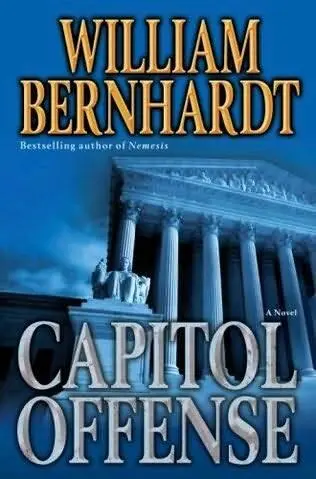
- Название:Capitol Offense
- Автор:
- Жанр:
- Год:неизвестен
- ISBN:нет данных
- Рейтинг книги:4 / 5. Голосов: 1
-
Избранное:Добавить в избранное
- Отзывы:
-
Ваша оценка:
Capitol Offense: краткое содержание, описание и аннотация
Предлагаем к чтению аннотацию, описание, краткое содержание или предисловие (зависит от того, что написал сам автор книги «Capitol Offense»). Если вы не нашли необходимую информацию о книге — напишите в комментариях, мы постараемся отыскать её.
Professor Dennis Thomas arrives at the law office of Ben Kincaid with a bizarre request: Thomas wants to know if Kincaid can help him beat a murder charge-of a killing yet to happen. The professor’s intended victim: a Tulsa cop who had refused to authorize a search for Thomas’s missing wife. For seven days, Joslyn Thomas had lain in the twisted wreckage of her car, dying a horrifically slow death in an isolated ravine. Now, insane with grief, Thomas wants to kill Detective Christopher Sentz. Kincaid warns him not to, but that very same day someone fires seven bullets into the police officer.
Suddenly Kincaid’s conversation with Thomas is privileged and Thomas is begging Kincaid to defend him. Thomas claims he didn’t shoot Sentz-even though he’d wanted to. Something about the bookish, addled Dennis Thomas tugs on Kincaid’s conscience, and against all advice, he decides to represent this troubled man in the center of a media and political firestorm.
But the trial doesn’t go Kincaid’s way, and a verdict of capital murder is bearing down on Dennis Thomas. That’s when Kincaid’s personal private detective, Loving, starts prying loose pieces of a shocking secret. Working in the shadows of the law, using every trick that works, Loving risks his life to construct an entirely new narrative about Detective Sentz, Joslyn Thomas, and madness in another guise: the kind that every citizen should fear, and no one will recognize-until it is too late.
Capitol Offense — читать онлайн бесплатно полную книгу (весь текст) целиком
Ниже представлен текст книги, разбитый по страницам. Система сохранения места последней прочитанной страницы, позволяет с удобством читать онлайн бесплатно книгу «Capitol Offense», без необходимости каждый раз заново искать на чём Вы остановились. Поставьте закладку, и сможете в любой момент перейти на страницу, на которой закончили чтение.
Интервал:
Закладка:
Guillerman was halfway to his feet before he stopped himself. Ben could see he desperately wanted to object, but apparently not desperately enough to get himself locked up on a contempt-of-court charge. The image of the DA sitting behind bars was not one likely to win votes.
“Almost certainly so,” Dr. Hayes answered. “Although she had many injuries, no one of them was so catastrophic as to guarantee death. What ultimately killed her was time.”
“Can you explain what you mean, Doctor?”
“I mean injuries of this sort will only get worse if they are not treated. She bled more. The poison spread. The toxins multiplied. And perhaps most critically, she remained dehydrated and without nourishment. The more time passed, the worse she got. Until finally it was too late and she could not be saved, not even by the best team of medics imaginable.”
“Can you give us an estimate of when she would have reached the point of no return?”
He leaned forward, nodding his head. “Of course it’s impossible for me to set out a precise timetable, because no one was there collecting data. But based upon my analysis of the records, I see no reason why she couldn’t have been saved, had she been found, after several days. In fact, I would go so far as to say she could have been saved had she been found a day earlier. Possibly even a few hours earlier.”
“So if the police had launched their investigation sooner, as Dennis Thomas had been urging them to do for days, she might have lived?”
Out the corner of his eye, Ben could see Guillerman gnashing his teeth. But he kept his mouth closed.
“Almost certainly,” Dr. Hayes said. “I’d stake my reputation on it. They could have saved that young doctor’s life. If they had just moved sooner.”
“Thank you,” Ben said. “Pass the witness.”
“Permission to approach the bench,” Guillerman said. He appeared near the smoldering point. The judge nodded and waved his fingers. Ben followed Guillerman up to the front.
“Your honor, I renew my objection, and I further formally protest the scurrilous tactics being used in this trial.”
“One thing at a time, counsel.” McPartland appeared underwhelmed. “What’s the basis for the objection?”
“This testimony is irrelevant. What difference does it make if the poor woman suffered pain? What difference does it make if she could have been saved? None of that is relevant to whether Christopher Sentz was murdered.”
“The testimony goes to our affirmative defense,” Ben said quietly.
“That was my understanding,” the judge added. “It goes to the state of mind of the defendant at the time the killing occurred.”
“What is he saying?” Guillerman asked. He was visibly angered, and Ben didn’t doubt it was genuine. “That this guy’s wife died in pain, so it was okay for him to take out a cop?”
“I doubt if that’s how he’ll put it in closing argument,” the judge said dryly.
“Probably not,” Guillerman barked, “because that would be too honest!”
The judge put his hand over the microphone. “Counsel…”
“This is the most offensive defense I’ve encountered in my entire career!” Guillerman continued. “Who are we kidding? This defendant killed a police officer. A senior detective. He planned it, then he consulted with his attorney on how to construct a good defense, and then he put the plan in action. He killed Detective Sentz in cold blood and faked a blackout so that he would look-” He pointed a finger to his temple and drew circles in the air. “-craaaaaazy!”
“None of this alleged premeditation has been proven,” Ben felt obliged to point out. “I’m simply presenting a textbook, by-the-numbers case of temporary insanity.”
Judge McPartland gave him a long look. “Well now, let’s not push it too far, Mr. Kincaid.”
“That’s not what he’s arguing at all,” Guillerman said, “and you know it as well as I do, Judge. What he’s asking for is jury nullification.”
“That’s not true!” Ben insisted.
Guillerman continued. “No one believes his client was insane, even temporarily, and he’s not really asking them to. What he’s saying is, his wife died a horrible death and it was all the police department’s fault, so forget about the law and let my man walk.”
“That is not correct. But what’s wrong with asking for justice? When the application of the law would produce an unjust result, don’t jurors have the right to use their own judgment?”
“That’s jury nullification, and it’s unethical and grounds for disbarment.”
Judge McPartland did not respond nearly as quickly as Ben would have liked. “I will admit that this aspect of the defense case troubles me.”
“Your honor,” Ben said firmly, “all I’m trying to do is show the jury what could cause a perfectly ordinary and harmless man to contemplate the most extreme actions. He didn’t just lose his wife-he lost her in the most horrible way imaginable. It wasn’t an unavoidable accident. The police had the power to find her a few hours after she disappeared. They chose not to. I am not in any way saying that made it okay to kill Detective Sentz. But I am saying that such dramatic and catastrophic events can render the most healthy brain temporarily unhinged. And this theory will be reinforced by my psychiatric witness.”
“For the price of six hundred dollars an hour,” Guillerman muttered. “That’s a lot of money for an opinion of insanity.”
“I’m reminded of something Oscar Wilde said,” Ben remarked. “‘In all matters of opinion, our adversaries are insane.’”
“For that much money, our adversaries could be declared insane.”
“That’s enough, counsel.” McPartland leaned back in his chair, obviously taking a few minutes to collect his thoughts. “I’m not happy about this aspect of this case, as I said. What else is new? This case has been a thorn in my side from the start. But I will see it out.”
He took another deep breath, then glared at the two attorneys. “I will allow Mr. Kincaid to call his psychiatric expert and to tie his testimony in with the other testimony we have heard. For the purpose of establishing a case of temporary insanity. And nothing else. Do you hear me, Mr. Kincaid?”
“I do, your honor.”
“Mr. Guillerman?”
“Loud and clear.”
“Good. There will be no arguments for jury nullification or any other inappropriate claims. Got it?”
“Yes,” they both answered.
“Good.” He banged his gavel on the bench. “We’re taking fifteen before the next witness, gentlemen. I need my blood pressure medicine.”
The judge left the courtroom, and most of the people in attendance headed toward the back doors. Guillerman stopped Ben before he could go anywhere.
“I’m filing a complaint with the bar association, Kincaid.”
“What, another one?”
“You know what that means?”
“You think I’m winning?”
He jabbed a finger into Ben’s chest. “I’ve got a lot of friends on the Grievance Committee. You could lose your license over this.”
“That would free up a lot of time.”
“Even if you don’t, we can tie you up in so many investigations and proceedings your candidacy will be impossible. I’ve got friends on the Democratic Party committee, too. No one will support you.”
“Are you threatening me?”
“You heard what I said.”
“What I think I heard was the district attorney making a personal threat for the purpose of gaining an advantage in a criminal trial. And that really is grounds for disbarment.”
“You’re in over your head, Kincaid,” Guillerman growled, bearing down on him, “and you’re going to lose. I will see to that personally. You’re going down in flames.” He turned on his heel and stomped away. “Both you and your client.”
Читать дальшеИнтервал:
Закладка:
Похожие книги на «Capitol Offense»
Представляем Вашему вниманию похожие книги на «Capitol Offense» списком для выбора. Мы отобрали схожую по названию и смыслу литературу в надежде предоставить читателям больше вариантов отыскать новые, интересные, ещё непрочитанные произведения.



Обсуждение, отзывы о книге «Capitol Offense» и просто собственные мнения читателей. Оставьте ваши комментарии, напишите, что Вы думаете о произведении, его смысле или главных героях. Укажите что конкретно понравилось, а что нет, и почему Вы так считаете.