William Bernhardt - Capitol Offense
Здесь есть возможность читать онлайн «William Bernhardt - Capitol Offense» весь текст электронной книги совершенно бесплатно (целиком полную версию без сокращений). В некоторых случаях можно слушать аудио, скачать через торрент в формате fb2 и присутствует краткое содержание. Жанр: Триллер, на английском языке. Описание произведения, (предисловие) а так же отзывы посетителей доступны на портале библиотеки ЛибКат.
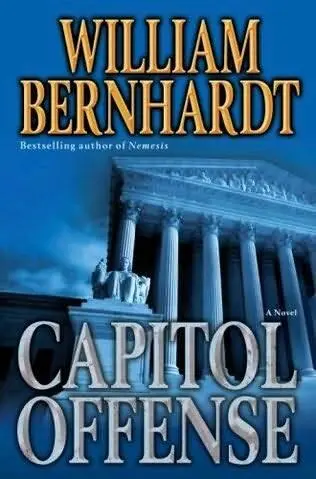
- Название:Capitol Offense
- Автор:
- Жанр:
- Год:неизвестен
- ISBN:нет данных
- Рейтинг книги:4 / 5. Голосов: 1
-
Избранное:Добавить в избранное
- Отзывы:
-
Ваша оценка:
Capitol Offense: краткое содержание, описание и аннотация
Предлагаем к чтению аннотацию, описание, краткое содержание или предисловие (зависит от того, что написал сам автор книги «Capitol Offense»). Если вы не нашли необходимую информацию о книге — напишите в комментариях, мы постараемся отыскать её.
Professor Dennis Thomas arrives at the law office of Ben Kincaid with a bizarre request: Thomas wants to know if Kincaid can help him beat a murder charge-of a killing yet to happen. The professor’s intended victim: a Tulsa cop who had refused to authorize a search for Thomas’s missing wife. For seven days, Joslyn Thomas had lain in the twisted wreckage of her car, dying a horrifically slow death in an isolated ravine. Now, insane with grief, Thomas wants to kill Detective Christopher Sentz. Kincaid warns him not to, but that very same day someone fires seven bullets into the police officer.
Suddenly Kincaid’s conversation with Thomas is privileged and Thomas is begging Kincaid to defend him. Thomas claims he didn’t shoot Sentz-even though he’d wanted to. Something about the bookish, addled Dennis Thomas tugs on Kincaid’s conscience, and against all advice, he decides to represent this troubled man in the center of a media and political firestorm.
But the trial doesn’t go Kincaid’s way, and a verdict of capital murder is bearing down on Dennis Thomas. That’s when Kincaid’s personal private detective, Loving, starts prying loose pieces of a shocking secret. Working in the shadows of the law, using every trick that works, Loving risks his life to construct an entirely new narrative about Detective Sentz, Joslyn Thomas, and madness in another guise: the kind that every citizen should fear, and no one will recognize-until it is too late.
Capitol Offense — читать онлайн бесплатно полную книгу (весь текст) целиком
Ниже представлен текст книги, разбитый по страницам. Система сохранения места последней прочитанной страницы, позволяет с удобством читать онлайн бесплатно книгу «Capitol Offense», без необходимости каждый раз заново искать на чём Вы остановились. Поставьте закладку, и сможете в любой момент перейти на страницу, на которой закончили чтение.
Интервал:
Закладка:
“But you have said he muttered a lot. What did he mutter?”
“Mostly his wife’s name. Joslyn.”
“Anything else?”
She smiled sadly. “Fizz. It was a nickname he had for her.”
“Anything else?”
“I’m sure I can’t recall everything…”
“Did he ever mention Detective Christopher Sentz?”
The elderly woman’s lips turned down in a small frown. “On occasion.”
“And did he mention the detective favorably?”
“No.”
“What did he say?”
She took a deep breath. It was obvious she did not want to continue but felt honor bound to answer the question truthfully. “He called him a murderer.”
“I see. Did you detect any anger when he said this?”
“What do you expect?”
“He was very angry at Detective Sentz, wasn’t he?”
“Can you blame him?”
“You’re not answering the question.”
“Yes. He was very angry at Detective Sentz. But that doesn’t mean-”
“Just answer the questions, ma’am. Would you say he thought about Detective Sentz a lot?”
“Probably.”
“That would be my guess as well. Now, one final matter, and let me thank you already for your cooperation today. You described in some detail how changed you found the defendant after he lost his wife, right?”
“Yes. Dramatically so.”
“As I’m sure is to be expected when someone loses a spouse, something which, sadly, is not all that uncommon. Thousands of people lose spouses every year, but they don’t all go out and commit murder as a result.”
“Objection!” Ben said.
“Sustained.”
“I’m sorry, your honor. I was distracted. What I meant to ask was, Ms. Sultan, you’ve said you thought the defendant was different. But would you describe that difference as insane?”
“Objection!” Ben said again. “The witness is not qualified to render a psychiatric opinion.”
The judge shrugged. “She can give her personal opinion, based on her observations, and the jury can give it whatever credence they deem appropriate.”
“Thank you, your honor.” Guillerman repeated the question. “Did he ever strike you as insane?”
There was a long pause before the witness answered. The silence hung between them, weighted and immoveable.
It seemed an eternity before she answered. “No,” she said quietly. “He did not.”
“Thank you,” Guillerman said, walking away. Ben sensed it was taking everything he had not to gloat. “No more questions.”
25
Ben’s lead witness after the lunch break was the first of two medical experts he would be calling. Dr. Stanley Hayes was an emergency medicine specialist operating out of a hospital in Oklahoma City. He was in his mid-fifties, bald on top and salt-and-pepper on the sides, slightly pudgy but certainly no more than might be expected from a successful man of his age and height. He was active in several state and national medical organizations and had been the keynote speaker for the National Council of Emergency Room Personnel. Ben established his credentials and then revealed that he had reviewed all the records pertaining to Joslyn Thomas and was familiar with the case.
“Your honor,” Guillerman said, “let me renew my objection to this witness and his entire anticipated testimony. It has no probative value.”
Judge McPartland looked annoyed. Perhaps he was still angry about the gag order violation. “Mr. Prosecutor, I have already ruled on your objection and you have made a record. Please sit down.”
Ben continued his direct. “Could you explain what caused the death of Joslyn Thomas?”
Hayes spoke directly to the jury box. “Dr. Thomas suffered numerous injuries from the crash, which, after not being treated for many days, led to her death. Upon impact, she was impaled by a jutting piece of metal that pierced her leg, right about here.” He pointed to a spot on his upper thigh. “This rendered her immobile, although given the condition of the automobile, I doubt she could have gotten out in any case. She also suffered a severe concussion, though it did not render her permanently unconscious. She had numerous lacerations, all over her body. One wound to her forehead bled profusely. She also suffered a broken arm, a broken clavicle, and two broken ribs, injuries she presumably received upon impact.”
“Of all these injuries, which were the most profound?”
“The most dangerous would be the impalement of her leg, though they were all serious. Broken limbs can be especially nasty when they go too long untreated. With the leg wound, though, there was profuse bleeding, not to mention the deadly danger of gangrene. Blood poisoning from the metal is also a danger. Worst of all, her kidneys had been damaged, causing a buildup of toxins in her system. That, coupled with the dehydration and malnutrition, is probably what caused her death.”
“I noticed you used the word probably , Doctor. Is there some uncertainty about it?”
He spread his hands wide. “In a case such as this, when there are so many factors at play that could have caused death, it is virtually impossible to know which one delivered the final killing stroke.” He paused, then his voice dropped a notch. “And I don’t really see that it matters much.”
“Indeed.” Ben flipped a page in his outline. This was where the examination got tricky. “Dr. Hayes, this is a delicate matter I’m about to raise, and I apologize in advance, but it’s something the jury needs to know. During this time that Joslyn Thomas was trapped in her car… would she have felt any pain?”
“Objection!” Guillerman said. “I must raise the same argument again, your honor. This is entirely inappropriate. This testimony is not relevant to any matter at issue in this trial.”
“I’m going to allow it,” Judge McPartland said, “just as I told you all the previous times you made this same argument. And if you make it again, your associate will have to take over the prosecution, because you will no longer be at liberty.”
Guillerman sat down, not pleased.
“You may answer the question,” Ben said, urging the witness onward.
“Oh my, yes,” he said. He seemed genuinely distressed. “Almost nothing on earth hurts as badly as a broken rib. She had two. Plus a broken arm. Plus a sharp piece of metal jabbed into her leg. The pain would have been… well, unimaginable. Indescribable.”
“I don’t doubt it,” Ben said, “but just so the jury can understand, I’m going to ask you to try.”
“In the medical profession, we have what is known as the pain scale. There are many different factors involved in measuring and evaluating pain, but for the purposes of this trial, all you need to know is that basically it’s a one-to-ten scale. One is relatively minor pain, and ten is the maximum it is possible for human beings to endure.”
“And where on the scale would you place the pain that Joslyn Thomas experienced, Doctor?”
“Ten,” he said, his face set and grim. “And if there were any higher numbers, I would say that.”
“I see. And she would have felt this pain throughout the period she was trapped in the car?”
“Of course. Her concussion did not induce unconsciousness. There was nothing to alleviate the pain. She was still conscious, albeit only barely, when her rescuers arrived.” He squirmed uncomfortably in his seat. “She would have felt the pain.”
“For seven days.”
“Yes,” the doctor said. “Day and night.”
Ben remained silent for a few moments, appearing to search through his outline for his next question. He wanted to let that horror linger in the juror minds before he dropped the next bomb.
“Doctor,” Ben continued, “you’ve described Joslyn Thomas’s injuries as being ultimately fatal. Could she have been saved had help come sooner?”
Читать дальшеИнтервал:
Закладка:
Похожие книги на «Capitol Offense»
Представляем Вашему вниманию похожие книги на «Capitol Offense» списком для выбора. Мы отобрали схожую по названию и смыслу литературу в надежде предоставить читателям больше вариантов отыскать новые, интересные, ещё непрочитанные произведения.



Обсуждение, отзывы о книге «Capitol Offense» и просто собственные мнения читателей. Оставьте ваши комментарии, напишите, что Вы думаете о произведении, его смысле или главных героях. Укажите что конкретно понравилось, а что нет, и почему Вы так считаете.