Jason Elliot - The Network
Здесь есть возможность читать онлайн «Jason Elliot - The Network» весь текст электронной книги совершенно бесплатно (целиком полную версию без сокращений). В некоторых случаях можно слушать аудио, скачать через торрент в формате fb2 и присутствует краткое содержание. Жанр: Триллер, на английском языке. Описание произведения, (предисловие) а так же отзывы посетителей доступны на портале библиотеки ЛибКат.
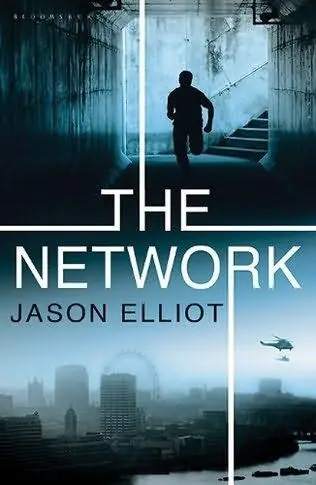
- Название:The Network
- Автор:
- Жанр:
- Год:неизвестен
- ISBN:нет данных
- Рейтинг книги:4 / 5. Голосов: 1
-
Избранное:Добавить в избранное
- Отзывы:
-
Ваша оценка:
The Network: краткое содержание, описание и аннотация
Предлагаем к чтению аннотацию, описание, краткое содержание или предисловие (зависит от того, что написал сам автор книги «The Network»). Если вы не нашли необходимую информацию о книге — напишите в комментариях, мы постараемся отыскать её.
The Network — читать онлайн бесплатно полную книгу (весь текст) целиком
Ниже представлен текст книги, разбитый по страницам. Система сохранения места последней прочитанной страницы, позволяет с удобством читать онлайн бесплатно книгу «The Network», без необходимости каждый раз заново искать на чём Вы остановились. Поставьте закладку, и сможете в любой момент перейти на страницу, на которой закончили чтение.
Интервал:
Закладка:
‘The Buddhas were destroyed on the orders of al-Qaeda,’ says Aref, ‘to make the world angry. Afghanistan will be much better when the Arabs have gone.’
After everything I’ve heard of the Taliban it seems like a kind of madness to introduce ourselves to their commander in Bamiyan, but the men are all for it. I feel a twinge of guilt at having suspected Sattar of leading us into a trap because it sounds like his advice was sensible after all. It involves a longer route, but I agree to it.
From Bamiyan, we’ll head west to Yakawlang and then across the mountains to Panjab. This much everybody agrees on. But the route after that is a little confused, which is not surprising because there aren’t actually any roads, but dusty and unmaintained tracks instead. The men’s fingers trace over the approximate route, but only Aref is really interested in the details.
I’m not too worried because the Afghan way of moving cross-country is simply to ask the route from whoever’s coming in the opposite direction. The maps of the country are in people’s minds, not on paper, and trying to follow a map too closely in Afghanistan is an almost sure way to get lost.
The following day Mr Raouf approves our request to test the explosives. His team is clearing a minefield an hour’s drive east of Kabul, in the vicinity of an old Soviet military position. We drive there together two days later. Mr Raouf proudly introduces us to the men at the site, who are mapping the cleared areas and marking the perimeter of the danger zone with stones daubed in red paint. An unexploded mortar round has been found and Mr Raouf allows us to place a charge next to it. Explosives are generally arranged in the form of a chain, each successive part creating a larger explosion, so we want to use as many of the components as possible to see if they all function as they’re supposed to. So we take a slice of the plastic from one of the blocks, wrap it in a length of detcord, tape a detonator to the free end of the detcord, and finally attach a short length of blasting fuse to the detonator.
The area is cleared and from somewhere comes the wail of a siren. Our little team, along with a dozen other men from the local group, stare fixedly at the point where I lit the fuse several hundred yards away. Thirty seconds later a brown cloud of dust leaps from the ground and a moment later there’s a spectacular bang as the sound wave reaches us. There are grins all round. All the components of the chain have performed as they should. It’s as if our faith has been restored in the purpose of the op, and now at last it’s within our reach. Back at the trust’s HQ we load the explosives into the G and return it to the safety of the garage at the house.
We send a report to London and receive a signal from Macavity approving our forward passage. We’re nearly ready to move now, but I must try to make contact with Manny one last time before we go. On the Monday, once again, I change into my shalwar kameez so as to be relatively invisible, adjust my nylon belt and holster and slide home the loaded Browning. I put my phone in one pocket, one of the silk E amp; E maps in the other, and walk ten minutes from the house before hailing a taxi.
There is no one waiting for me at the palace, and once again I have to struggle with my disappointment. I have one more day to try, and then we’ll have to move because we can’t wait another week. Apart from anything else, I’m not happy about the risk of our meeting place having been compromised, which increases as more time passes.
For the final time I repeat the process the following day. The taxi driver asks if I’m Iranian, and I tell him I’ve grown up in Iran but come back recently. He gets talking about his life.
‘I fought with Massoud in Panjshir at the time of the jihad,’ he says, referring to the period of the Soviet occupation. ‘I was wounded and went to live with my cousin in Mazar. After he was killed I had to fight with Dostam. When we came to fight in Kabul I was captured by the government and my brother paid for my release with his house. Then the Taliban accused me of being a spy and tortured me. They put me in a freezing basement and beat me with cables. My uncle gave them his house, so they let me go. I was lucky. What is there to come back to?’ he asks cynically, waving a hand towards the destruction on either side of the road.
I reach the palace at exactly six o’ clock. There’s no one around. I walk across the central courtyard and marvel as I always do at the volume of gunfire that must have once filled the air. But it’s silent now, and nothing stirs but the light breeze that so often rises in the moments just before dusk. I observe my feelings of disappointment as if from afar. The first few times I came I was full of expectation, but the emotion’s gone now and I’m forced to admit that I’m merely a solitary spectator at a forgotten battlefield of which the world knows nothing.
I’m full of morbid thoughts about the uselessness of the destruction around me and the folly of the people who inflicted such misery on themselves, albeit with considerable help from abroad. I walk on impulse along the arcade of the eastern wing and enter one of the ruined rooms. The empty windows stare back at me, but then something catches my eye. It’s a tiny fire, burning at the far end of the building. It’s in the north-east corner of the building and corresponds exactly, I now realise, to the position of the pinprick I made in the note.
I hear the crunch of my footsteps amplified by the bare walls as I approach the flickering light, beside which a human shape is crouching. For a moment I allow myself to believe that at last Manny has made an appearance, then curse myself again because I know it can’t be him. The figure is wrapped in a dark pattu and doesn’t move as I approach. But the coincidence won’t let my mind rest, and I have to make sure.
‘Peace be to you, watandar. May this traveller warm his hands on your fire?’
In a slow gesture, as slow as a man on the point of death, a lean and dark-skinned arm emerges from the shadowy bundle as if to offer me the place opposite. A ripple of shock passes through me as I register how thin the arm is, like that of a starving man. There’s not enough light to make out the face, and a nightmarish train of thoughts suddenly spins across my mind. Perhaps it really is Manny, but he’s been disfigured or suffered some cruel affliction that’s left him withered and prematurely aged.
‘Manny?’ I say his name experimentally, because I’m not sure. I can just make out the grey bundle of beard that hangs from a chin and the vague contours of a face within the shadows. The outstretched hand looks horribly old, and repeats the beckoning motion for me to sit. I’m only a few feet from him, and the fire is between us. The stone floor is cold.
‘Manny? Say something, Manny. You’re scaring the shit out of me.’
Then with unexpected suddenness the face looks up at me. It’s not Manny. It’s a half-toothless old man, whose gaunt and almost fleshless face looks into mine as the flames bring to life a mad glint in his eyes, and from his ruined gums comes a wheezing cackle.
‘Oh Christ.’ I leap up in fright. ‘Oh Christ.’ My heart’s pounding and the spell is broken. I take several steps backwards, slipping on the rubble as the old man’s dreadful laughter subsides.
And then I hear the voice.
‘As you were, Captain.’
I whirl around in reflex, and my right hand flies by instinct to the grip of the Browning. Behind me, ten feet away and emerging from behind one of the plaster pillars, I see Manny, dressed in a black shalwar with a pattu thrown over one shoulder. He’s tanned and lean and has a full beard, but it’s him, unmistakably, and he’s smiling now and throws his arms open towards me.
Читать дальшеИнтервал:
Закладка:
Похожие книги на «The Network»
Представляем Вашему вниманию похожие книги на «The Network» списком для выбора. Мы отобрали схожую по названию и смыслу литературу в надежде предоставить читателям больше вариантов отыскать новые, интересные, ещё непрочитанные произведения.








Обсуждение, отзывы о книге «The Network» и просто собственные мнения читателей. Оставьте ваши комментарии, напишите, что Вы думаете о произведении, его смысле или главных героях. Укажите что конкретно понравилось, а что нет, и почему Вы так считаете.