Jason Elliot - The Network
Здесь есть возможность читать онлайн «Jason Elliot - The Network» весь текст электронной книги совершенно бесплатно (целиком полную версию без сокращений). В некоторых случаях можно слушать аудио, скачать через торрент в формате fb2 и присутствует краткое содержание. Жанр: Триллер, на английском языке. Описание произведения, (предисловие) а так же отзывы посетителей доступны на портале библиотеки ЛибКат.
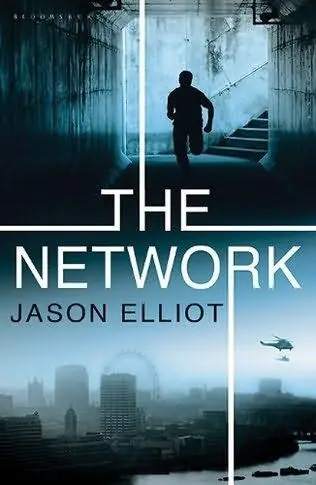
- Название:The Network
- Автор:
- Жанр:
- Год:неизвестен
- ISBN:нет данных
- Рейтинг книги:4 / 5. Голосов: 1
-
Избранное:Добавить в избранное
- Отзывы:
-
Ваша оценка:
The Network: краткое содержание, описание и аннотация
Предлагаем к чтению аннотацию, описание, краткое содержание или предисловие (зависит от того, что написал сам автор книги «The Network»). Если вы не нашли необходимую информацию о книге — напишите в комментариях, мы постараемся отыскать её.
The Network — читать онлайн бесплатно полную книгу (весь текст) целиком
Ниже представлен текст книги, разбитый по страницам. Система сохранения места последней прочитанной страницы, позволяет с удобством читать онлайн бесплатно книгу «The Network», без необходимости каждый раз заново искать на чём Вы остановились. Поставьте закладку, и сможете в любой момент перейти на страницу, на которой закончили чтение.
Интервал:
Закладка:
A large part of our time is devoted to arranging and conducting meetings. For secret information to pass between two parties, there must be a moment of contact, and this is the most perilous moment of all. A ‘chance’ meeting, which has in fact been arranged in advance, may be best when the exchange must be verbal. When information can be passed on without the need for a conversation, a brush contact may be best, involving a fleeting and wordless exchange of secret material. An innocent third party, or cut-out, may be another solution. Each has its advantages and corresponding risks. Brush contacts must be arranged carefully in advance and executed with precise timing; a cut-out may be unreliable and describe both parties if interrogated; and a chance meeting must stand up to intense scrutiny if suspected. But a meeting can also be arranged remotely, by an advertisement in a paper, a phone call with a disguised message, or take the form of a ‘dead letter box’ at an agreed location, visited by both parties at different times, perhaps days apart. The Baroness’s preferred method for transmitting short messages is an ‘innocent’ letter, in which an ordinary text disguises a broken-up message, previously enciphered by means of a key known only to the recipient. To this end we practise a variety of codes and ciphers that can be created in the field without potentially incriminating aids such as printed one-time pads or code books, and study the theories of fractionation and homophony, and the various ways to combine codes that will render them impenetrable in the short term.
We learn of famous historical double agents and illegals and of their successes and failures. We study the career of one of the CIA’s greatest spies, the Soviet GRU officer Oleg Penkovsky, and are invited to decide whether he was a triple agent or not. We learn too of the quiet English mother of three to whose children Penkovsky passed microfilm-stuffed sweets in public parks and on trains, trained by the SIS for the purpose but never caught. We are told of the reckless extravagance of Aldrich Ames, whose tailored suits, bought with KGB dollars, went unnoticed while he betrayed hundreds of CIA assets abroad. We consider the long successes of illegals with carefully constructed legends such as Rudolph Abel and Konon Molody. Abel lived in New York as a retired photofinisher; Molody in London as a bubblegum-machine salesman. Both masterminded spy rings, both were eventually caught and given long prison sentences, and both were later exchanged for Western spies captured in the Soviet Union.
We are on one occasion delivered a fascinating lecture analysing the daring escape from Moscow, organised by his SIS handlers, of the KGB colonel Oleg Gordievsky. The lecture is given by a middle-aged man with a serious-looking face, straw-coloured hair and a distinct Slavic accent, on loan to us for the day with the approval of his agent resettlement officer from the Firm. Afterwards, I confess how impressed I’ve been by the speaker.
‘It is the lessons of tradecraft you are being asked to consider on such occasions,’ she says, ‘not the personalities involved.’ The Baroness lets this sink in. ‘Look more closely, and you will see the cold-hearted pride and ruthless vanity from which such people suffer.’
It becomes an axiom of our training that whatever the chosen means of communication and however it is passed, there must always be a credible cover story, as well as innocuous signals, agreed in advance, to indicate danger to one’s allies. The closer the cover story is to the truth, the better. But there must always, always be a cover story.
When Saddam Hussein is foolish enough to invade Kuwait, the Baroness summons us to discuss things. We are both preparing to deploy to the Gulf and awaiting our final orders. It won’t be real war, the Baroness tells us. She predicts confidently that Kuwait will be quickly liberated, but that the West will be blinded by its victory to the greater consequences of the conflict. America’s willingness to turn its back on the heroic and ruined nation of Afghanistan but to spend billions in defence of a corrupt oil-rich state will confirm the deepest cynicism of its opponents. The time, she says, is drawing near. She offers us a final chance to withdraw. The war in Kuwait will provide the context for our operational phase with the Network. She is fond of the term context. She advises us to await our orders and do nothing except what is expected of us. We will know the signal when it is given to us. ‘Like a passing bus,’ she says, ‘you will know when to jump on it.’ It is better, she explains, that neither of us sees it coming.
We do not, in the event. When hostilities begin, we are both assigned unusual extra-regimental roles with the same interrogation team in Kuwait. Our parent unit is the Joint Services Interrogation Wing, housed at Ashford and commanded by a I Corps lieutenant colonel, hence our ‘2’ designations, which indicate an intelligence role. The assignment is unusual because the forward interrogation team to which we’re assigned – me as operations officer and Manny as 2i/c – is formed primarily from reservists who are volunteer members of 22 Int Coy, the Naval Reserve unit HMS Ferret, and 7630 Flight. We have relevant backgrounds, having both been through DSL Beaconsfield, but we’re not regular senior NCOs or Reserve officers, and in time-honoured fashion we blame the mistake in tasking on the army. Most of the interrogation teams deploy forward to where enemy prisoners are being held, but we’re assigned to Category 1 prisoners, who are usually senior officers and intelligence personnel, and our team takes over a warehouse on the outskirts of the city and converts it into an interrogation centre. We’re barely up and running when the war screeches to a halt. Saddam Hussein’s great army has fled before the allied onslaught, and the Baroness’s prediction has proven uncannily accurate. The active combat phase of Desert Storm has lasted one hundred hours, Kuwait is liberated, and Saddam’s ‘mother of battles’ turns out to be a rout.
When the raid occurs, we’re not expecting it. Neither Manny nor I can have any notion of how deeply, and irreversibly, that ten-minute period of our lives will change things for us both. Manny has no idea that he will be seized by an Israeli commando team, beaten senseless and confined to a Mossad safe house in Kuwait City. But when the same Mossad officer – who has been beating Manny around his face so that the bruises will look much worse than they really are – slips him a narrow hacksaw blade and pats him on the back for good luck before throwing him into a cell with a suspected Arab terrorist, Manny knows that this is the bus he’s expected to jump on. When Manny cuts through both sets of handcuffs and then through the metal bar that secures their window, the Arab can’t believe his luck. He has no reason to suspect that his escape has been engineered. All he knows is that an enraged English soldier, vowing jihad against the Zionists, has freed him from his enemies, and he can’t believe his luck. He’s only too happy to introduce him to his superiors. Manny’s dangerous work has begun.
Not everything goes according to plan. I am not supposed to shoot and kill a man. But the Israelis are willing to overlook the accident, since they have been allowed to seize Gemayel in the process, and they have wanted him for years. Such is the deal that has been struck. Mossad gets its man, and Manny’s cover story – bruises and all – is brilliantly established from the start.
It’s nearly six months before our first contact arrives at a PO box in London. It takes the form of an ‘innocent’ letter sent from Jalalabad in southern Afghanistan. It’s what the Baroness calls a ‘sign of life’. Manny, to whom we’ve given the code name Orpheus, has made it to Afghanistan with a forged New Zealand passport, and requests an address in Kabul to which his reports can be sent. Thus begins the new phase of my work. The Baroness tells me a vacancy has come up with a British de-mining trust operating in Kabul which favours ex-servicemen, and it’s obvious she’s used her influence with the founder. The fact that the plans for me to move to Afghanistan coincide with the outbreak of civil war in the country is, in the Baroness’s words, ‘problematic but not insurmountable’.
Читать дальшеИнтервал:
Закладка:
Похожие книги на «The Network»
Представляем Вашему вниманию похожие книги на «The Network» списком для выбора. Мы отобрали схожую по названию и смыслу литературу в надежде предоставить читателям больше вариантов отыскать новые, интересные, ещё непрочитанные произведения.







Обсуждение, отзывы о книге «The Network» и просто собственные мнения читателей. Оставьте ваши комментарии, напишите, что Вы думаете о произведении, его смысле или главных героях. Укажите что конкретно понравилось, а что нет, и почему Вы так считаете.