Jason Elliot - The Network
Здесь есть возможность читать онлайн «Jason Elliot - The Network» весь текст электронной книги совершенно бесплатно (целиком полную версию без сокращений). В некоторых случаях можно слушать аудио, скачать через торрент в формате fb2 и присутствует краткое содержание. Жанр: Триллер, на английском языке. Описание произведения, (предисловие) а так же отзывы посетителей доступны на портале библиотеки ЛибКат.
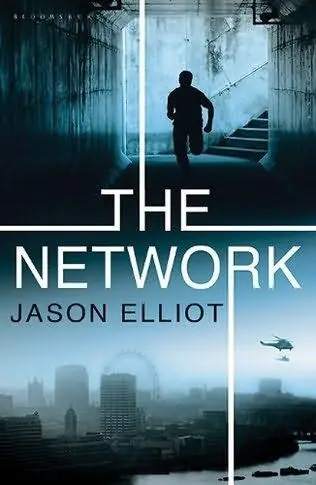
- Название:The Network
- Автор:
- Жанр:
- Год:неизвестен
- ISBN:нет данных
- Рейтинг книги:4 / 5. Голосов: 1
-
Избранное:Добавить в избранное
- Отзывы:
-
Ваша оценка:
The Network: краткое содержание, описание и аннотация
Предлагаем к чтению аннотацию, описание, краткое содержание или предисловие (зависит от того, что написал сам автор книги «The Network»). Если вы не нашли необходимую информацию о книге — напишите в комментариях, мы постараемся отыскать её.
The Network — читать онлайн бесплатно полную книгу (весь текст) целиком
Ниже представлен текст книги, разбитый по страницам. Система сохранения места последней прочитанной страницы, позволяет с удобством читать онлайн бесплатно книгу «The Network», без необходимости каждый раз заново искать на чём Вы остановились. Поставьте закладку, и сможете в любой момент перейти на страницу, на которой закончили чтение.
Интервал:
Закладка:
Of all the adults who crossed the horizon of my youth, it’s the Baroness who stands out. It is to her that I owe my stock of stories about Africa and the Middle East, as well as my decision to study Middle Eastern languages at university. I introduce Manny to her not long after our first return from Afghanistan, and she takes a kindly, godmotherish interest in our future careers, going to the trouble of sending us newspaper clippings or alerting us to films or documentaries on subjects which she thinks will interest us.
One day she calls to invite us to her London home in Little Venice. We join her for dinner, and when the subject of Afghanistan comes up, as it always does, Manny surprises us both by delivering a passionate attack on the immorality of the Western powers who have abandoned the country and are doing nothing to help rebuild a nation in whose destruction they have participated.
The Baroness listens attentively. Then, in a tone of seriousness to which we’re unaccustomed, she extends the argument in a direction that leaves us dumbfounded. Until this moment she’s seemed to us a refined and kindly old lady.
‘Have you thought,’ she asks, ‘of the wider consequences of the war in Afghanistan and how much we will all be affected by it? You are both seeking something out of the ordinary. Perhaps today is the day to explore it.’
We are entering a new era, she says, in which the real threat facing the West is not a military one. The Western powers will no longer fight conventional wars because the enemy of the future will be more diffuse. It will, in part, grow out of the disaffected peoples of the Islamic world, she tells us. We have meddled in and manipulated their countries for far too long. Now Afghanistan has shown that a poor but determined people can successfully resist impossible odds, and the ten-year-long war against the Soviets has served as a rallying call throughout the Muslim world. But the Afghans’ hard-fought victory is being exploited by extremists, who have begun to gather in the country with the intention of spreading their violent agendas ever further afield. It is from these loosely allied militant groups that the threat is really incubating, she says, and there is a small organisation, to which the Baroness belongs, that takes an interest in such things. If we agree to speak nothing of it, she will tell us more. Manny and I are spellbound.
She calls it only the Network, and says she was introduced through a friend and former SOE agent called Freya. The Network’s original goal was to establish a structure, to be activated in times of need, to penetrate key groups relevant to British interests in the Middle East and gather information on their activities. It operated independently of the more conventional intelligence services, with which its relationship was collaborative when necessary, but for the sake of secrecy never shared operational details. Being much smaller, and not limited by the approval of ministers or the political agendas of the time, it functioned with both greater freedom and greater risk. It was successfully brought into play several times over the past few decades, but the loss of British influence in Middle Eastern affairs led to its suspension.
Now the world is again facing a crisis of new proportions, and the Network has been resurrected across several continents. The Baroness’s role is to address the emerging need for intelligence from Afghanistan, and this, she confesses, is why she has chosen to speak to us on the matter.
Napoleon’s dictum that a single spy in the enemy’s camp is more valuable than a thousand soldiers on the battlefield is more pertinent than ever, she tells us. It is not so difficult, she goes on, for someone with the relevant talents to infiltrate a group of potential terrorists. What is difficult is to gather useful information about their activities over a long period and communicate this to one’s allies. The ideal structure for such a task is a pair of individuals. One disappears from sight of the world and leads a secret life inside the target’s camp. The other follows at a distance, receiving and transmitting signals like the polished mirror of a telescope.
‘It is the work of years, rather than weeks or months,’ she says, ‘and the very practice that the ordinary intelligence services have abandoned. We like to think of it as directed towards obtaining higher intelligence. The Service addresses the changing affairs of the day. We march to a different drum. By its nature it involves a fateful commitment and the sacrifice of all lesser ambitions. Above all, this task must be secret and known only to the smallest possible number of people. As long as the Network exists, its work cannot be spoken about to outsiders.’
It is for this reason, she adds, that its members are painstakingly recruited from the families of trusted friends who have demonstrated what she calls the ‘appropriate spirit’.
The Network serves an idea, not an authority. It has no overt hierarchy. Even the Baroness has her teachers, she says. The role of its members is to understand a given target, to deepen their understanding and to transmit this to those who can hear. Their ambition is not to change the world, but to influence it, for lasting change is brought about by understanding rather than the application of external force. Advancement in the Network is acquired on the basis of understanding alone.
We will never know its exact numbers, the Baroness tells us, because no such information exists and its members never gather in a single place. They collaborate when necessary, but not for gain or advancement. There are Network members in government, in the military, in commerce and academia; others serve in more dangerous roles. They are content for their work to be invisible and for the most part lead ordinary lives, incorporating, without any outward show, their hidden task into the fabric of their daily responsibilities.
Such a possibility, if we wish to reflect on it, now exists for us.
She gives us time to think, but we don’t need long. We are young and keen, and we accept. Nothing changes for us on the surface of things, but in our spare time we meet the Baroness whenever our duties allow, and begin our secret course of study.
There are some things you learn which, when you first encounter them, make each day seem like a gift beyond value. Our first few sessions have this quality. The fact that what we’re learning must be kept secret adds a further, intoxicating aspect to our work, which is why the protocols for secrecy are drummed into us from the start.
The success of all our future work is founded on the twin arts of observation and clandestine communication – essential practices, the Baroness tells us, which have not changed since men first learned to spy on one another, and which require nothing of technology. We learn first to see and hear through a new version of our senses, as if an extra dimension has been added to their habitual function. Our task is to act at all times on the assumption that we are being observed, and to see ourselves through the eyes of our observers. We learn to watch and follow a human target, to note and then predict his actions. Then, by inverting the same skills, to evade a follower and to conceal our own telltale gestures of impatience, anxiety or relief. We must be able, the Baroness endlessly reminds us, to transmit the signals of whatever emotion we choose to whoever is watching, as well as to draw the attention of others in whatever direction we wish.
To sharpen our skills of observation, she invites us to assign a portion of our attention to something going on around us, and then points out when our attention has faltered. Our ordinary power of attention must acquire a second track, she reminds us. At meetings in restaurants she challenges us to describe the faces we have seen at the tables on our way in and to recall the numbers of buses or taxis we’ve used on the way. She explains how to use mental mnemonics to remember lists of things or names. We must learn these skills, she says, practise them in small ways every day, and live them until they become instinctively natural, betraying no trace of our ulterior agendas.
Читать дальшеИнтервал:
Закладка:
Похожие книги на «The Network»
Представляем Вашему вниманию похожие книги на «The Network» списком для выбора. Мы отобрали схожую по названию и смыслу литературу в надежде предоставить читателям больше вариантов отыскать новые, интересные, ещё непрочитанные произведения.












Обсуждение, отзывы о книге «The Network» и просто собственные мнения читателей. Оставьте ваши комментарии, напишите, что Вы думаете о произведении, его смысле или главных героях. Укажите что конкретно понравилось, а что нет, и почему Вы так считаете.