Jason Elliot - The Network
Здесь есть возможность читать онлайн «Jason Elliot - The Network» весь текст электронной книги совершенно бесплатно (целиком полную версию без сокращений). В некоторых случаях можно слушать аудио, скачать через торрент в формате fb2 и присутствует краткое содержание. Жанр: Триллер, на английском языке. Описание произведения, (предисловие) а так же отзывы посетителей доступны на портале библиотеки ЛибКат.
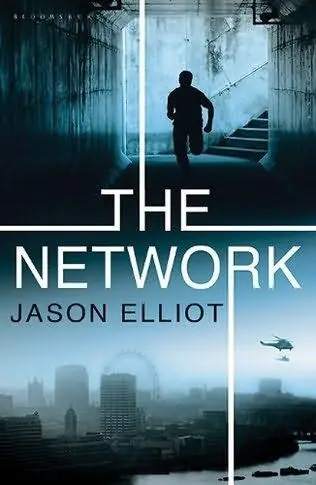
- Название:The Network
- Автор:
- Жанр:
- Год:неизвестен
- ISBN:нет данных
- Рейтинг книги:4 / 5. Голосов: 1
-
Избранное:Добавить в избранное
- Отзывы:
-
Ваша оценка:
The Network: краткое содержание, описание и аннотация
Предлагаем к чтению аннотацию, описание, краткое содержание или предисловие (зависит от того, что написал сам автор книги «The Network»). Если вы не нашли необходимую информацию о книге — напишите в комментариях, мы постараемся отыскать её.
The Network — читать онлайн бесплатно полную книгу (весь текст) целиком
Ниже представлен текст книги, разбитый по страницам. Система сохранения места последней прочитанной страницы, позволяет с удобством читать онлайн бесплатно книгу «The Network», без необходимости каждый раз заново искать на чём Вы остановились. Поставьте закладку, и сможете в любой момент перейти на страницу, на которой закончили чтение.
Интервал:
Закладка:
I turn in, but my mind is see-sawing between past and future. H is right to suspect that I have doubts, and they’re coming at me like demons now. I’m not so much worried about the dangers ahead. Planning and training and common sense go a long way towards dealing with the obvious dangers. I’m actually looking forward to going back to Afghanistan. My doubt is whether I can carry my secret with me, which I can’t tell Seethrough or even H, and this already feels like a betrayal. No one but the Baroness knows about Orpheus or the fact that he needs to come in, or whether, in the jargon of the Network, he’s still a good householder or has become a lost sheep and will have to be eliminated.
I can’t sleep, not properly, anyway. It’s 3 a.m. I crawl out of the sleeping bag and pace around. There’s a half-moon above me and the clouds are sweeping in luminous silence across the sky, and through the tears in their fabric I catch glimpses of the stars.
Fear is a catalyst of strange thoughts, I realise.
In daily life you are swept along by events which prevent you from going too deeply into things. But now that the ordinary momentum of the world has been stripped away, my doubt is laid bare. I want to know if I am making the right choice, but I can’t be sure whether I have made a choice at all, or whether it has chosen me. When a man reaches a crossroads, it’s fair to suppose that the decision he takes is a free one. It’s what we’d all like to believe. But you can argue that his choice, so-called, is no more than the outcome of everything that has gone before, like a mathematical equation which, however complex, really only has one answer. All of a man’s experience of life is part of that equation, embracing all his hopes, dreams and prejudices, his wishes and convictions, his most tender longings, bitterest grievances, and all the dark machinery of his fears. All invisibly influence his choice, like a secret committee voting behind its leader’s back. Perhaps even the future itself exerts an influence, reaching back beneath the scheme of things. Then, when this formula of near-infinite complexity is at last resolved, and his decision, in which he has really had no say, rises like a balloon into the world of his conscious thoughts, the man will declare: I have made my choice freely and am responsible for it.
But that’s not the point. Any propagandist, magician or behavioural scientist can tell you a man has much less choice than he’d like to believe. The interesting question is whether a man who knows he isn’t free lives a different kind of life from the one who imagines he is. And if it is different, how is it different?
I can’t hold the thought long enough to calculate the answer. I’m cold and tired and shivering now, and it’s time to get some rest.
7
Even today I am reluctant to go into the details, and the knowledge that the players and the protocols have all changed since then does nothing to ease the task. It’s true I want things to be told, but to abandon the habit of secrecy on which your life and that of others has at times depended is like pulling shrapnel from a wound. It may seem like the necessary thing to do, but the act sometimes risks killing the victim. It does feel like a kind of death, a relinquishment of something that’s been part of my survival, and which year after year I’ve managed to conceal.
His code name is Orpheus, and his real name is Emmanuel, but I’ve known him personally as Manny since before the beginning of all this. Fate had thrown us together in the Pakistani town of Peshawar, not far from the Afghan border, in the late 1980s, and our lives have been linked ever since.
We meet one evening in the restaurant of the notorious Green’s Hotel, a favourite haunt of the many misfits and adventurers drawn by the lure of the secret and dangerous war in Afghanistan under Soviet occupation. We’re starved for company and like each other at once. Manny’s been hiking in Chitral in his summer holiday from university and has made his way to Peshawar, as have I, in the hope of joining a mujaheddin group who’ll take him across the border into Afghanistan itself. At twenty-three, he’s only a year older than me but has a worldly confidence that I admire and enjoy. He’s been awarded a short-service commission by the army, which pays his way through university, after which he’s set his sights on a cavalry regiment. I’m toying with the idea of Sandhurst myself in a year’s time, so I soak up everything he tells me about his plans. We share a fascination with Afghanistan, and the chance to get closer to the conflict is irresistible to both of us.
Green’s is a dismal hotel. It’s gloomy, run-down, inefficient and, worst of all, has no alcohol licence. The Pakistani staff all know that the majority of the guests are not there for love of the hotel, but have fallen in some way under the spell cast by Afghanistan, which beckons from beyond the tribal territories some fifty miles distant. They do not share our enthusiasm for Afghanistan or its people, and make no secret of the fact they think we’re misguided. We take a morbid pleasure in their cynicism, and it’s in keeping with this spirit of defiance that Manny has smuggled a bottle of duty-free whisky into his room.
That same night we stay up drinking, and by dawn we’re planning our trip ‘inside’ together. It’s reckless and dangerous, but we reason that two heads are better than one because anything might happen once we’re inside a war zone and it seems wiser to combine our talents. There’s no way to communicate with the outside world once we’re actually in Afghanistan, and we exchange addresses at home in case one of us has to pass on bad news to the other’s family.
For a week we explore together, diving into the noise and anarchy of the bazaars in the old part of the town, where we buy Afghan clothes in preparation for our first journey into war. We make friends with a Pashtun tribesman who lives in the tribal territories near the border with Afghanistan, and travel with him to a few of the wild frontier settlements where the law has scarcely ever reached and where guns and drugs can be bought like sweets at a tuck shop. At Darra we try out a selection of a gunsmith’s wares, and the locals are duly impressed by Manny’s marksmanship. An old man, hearing we are from England, tells us the story of the charismatic faqir of Ipi, known as Mirza Ahmed Khan to the Pashtuns, who fifty years earlier led a guerrilla-style jihad against the British presence in the region. Forty thousand troops were sent to the wilds of Waziristan to hunt him down, but failed to find him in a campaign lasting more than a decade.
Then comes the news we’ve both been waiting for. A mujaheddin group agrees to smuggle us into Afghanistan to its regional headquarters in Logar province, not far south of the capital Kabul, and a few days later we settle our bills at the hotel and send our final letters home. At dawn the next day we’re moving towards the ragged purple profile of the mountains that mark the border, where we join a party of a dozen armed mujaheddin leading a small convoy of horses laden with arms and supplies.
We walk day and night, moving from village to village, sleeping in caves and on mountainsides, and are quickly immersed in all the hazards and romance of life with our guerrilla hosts. We share our first taste of warfare. Distantly at first, in the form of long, sonorous rumbles of artillery barrages laid down miles away, and in the fleeting sight of Soviet jet fighters glinting like silver arrows against the cobalt Afghan sky. And then more closely, when the village in which we’ve slept is inexplicably struck by two bombs, and in the chaos of the aftermath we catch sight of the limp and broken bodies of several villagers killed by the blasts, and the war becomes suddenly real for us.
Читать дальшеИнтервал:
Закладка:
Похожие книги на «The Network»
Представляем Вашему вниманию похожие книги на «The Network» списком для выбора. Мы отобрали схожую по названию и смыслу литературу в надежде предоставить читателям больше вариантов отыскать новые, интересные, ещё непрочитанные произведения.




Обсуждение, отзывы о книге «The Network» и просто собственные мнения читателей. Оставьте ваши комментарии, напишите, что Вы думаете о произведении, его смысле или главных героях. Укажите что конкретно понравилось, а что нет, и почему Вы так считаете.