Douglas Jacobson - The Katyn Order
Здесь есть возможность читать онлайн «Douglas Jacobson - The Katyn Order» весь текст электронной книги совершенно бесплатно (целиком полную версию без сокращений). В некоторых случаях можно слушать аудио, скачать через торрент в формате fb2 и присутствует краткое содержание. Город: Ithaca, Год выпуска: 2011, ISBN: 2011, Издательство: McBooks Press, Жанр: Триллер, Историческая проза, на английском языке. Описание произведения, (предисловие) а так же отзывы посетителей доступны на портале библиотеки ЛибКат.
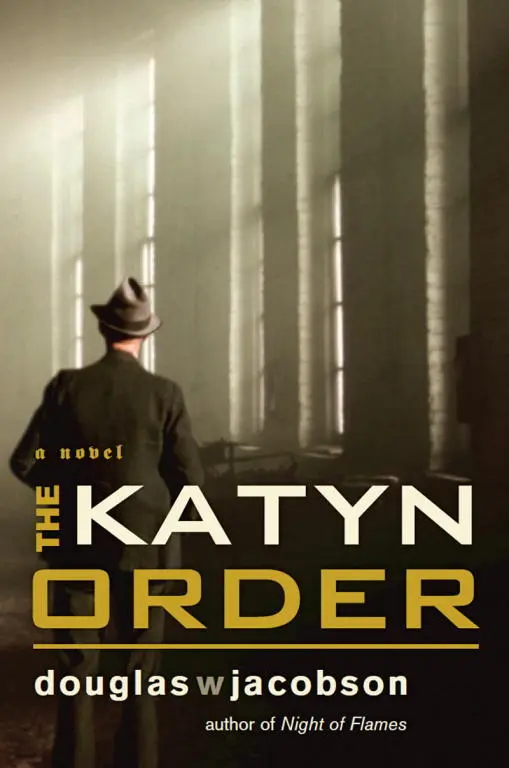
- Название:The Katyn Order
- Автор:
- Издательство:McBooks Press
- Жанр:
- Год:2011
- Город:Ithaca
- ISBN:978-1-59013-572-3
- Рейтинг книги:5 / 5. Голосов: 1
-
Избранное:Добавить в избранное
- Отзывы:
-
Ваша оценка:
The Katyn Order: краткое содержание, описание и аннотация
Предлагаем к чтению аннотацию, описание, краткое содержание или предисловие (зависит от того, что написал сам автор книги «The Katyn Order»). Если вы не нашли необходимую информацию о книге — напишите в комментариях, мы постараемся отыскать её.
The Katyn Order — читать онлайн бесплатно полную книгу (весь текст) целиком
Ниже представлен текст книги, разбитый по страницам. Система сохранения места последней прочитанной страницы, позволяет с удобством читать онлайн бесплатно книгу «The Katyn Order», без необходимости каждый раз заново искать на чём Вы остановились. Поставьте закладку, и сможете в любой момент перейти на страницу, на которой закончили чтение.
Интервал:
Закладка:
Natalia held the cup of water to Berta’s lips. She took a sip and laid her head back on the stained, wafer-thin pillow. “When can I get out of here?” she asked. Her voice was little more than a croaky whisper, her eyes glazed and distant.
Natalia smiled at her. “As soon as you can put some weight on that leg, I’ll get you out of here. Maybe a day or two.”
“Yeah, sure. Nice try.” She pointed at Natalia’s face. “What happened to you?”
Natalia had to think for a second, then remembered how she must look. “Oh, it’s nothing. I bumped into a post.”
“Looks like someone… took a poke…” Berta’s eyes closed. “It’s… so hot in here…”
Natalia glanced around. The elderly nun was on the other side of the room changing the dressings of a severely burned young girl, who was mercifully unconscious. Natalia cursed under her breath. She had to get back to her unit. But she didn’t want to leave Berta. One patient with an infection wasn’t going to get any special treatment in this makeshift hospital with virtually no staff and no medications. Berta couldn’t walk, and even if she could, where could she take her? Now that they’d abandoned the apartment on Trebacka Street, Natalia and the rest of the commandos in her unit hunkered down wherever they happened to be, like the rest of the AK now trapped in Old Town. As crappy as this place was, at least Berta was off the streets.
“Do you remember… when we first met?” Berta had opened her eyes again.
“Yes, I doubt I could ever forget it,” Natalia said, remembering the gruesome incident on the train. “You were the strong one that day. I’m not sure if I could have continued on if you hadn’t been there for me.”
Berta reached over and took her hand with a surprisingly strong grip. “You’ll survive this.”
Natalia’s eyes clouded up. “So will you, Berta. We’ll survive it together. I’ll come back tomorrow.”
“Don’t worry about me. I’ll be fine. Like you said… in a day or two.”
Twelve
ADAM KNELT with his elbow resting on the sill of the second-floor window and squinted into the late afternoon sun. His body was heavy with fatigue, and sweat dripped down the back of his neck as he silently cursed the Weaver scope on his Springfield sniper rifle. It was fogged up again. He’d had it specially mounted by an AK gunsmith so he could top-load five cartridges, but the damned thing still fogged up in humid weather.
He had been at it for three straight days, working with AK commando units that dashed from barricade to barricade, desperately trying to keep the enemy Panzers out of Old Town. In the days following the destruction of the PAST building, the Germans had brought in thousands of reinforcements, including battalions of battle-hardened Wehrmacht troops to fight alongside the Ukrainian and Russian conscripts. Stukas bombarded the city with aerial assaults, while Panzer units and infantry battalions hammered one neighborhood after another from dawn to dusk. Artillery fire continued nonstop through the night, bringing the last feeble remnants of civilian life to a grinding halt. The AK still hung on to Old Town, but the noose was tightening.
Adam wiped the moisture off the scope’s lens with a handkerchief, then peered through it again, adjusting the focus knob. A Panther tank came into view and, a moment later, the tank commander’s head poking up through the open hatch. Adam shifted an inch to the left, bringing the target directly into the center of the crosshairs. He exhaled slowly and squeezed the trigger.
The tank commander’s head exploded as Adam moved the rifle a few degrees farther left and located a second target: an SS officer standing next to the Panther tank. The officer reacted to the gunshot and turned his head toward the tank as Adam smoothly chambered a second round, squeezed the trigger and shot him in the neck.
He found two additional targets. One went down cleanly with a shot to the forehead. The other doubled over, howling, his hands clawing at the entry hole in his stomach. Adam got to his feet and bolted from the room, taking the stairs two at a time.
He knew the drill well. They had been repeating it for days. The AK was desperately short of PIAT anti-tank guns, so when the Panzer units approached, the commandos waited behind the barricades while Adam picked off as many of the tank crew as he could. Then the commandos charged forward with rifles and Molotov cocktails, attempting to capture or disable the tank. But if they didn’t make it before the tank gunner rotated the turret and sighted in, the building Adam was about to vacate would be reduced to a pile of rubble.
He emerged from the building and sprinted down Podwale Street, away from the barricade. He continued for another fifty meters, then ducked into a partially demolished building at the intersection with Senatorska Street. The front façade had been blown away in an aerial bombardment two days earlier, and a broken water main had flooded the cellar, drowning more than a dozen people who had taken refuge down there. There hadn’t been time to recover the bodies, and Adam held his breath against the stench as he carefully negotiated the rickety staircase.
He’d selected the building because what was left of the first floor gave him a clear view down Senatorska where a second group of AK commandos had encountered an older Panzer II tank. Adam got into position, reloaded the Springfield and sighted in on his targets. Thirty seconds later he descended the stairs and exited the building.
The Panzer II was captured by the AK, but the Panther tank was not. As Adam looked back down Podwale Street, he saw the massive machine bash through the barricade. AK commandos scattered to get out of the way, but the tank’s machine guns mowed them down. The Panther tank crunched over the debris, then stopped in the middle of the street.
Adam dropped to one knee and raised his rifle, but the tank hatch was closed with no targets in sight. One of the badly wounded commandos, his jacket and trouser legs dripping with blood, managed to light a Molotov cocktail and hurl it before collapsing. The bottle hit the side of the tank, and it burst into flames with no effect.
For a moment the tank just sat there. Then the turret rotated toward a schoolhouse with boarded up windows and a bright red cross painted on the door.
A second later Adam was knocked flat as a thunderous blast roared from the Panther’s 75mm cannon. In a deafening concussion, the first and second stories of the school building collapsed, belching a cloud of dust fifty meters in all directions. Frantic commandos raced toward the demolished building as the lethal machine turned away and rumbled back across the smashed barricade, its brief mission of retribution complete.
It was well after dark by the time Adam and a dozen other grim commandos finally gave up digging through the ruins of the collapsed school building. They’d recovered twenty-one bodies, and carried them onto the grassy area between the street and the old city wall, but many more lay buried deep beneath the rubble.
A priest who’d been helping them slumped to the ground, his thick, black hair plastered to his forehead with sweat and dust. “I just stepped out to try and locate some bandages,” he croaked, “and when I returned the building was…” He looked up at Adam, tears streaming down his dirt-caked face. “There were forty-three patients in there. Nineteen were just children!” Adam extended his hand to help him to his feet, but the priest waved him off, his head drooping to his chest.
Adam stood there for a moment. In the brief flashes of light from artillery bursts he could make out a beaded rosary in the priest’s hands. When he was a young boy in Krakow his aunt and uncle had taken him to church regularly while his father was off fighting with the legions. His aunt taught him to pray the rosary, which he did to please her. He remembered questioning, in those long ago days, whether it did any good. Now he was certain that it didn’t.
Читать дальшеИнтервал:
Закладка:
Похожие книги на «The Katyn Order»
Представляем Вашему вниманию похожие книги на «The Katyn Order» списком для выбора. Мы отобрали схожую по названию и смыслу литературу в надежде предоставить читателям больше вариантов отыскать новые, интересные, ещё непрочитанные произведения.






Обсуждение, отзывы о книге «The Katyn Order» и просто собственные мнения читателей. Оставьте ваши комментарии, напишите, что Вы думаете о произведении, его смысле или главных героях. Укажите что конкретно понравилось, а что нет, и почему Вы так считаете.