Махи Бинбин - Marrakech Noir
Здесь есть возможность читать онлайн «Махи Бинбин - Marrakech Noir» весь текст электронной книги совершенно бесплатно (целиком полную версию без сокращений). В некоторых случаях можно слушать аудио, скачать через торрент в формате fb2 и присутствует краткое содержание. Город: New York, Год выпуска: 2018, ISBN: 2018, Издательство: Akashic Books, Жанр: Детектив, на английском языке. Описание произведения, (предисловие) а так же отзывы посетителей доступны на портале библиотеки ЛибКат.
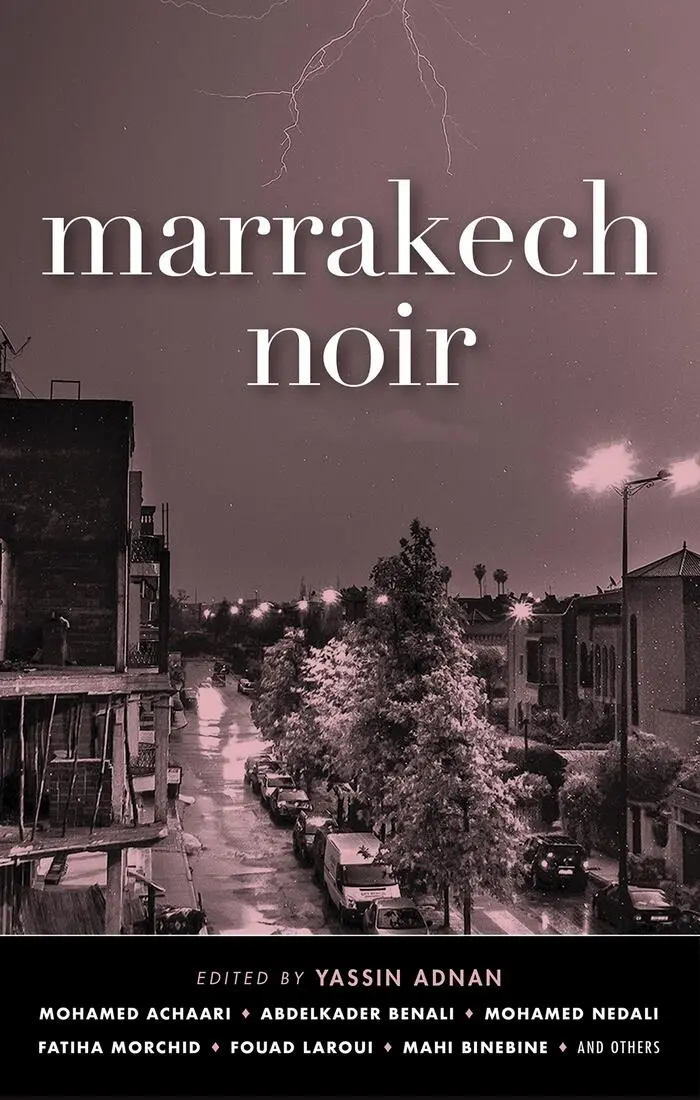
- Название:Marrakech Noir
- Автор:
- Издательство:Akashic Books
- Жанр:
- Год:2018
- Город:New York
- ISBN:978-1-61775-473-9
- Рейтинг книги:5 / 5. Голосов: 1
-
Избранное:Добавить в избранное
- Отзывы:
-
Ваша оценка:
Marrakech Noir: краткое содержание, описание и аннотация
Предлагаем к чтению аннотацию, описание, краткое содержание или предисловие (зависит от того, что написал сам автор книги «Marrakech Noir»). Если вы не нашли необходимую информацию о книге — напишите в комментариях, мы постараемся отыскать её.
Marrakech Noir — читать онлайн бесплатно полную книгу (весь текст) целиком
Ниже представлен текст книги, разбитый по страницам. Система сохранения места последней прочитанной страницы, позволяет с удобством читать онлайн бесплатно книгу «Marrakech Noir», без необходимости каждый раз заново искать на чём Вы остановились. Поставьте закладку, и сможете в любой момент перейти на страницу, на которой закончили чтение.
Интервал:
Закладка:
The chief just stared at the old man.
“My son didn’t die in a traffic accident!”
“Just what are you saying, cherif ?” the cop asked.
“The truth, chief! My son was killed by members of the drug squad.”
“What you’re saying is serious,” the chief replied, his tone suddenly menacing. “Very serious. Do you have proof?”
“Proof, no. But I have a witness.”
“Who’s this witness?”
“A friend of my late son’s.”
“His name and address?” the chief requested. “I want to question him as soon as possible.”
“His name is Noureddine... Noureddine...” The old man was silent for a few seconds, searching his memory for a surname. “It will come to me later... I have his phone number, though.” He took the notepad out of his pocket and flipped through its yellowed pages. “Here it is.”
The chief pushed the desk phone toward Rezzouk and pressed the speakerphone button. “Go on,” he ordered. “Call him and tell him to meet you somewhere. In a park, for example.”
The old man dialed the number and heard a woman’s voice at the other end of the line: “ Maroc Telecom, bonjour! The number you have dialed is not in service. ” He tried again, got the same message, and hung up, stupefied.
“Tell me, cherif ,” the chief said after a silence.
“Yes?”
“Where did you meet this Noureddine?”
“At Bab Ghmat Cemetery, near my son’s grave.”
“There were others around, I imagine?” the chief asked.
“No, no one.”
“No one came to the ceremony?”
“Oh, yes. Lots of people,” Rezzouk told him. “But after the burial, they all left.”
“And you stayed there alone?”
“Yes.”
“What were you doing alone by the grave?”
“I was praying for my son’s soul,” the old man shared, sorrow filling his voice again.
“And how were you praying? Standing up? Kneeling? Describe it to me as carefully as possible,” the chief pressed.
Confused and suspicious, the old man stared at the chief. “Those are pointless details.”
The chief stared back with a faint, sneering smile. “You must know, cherif , that in our work, the truth is like the devil: it hides in details that the average person finds unimportant. A gesture, a look, a trifle, a mere nothing — yes, sometimes the truth hides in nothing at all! Believe me: if I told you all the crimes we’ve solved thanks to an insignificant detail, I’d be here all day.”
Though unconvinced by the chief’s argument, the old man relented: “I was there, standing at the foot of the grave, my hands raised to the sky, eyes closed—”
“You had your eyes closed?” the chief interrupted.
“Yes, to better concentrate on the prayer.”
“And it was then that this Noureddine approached you?”
“Yes.”
The chief swiftly pushed his swivel chair back from the desk, nodding his head up and down as if he’d found the key to the mystery. “Go home, cherif !” he urged the old man. “You’re very tired.”
Rezzouk got up and, without saying a word, began walking toward the door.
“Some advice, cherif !” the chief called after him with the self-satisfied air of a man who understood life better than most. “The next time you visit the cemetery, be careful not to pray with your eyes closed.”
Translated from French by Katie Shireen Assef
Mama Aicha
by Halima Zine El Abidine
Jemaa el-Fnaa
As I was getting ready to leave the furnished apartment that I’d rented in the heart of Casablanca, I realized that I had forgotten the most important thing: the organdy. This length of purple silk from Kawamata that I’d spent half my scholarship money to buy during my first year of university in Japan was part of a memory that had been boxed away for twenty years. When I’d arrived there as a teenager, I could think of nothing but the disappointment of it all, the crushing defeat. In my hand I carried a small satchel of clothing, and from my shoulder hung a wallet containing my passport, my registration certificate for the university, and postcards showing scenes from the city I loved more than anything: Marrakech. Marrakech opens her gates to the world, but she had driven me — her own son — out.
My father insisted that I seek refuge in the most remote corner of the earth, where the hurricane winds sweeping our country could not reach. “This is a time of fear and death. I can bear your distance, my son, as long as you’re safe,” he told me. “I could not keep you here knowing you might be taken at any time by the secret police and the men with whips — seized by treachery or coercion. Though Japan, where your uncle Salim lives, may be far away in the east, it’s still closer than the corridors of the commissariat in Jemaa el-Fnaa. Leave your glorious dreams of revolution behind, son, and do something with your youth, and when you are a grown man, you will realize that no revolution in the world was ever led by inexperienced students.”
That is what my father said as he bid me goodbye at Marrakech Menara Airport one day in the late seventies. The stern headmaster who terrified everyone in the high school, teachers and students alike, seemed sad, diminished. When he gave me a final parting look, his eyes were full of tears.
Alone with my thoughts as I sat in the window seat on the plane, I let my own tears flow. All of the words that had died on my tongue repeated themselves in my head. Everything I hadn’t said to my father. What had we done that we should be either sent to prison or driven out of the country?
My phone rang, and I ignored it as I attempted to find my way out of a garage that was like a maze. Maybe it was my mother, although I’d told her — when I had dinner at her house last night — that I was going to Marrakech today to see Aziz and his mother Aicha.
I’d been gone from Marrakech for twenty years. For twenty years I’d been the cause of my mother’s tears. Distracting myself, immersing myself in books and theories. It was true that I had done very well and had become an instructor at a Japanese university. But these were successes without savor. I had no one to celebrate with, no one to whom I could speak in my native tongue about the black misery that blotted out my name from the diplomas I had earned with such distinction. Regret gnawed at every part of me. If only I had not obeyed my father and emigrated to this much larger prison, allowed myself to be torn out by my roots. I had no friends or companions except the postcards that I’d brought with me. I kept them close to my heart, and with them the piece of organdy silk. I saw the faces from my country in them. I talked to them and they spoke back to me. I passed the nights in their company.
As for my uncle Salim, our only connection was through the money my father sent him to support me during the early years of my exile. Family is not a matter of blood, it is a matter of birth and upbringing — I would console myself with this thought when it became clear that my uncle wasn’t going to worry himself about me in a country where sons became adults and took responsibility for themselves as soon as they started university. In Marrakech, where I had come from, sons could have gray hair and they would still be children in the eyes of their parents.
The phone rang again. Be patient, Mother, I can’t answer right now, I’m looking for a way out of this lousy garage that you directed me to. My poor mother. Perhaps she had wanted to come with me to Marrakech. Maybe that was what she’d been hinting at when we spoke yesterday, revealing a sadness that had spread and taken root like a tree in the depths of her eyes. “While you were gone I might as well have been dead,” she’d said. “Aicha was the bosom in which I sought comfort, but in the end, I left her to her tragedies and came to Casablanca to drink from my cup of sorrow alone.”
Читать дальшеИнтервал:
Закладка:
Похожие книги на «Marrakech Noir»
Представляем Вашему вниманию похожие книги на «Marrakech Noir» списком для выбора. Мы отобрали схожую по названию и смыслу литературу в надежде предоставить читателям больше вариантов отыскать новые, интересные, ещё непрочитанные произведения.






Обсуждение, отзывы о книге «Marrakech Noir» и просто собственные мнения читателей. Оставьте ваши комментарии, напишите, что Вы думаете о произведении, его смысле или главных героях. Укажите что конкретно понравилось, а что нет, и почему Вы так считаете.