Махи Бинбин - Marrakech Noir
Здесь есть возможность читать онлайн «Махи Бинбин - Marrakech Noir» весь текст электронной книги совершенно бесплатно (целиком полную версию без сокращений). В некоторых случаях можно слушать аудио, скачать через торрент в формате fb2 и присутствует краткое содержание. Город: New York, Год выпуска: 2018, ISBN: 2018, Издательство: Akashic Books, Жанр: Детектив, на английском языке. Описание произведения, (предисловие) а так же отзывы посетителей доступны на портале библиотеки ЛибКат.
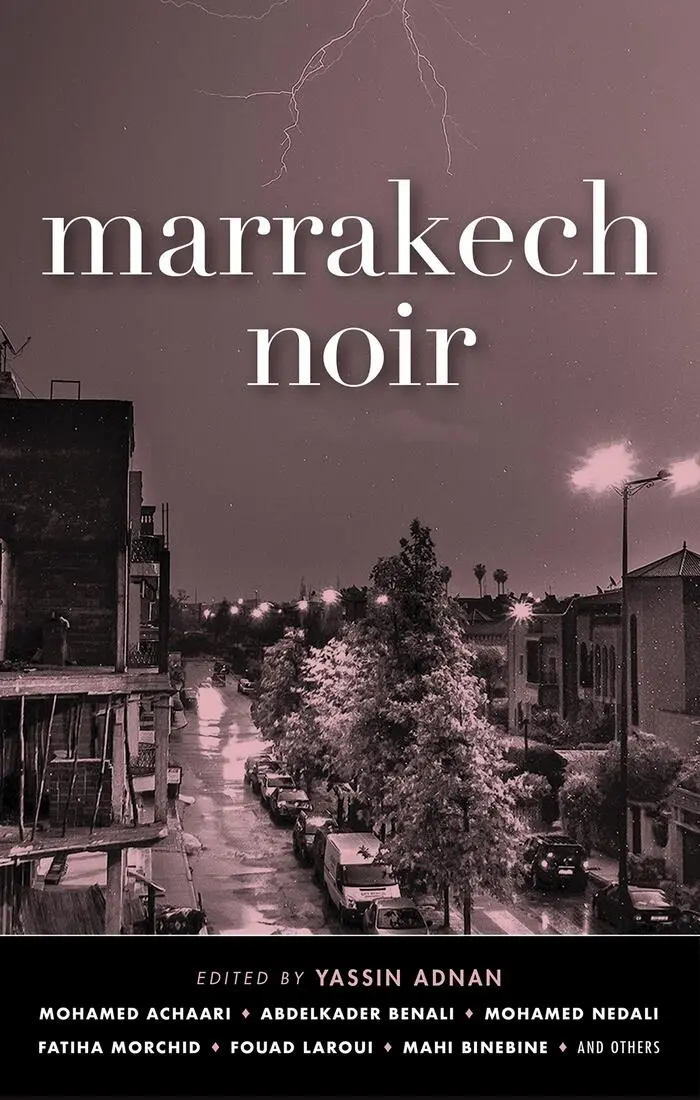
- Название:Marrakech Noir
- Автор:
- Издательство:Akashic Books
- Жанр:
- Год:2018
- Город:New York
- ISBN:978-1-61775-473-9
- Рейтинг книги:5 / 5. Голосов: 1
-
Избранное:Добавить в избранное
- Отзывы:
-
Ваша оценка:
Marrakech Noir: краткое содержание, описание и аннотация
Предлагаем к чтению аннотацию, описание, краткое содержание или предисловие (зависит от того, что написал сам автор книги «Marrakech Noir»). Если вы не нашли необходимую информацию о книге — напишите в комментариях, мы постараемся отыскать её.
Marrakech Noir — читать онлайн бесплатно полную книгу (весь текст) целиком
Ниже представлен текст книги, разбитый по страницам. Система сохранения места последней прочитанной страницы, позволяет с удобством читать онлайн бесплатно книгу «Marrakech Noir», без необходимости каждый раз заново искать на чём Вы остановились. Поставьте закладку, и сможете в любой момент перейти на страницу, на которой закончили чтение.
Интервал:
Закладка:
Kamal and I made a small fortune each week, half of which ended up in Mama Rosalie’s purse, and the other in the till of the potbellied owner of Café Atlas.
Once our morning work at the souk was done, we’d spend most of the day drinking beer by the case, in this godforsaken hole in the wall where we found a kind of peace. Our secret squabbles would die down; we’d admit to the snag in our argument on this or that subject, each of us conceding a point in the debate, even flattering each other, becoming affable and easy. If only we’d had two distinct bodies, we’d have embraced one another like a couple of drunks.
Come nine o’clock sharp — just this side of an alcoholic coma — we’d climb onto our mopeds and fly straight to Mama Rosalie’s. That we made it home safe and sound every night was no less than a miracle. If we sometimes took a spill in a narrow alley between buildings, it was rarely serious. We’d get to our feet and bravely continue on our way. As soon as we arrived, a good warm meal (the only one of the day) was served to us by a young housekeeper with sumptuous curves who we always swore we’d take advantage of, though we never had the energy to go through with it. Mama Rosalie stayed shut away in her room, refusing to cross paths with the pitiful wrecks that came stumbling through the door every night of her life. She’d wait until the next morning, at coffee, when we’d become human again and speak intelligibly. We loved these moments of reprieve, loved resting our heads on her knees and letting her fuss over us like in the old days, when she’d spend hours picking our hair for lice. We couldn’t get enough of her caresses or her half-soothing, half-reprimanding words. Just knowing she was there beside us gave us the strength to face another day, to face the chaos of the souk and its hordes of tourists. We’d recharge our batteries, laughing at the same old jokes we’d told a thousand times. That just about sums up our existence, Kamal’s and mine.
Café Atlas was a world teeming with the dregs and mold of the city, a lure for all kinds of human distress, an island of survival on a sea of torment, engulfing you in its smoke: stories sung by vagabond dreamers, the humid air filled with joyful chatter, and tears that fell from a thousand bursts of laughter. It was a place where you could be without really being there, a place closed in by dirty, smoke-stained windows that hurried passersby would brush against on their way to somewhere else, where the din of life was a faint, distant sound, drowned out by the omnipresent voice of the divine Umm Kulthum, and where the beer and wine flowed freely. Ah! Café Atlas was our paradise... or our hell, depending.
On that particular night, riding home on our mopeds, we’d suffered a brutal fall. Our face was covered in blood. We couldn’t move so much as our little finger. Kamal opened his eyes to see a dead child laid out beside us. A crowd had gathered, the people’s accusing looks like so many blazing pitchforks ready to stab us. He saw horned serpents and yellow scorpions flowing from gaping mouths, the sleeves of the crowd’s djellabas billowing around us in a ghostly danse macabre as people screamed and screamed. The child, dressed all in white, stood and began to join in the dance.
“He’s dead!” Kamal told me.
“Who?”
“The dancing child. Black blood is flowing from his ears.”
“I don’t see any child,” I said.
“He’s lost in the crowd, that’s why you don’t see him.”
“There’s no crowd! We’re alone in the street,” I insisted.
“You don’t hear them screaming?”
“I can only hear you.”
“And the blood on the ground?”
“It’s ours. Look closely, we’ve just fallen. It’s not the first time!”
“You’re lying. You refuse to see what’s in front of your face!” Kamal shouted. “You never want to see anything!”
“Come on, get up. Let’s go home. A warm meal is waiting for us.”
“I hate you!”
“You’ll get over it.”
“I’ve always hated you,” Kamal said.
“Because I see you. I don’t judge you, but I see you. You don’t like to be watched.”
Kamal went silent. I’d never seen him in such a state. His fixed expression raised a kind of invisible wall between us. I tried to change my tone, to soften my words, to reason with him in every possible manner, but he wouldn’t listen. It was as if, by some obscure trickery, he’d caused me to vanish from our existence. He’d turned his back on me — on me , his companion for better or worse since childhood. My protests were in vain. I could see my words driving straight into that wall of silence, then rolling down it like drops of condensation.
He stood up, got back on his moped, and rode straight to the souk. Most of the stalls were already closed. The muezzin was calling for the evening prayer. He stopped at Morad’s — a friend who owned our go-to bazaar.
“Hide me,” he sobbed. “Hide me!”
“What’s going on?” Morad asked.
“I hit a child,” Kamal whispered. “I killed him.”
“What are you talking about?”
“I’m a murderer!” he bellowed.
“Calm down and come inside.”
“The kid was no more than ten!” Kamal trembled, and his bloodied face seemed to confirm his story.
Morad asked no more questions. Where we’re from, we stick together and we take care of each other first and worry about the consequences later. He brought Kamal into his bathroom and made him take a shower. Kamal let himself be taken care of, his expression blank, his movements slow. Morad came back with a first-aid kit and attended to his wounds. The sting of the alcohol didn’t even make him wince. Then Morad went to find him a clean gandoura and some babouches, which didn’t take long in the bazaar. He led him to a cramped room at the back of the shop where a mountain of carpets rose up to the ceiling.
“Stay here,” he said. “We’ll talk it over in the morning.”
He came back with a sandwich, closed and double-locked the door behind him, and was gone.
We stayed there for several days, in the shadowy half-darkness, not speaking a word to each other, like a surly old couple. Kamal went from bad to worse. He began to cry, playing the film of his imaginary accident over and over again in his mind, filling gaps in the scenes with hallucinatory details. Sometimes snakes would coil themselves around his body to keep him from escaping, or scorpions would form a blockade like a fakir’s bed of nails. Sometimes there was a blinding light, and ghosts surged toward him, grasping at his face. It was very painful for me not to be able to save him from this nightmare. But what could I do? He was ignoring me. I’d become persona non grata, a stranger as dangerous as the menacing beasts that closed in on him.
Morad paid us visits at mealtimes, bringing a basket of food and several cases of beer. He brought news from the outside too, which was quickly becoming frightening. The police were indeed looking for us. Two inspectors were making rounds of the souk, stall by stall, asking for leads about where we might be. I didn’t understand any of it. I knew we hadn’t killed anyone; I’d been there at the scene of the accident, and much less inebriated than Kamal. As word spread, I felt Morad’s anxiety growing. He wouldn’t have abandoned us for anything in the world, I was sure of that, but he was afraid. Doubt gradually came over me, piercing me with its cruel venom. I couldn’t see the logic in this story. Why in the hell would the police be looking for a drunk who’d fallen off his moped in a deserted alley? Because they’re bored to death down there, and to pass the time, the demons were amusing themselves by toying with our fears, our anxieties, our lives. I know something about that, having frequented the likes of them inside Kamal’s feverish body. A body I didn’t choose, and that was, so to speak, my purgatory.
Читать дальшеИнтервал:
Закладка:
Похожие книги на «Marrakech Noir»
Представляем Вашему вниманию похожие книги на «Marrakech Noir» списком для выбора. Мы отобрали схожую по названию и смыслу литературу в надежде предоставить читателям больше вариантов отыскать новые, интересные, ещё непрочитанные произведения.






Обсуждение, отзывы о книге «Marrakech Noir» и просто собственные мнения читателей. Оставьте ваши комментарии, напишите, что Вы думаете о произведении, его смысле или главных героях. Укажите что конкретно понравилось, а что нет, и почему Вы так считаете.