D. Wilson - Primordial - An Abstraction
Здесь есть возможность читать онлайн «D. Wilson - Primordial - An Abstraction» весь текст электронной книги совершенно бесплатно (целиком полную версию без сокращений). В некоторых случаях можно слушать аудио, скачать через торрент в формате fb2 и присутствует краткое содержание. Год выпуска: 2014, Издательство: Anti-Oedipus Press, Жанр: Старинная литература, на английском языке. Описание произведения, (предисловие) а так же отзывы посетителей доступны на портале библиотеки ЛибКат.
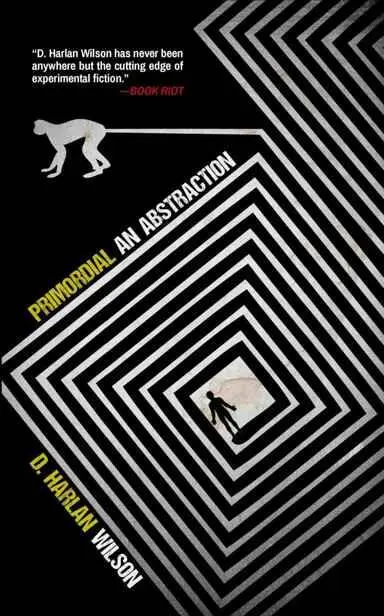
- Название:Primordial: An Abstraction
- Автор:
- Издательство:Anti-Oedipus Press
- Жанр:
- Год:2014
- ISBN:нет данных
- Рейтинг книги:4 / 5. Голосов: 1
-
Избранное:Добавить в избранное
- Отзывы:
-
Ваша оценка:
Primordial: An Abstraction: краткое содержание, описание и аннотация
Предлагаем к чтению аннотацию, описание, краткое содержание или предисловие (зависит от того, что написал сам автор книги «Primordial: An Abstraction»). Если вы не нашли необходимую информацию о книге — напишите в комментариях, мы постараемся отыскать её.
is an exercise in contemporary idiocy that rakes academia over the coals while plumbing the uncanny obscurities of existence and identity.
Primordial: An Abstraction — читать онлайн бесплатно полную книгу (весь текст) целиком
Ниже представлен текст книги, разбитый по страницам. Система сохранения места последней прочитанной страницы, позволяет с удобством читать онлайн бесплатно книгу «Primordial: An Abstraction», без необходимости каждый раз заново искать на чём Вы остановились. Поставьте закладку, и сможете в любой момент перейти на страницу, на которой закончили чтение.
Интервал:
Закладка:
43
It’s rush hour.
I accidentally cut off a pickup truck with jacked-up tires.
At the next stoplight the truck pulls next to me.
The driver rolls down the window.
He glares at me.
He says I drive a faggy car so I must be some kinda fag.
“Do Subarus denote homosexuality? This is a Forester, mind you. It’s technically an SUV.”
He swears at me. He tells me he’s going to kill me.
“Well, if it helps, it’s not my car. I ‘borrowed’ it from one of my roommates.” I laugh.
He continues to threaten me. Then the light turns green. He rolls up his window. He flips me off.
We go.
I’m running low on gas. I stop to get some.
The pickup truck pulls into the gas station. The driver leaps out and marches toward me.
He’s short.
He has a patchy beard.
He wears a plaid shirt and a trucker hat and all the rest of it.
I get out of the Subaru.
The driver reaches back a bloody stump.
I am a foot-and-a-half taller and 30 lbs. more muscular than him. At least.
He didn’t realize it before. Everybody looks more or less the same behind the wheel of a car.
There’s more talk of me being gay.
I take a step towards him.
He runs back to his truck.
As he retreats, I sort of yell at him in this resounding, preternatural death-voice. The modest subtext of my thesis: “You fucked with the wrong asshole, shithead.”
The driver tries to get the truck going.
The engine hiccups. The starter won’t catch.
There’s an aluminum bat in the trunk of the Subaru.
I retrieve it.
I stride toward the truck.
The driver is getting antsy now. He peers at me in the rear view mirror. He hops up and down in his seat, stomping on the gas pedal.
I fall into a trot.
I lift the bat over my head.
I bring the bat down on the windshield of the truck, exploding it into glinting stardust.
The driver shrieks like an insect.
I hit the truck again with the bat. I hit the truck again with the bat. I hit the truck again with the bat. I hit the truck again with the bat. I hit the truck again with the bat. I hit the truck again with the bat. I hit the truck again with the bat. I hit the truck again with the bat. I hit the truck again with the bat. I hit the truck again with the bat. I hit the truck again with the bat. I hit the truck again with the bat. I hit the truck again with the bat. I hit the truck again with the bat. I hit the truck again with the bat. I hit the truck again with the bat. I’m screaming like a pope, howling like a holy ghost. I hit the truck again with the bat.
The truck roars to life.
We go.
44
Violence begets violence. Ultraviolence is another matter. Hermeneutics of suspicion vary like words for snow in Eskaleut. And while violence in its pure form is certainly variable, it’s not as volatile. This includes physical violence as much as the violence of Psyche and especially Rhetoric. Consider this climatic passage from Gilles Deleuze and Félix Guattari’s The War Machine :
The first theoretical element of importance is the fact that the war machine has many varied meanings, and this is precisely because the war machine has an extremely variable relation to war itself . The war machine is not uniformly defined, and comprises something other than increasing quantities of force. We have tried to define two poles of the war machine: at one pole , it takes war for its object, and forms a line of destruction prolongable to the limits of the universe. But in all of the shapes it assumes here — limited war, total war, worldwide organization — war represents not at all the supposed essence of the war machine, but only, whatever the machine’s power ( puissance ), either the set of conditions under which the States appropriate the machine, even going so far as to project it as the horizon of the world, or the dominant order of which the States themselves are no longer but parts. The other pole seemed to be the essence; it is when the war machine, with infinitely lower “quantities,” has as its object not war, but the tracing of a creative line of flight, the composition of a smooth space and of the movement of people in that space. At this other pole, the machine does indeed encounter war, but as its supplementary or synthetic object, now directed against the State and against the worldwide axiomatic expressed by States.
Then, in the final sentence of the book, Deleuze & Guattari’s thesis ignites like gunpowder: “War machines take shape against the apparatuses that appropriate the machine and make war their affair and their object: they bring connections to bear against the great conjunction of the apparatuses of capture and domination.”
To adequately process this data, one requires an expansive knowledge of D&G’s entire oeuvre, at which point the theoretical duo’s enigmatic deployment of word-bombs becomes utterly ordinary, if not banal.
More compelling, perhaps, is a disembowelment of this material from the gutsack of everyday life. For instance, I get this text from my wife:
“Please go to the Dollar Store and pick up some buttwipes for the baby.”
But my phone has turned against me.
Also, as I remind my wife in an encrypted font: “I’m not home. I’m at school.”
45
I say, “Did Mama Cass really choke to death on a hamburger?”
The grad student looks at the Professor. The Professor looks at the Dean. The Dean looks at another Dean. The other Dean looks at another Dean. That Dean looks at the Provost. The Provost looks at the President. The President looks at his mom.
His mom shrugs.
I say, “Well what good are you people? What good is any of this?” I gesticulate at the University.
46
My wife and I have an open relationship. Don’t ask, don’t tell.
I fall in love with my eschatology professor.
The swell of her bust cuts me deeper than the curve of her hips.
We make love beneath the moon.
Afterwards we lie naked on our backs in the grass and discuss the probability of the moon derailing from orbit and slamming into the earth like a great ball of scrimshaw, craters revealing themselves as open bear traps and vagina dentata etched into the ivory.
She ends her thoughts on the matter with a soft, awkward explosion from her lips. But not quite an explosion. More like a pop. And yet more violent than a pop.
“What lies between an explosion and a pop?” I ask her.
“Discourse,” she whispers. “Rhetoric.”
I take her breast in my hand and massage it. She tells me it doesn’t feel good. I massage it differently. She says that feels worse.
I look at my hand.
The fingers, I realize.
The knuckles, I wonder.
My eschatology professor rolls on top of me. We set aside the pretense of language and gaze into each other’s eyes. Our pupils have swallowed our irises. I can see the starlight reflecting off of my dark matter onto hers.
Later, we have sex in every public bathroom on campus, just to say we did it.
I do something she doesn’t like. I say something she doesn’t like. She tells me she doesn’t like what I’m thinking.
She orders me to temper my metabolism.
I breathe in and out, in and out, in and out until I accomplish a fluid synesthesia, all of the extensions and vicissitudes of my sensorium called to stiff attention.
“I can hear your breathing,” she remarks.
“Well I have to breathe. Don’t I?”
“Not that way. You don’t hear me breathing that way.”
I release a cataleptic sigh. “I don’t know what you want. I have tried to involve all of the senses. I have tried to account for the full breadth of human experience and potentially the experience of the moon. I am not the moon. I don’t know what the moon thinks or what the moon desires or what the moon intends to do. You can’t hold that against me.”
Читать дальшеИнтервал:
Закладка:
Похожие книги на «Primordial: An Abstraction»
Представляем Вашему вниманию похожие книги на «Primordial: An Abstraction» списком для выбора. Мы отобрали схожую по названию и смыслу литературу в надежде предоставить читателям больше вариантов отыскать новые, интересные, ещё непрочитанные произведения.









Обсуждение, отзывы о книге «Primordial: An Abstraction» и просто собственные мнения читателей. Оставьте ваши комментарии, напишите, что Вы думаете о произведении, его смысле или главных героях. Укажите что конкретно понравилось, а что нет, и почему Вы так считаете.