D. Wilson - Primordial - An Abstraction
Здесь есть возможность читать онлайн «D. Wilson - Primordial - An Abstraction» весь текст электронной книги совершенно бесплатно (целиком полную версию без сокращений). В некоторых случаях можно слушать аудио, скачать через торрент в формате fb2 и присутствует краткое содержание. Год выпуска: 2014, Издательство: Anti-Oedipus Press, Жанр: Старинная литература, на английском языке. Описание произведения, (предисловие) а так же отзывы посетителей доступны на портале библиотеки ЛибКат.
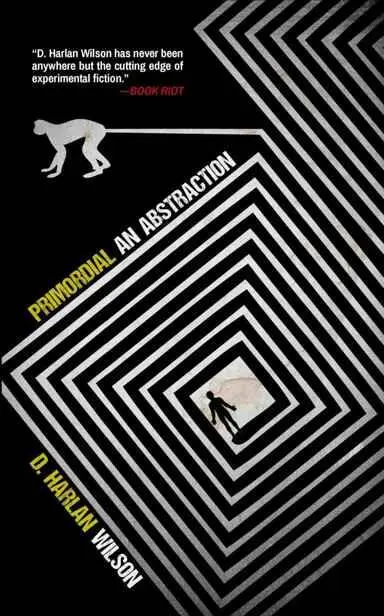
- Название:Primordial: An Abstraction
- Автор:
- Издательство:Anti-Oedipus Press
- Жанр:
- Год:2014
- ISBN:нет данных
- Рейтинг книги:4 / 5. Голосов: 1
-
Избранное:Добавить в избранное
- Отзывы:
-
Ваша оценка:
Primordial: An Abstraction: краткое содержание, описание и аннотация
Предлагаем к чтению аннотацию, описание, краткое содержание или предисловие (зависит от того, что написал сам автор книги «Primordial: An Abstraction»). Если вы не нашли необходимую информацию о книге — напишите в комментариях, мы постараемся отыскать её.
is an exercise in contemporary idiocy that rakes academia over the coals while plumbing the uncanny obscurities of existence and identity.
Primordial: An Abstraction — читать онлайн бесплатно полную книгу (весь текст) целиком
Ниже представлен текст книги, разбитый по страницам. Система сохранения места последней прочитанной страницы, позволяет с удобством читать онлайн бесплатно книгу «Primordial: An Abstraction», без необходимости каждый раз заново искать на чём Вы остановились. Поставьте закладку, и сможете в любой момент перейти на страницу, на которой закончили чтение.
Интервал:
Закладка:
I put in my card and press the buttons and wait and press the buttons and wait and wait and wait and my money comes out of the slit.
I take it, count it.
The money blows away. It’s windy.
I go inside the bank to get reimbursed. The teller gives me a hard time. She has to talk to her supervisor. They go back and forth and the supervisor makes a phone call. They look at each other. They look at me.
They decide to reimburse me.
I count my money as I exit the bank.
When I step outside, the money blows out of my hands. The wind has picked up.
I go back inside the bank to get reimbursed and the teller sort of laughs at me and her supervisor comes out and laughs at me and they call somebody on the phone and I can hear them laughing really loud on the other end of the line.
I’m persistent.
My persistence wears everybody out. They reimburse me just to get rid of me, although I’m careful to explain that I’m not breaking the law, that I didn’t do anything wrong, that I can’t help it if the forces of nature are against me, against all of us, and finally that I resent the allegation, veiled or otherwise, that I’m trying to take advantage of the bank and get away with something. Apologizing like henpecked spouses, the bank staff nod perfunctorily and they dole out idle reassurances and they call me sir and so forth and I back out of the bank staring at everybody with my jaw flexed and my eyes round and wet and insane.
This time I’m careful to hold on tightly to my money in two fists.
I’m angry now.
I don’t like those people in the bank.
I might have had too much to drink earlier.
I can’t hold my liquor anymore.
I may just relax the muscles in my fingers.
I may just loosen my fists a hair so that the wind can rob me a third time.
Nothing happens. The wind has died a quiet death.
I open my hands and the money falls onto the sidewalk between my feet.
I stand there for awhile, like a soldier at ease, observing the crisp bills and wondering if the wind will rise from the grave and do something.
Nothing happens.
Somebody comes up to me.
They see me looking down at the money.
They look back and forth between my face and the money and my face and the money.
They bend over.
They take the money.
They run away.
I run into the bank. “Did you see that!”
Nobody saw anything.
Getting reimbursed a third time is difficult but not impossible. It never is. Given enough time, the patience, temperament, and psychological endurance of the human condition will always run its course.
“At any rate,” I explain to the teller, singling her out, “why would I lie?”
38
“I want to declare my intent to go up for tenure,” I say. “Do I have to put it in writing or is my word good enough?”
“You are a student, if I’m not mistaken,” responds the chairperson of the Promotion and Tenure committee, a lumbering man with off-kilter shoulders and a beard he keeps to conceal a deep cleft palate.
“Yes. I suppose.”
“Students can’t go up for tenure. They aren’t eligible.” He touches his overlip.
“I received tenure before, though. And I have all of the requisite publications.” I hand him my curriculum vita and a copy of my latest book. “Generally my work has been positively reviewed in all of the major journals in my field of study. There have been a few bad reviews, but they were written exclusively by scholars whose ideas I turned inside-out, exposing their idiot cores.”
The chairperson makes bird noises as he peruses my c.v. and skims through my book. “Impressive,” he concludes, touching his overlip again. I’m beginning to think that it’s a nervous tic. “But as I said, students can’t go up for tenure. You are a student.”
I flex my jaw. “I can see your deformity.” I point at his face. “Your cleft palate. There. I can see it. That beard isn’t hiding anything.”
Sighing, the chairperson smiles a crooked smile. “What a relief. I was trying to get you to notice it.” Once again he touches his overlip. “Sometimes people forget to say anything. I keep meaning to shave but I never get around to it.”
We shake hands before I leave.
39
I wander around for awhile. I don’t think I talk to anybody and I may or may not go to class. The moon flitters on and off like an ailing lamp. I use toilets frequently, even when I don’t have to go. I don’t stop wandering until I have used every toilet in every public building at the University.
40
After all these years it occurs to me that I have retaken all of my undergraduate classes. I didn’t need to do that. Did I?
I go to talk to a student advisor.
She’s a woman. She’s attractive. She’s younger than me.
“How old are you?” I ask.
“At least fifteen years younger than you,” she retorts. “Maybe more.”
I nod. My underlip tries to outmaneuver my overlip.
Balking, I say, “Do you like my shirt?” I push out my chest and admire the logo. “Technically I may call you shawty, correct? Or is there an age limit? How old does a woman have to be before a man is no longer allowed to call her shawty? Can somebody’s grandmother be called shawty without it sounding acerbic, juvenile, or downright pejorative? Can I call a skeleton shawty as long as it possessed female genitals when it was encrusted in flesh? How does it work? What has happened to the sphere of culture and oblivion that interpellates us? Why is there no linguistic counterpart for shawty in the male register? I assume it has to do with patriarchy and the nature of power relations, but it’s dangerous to assume anything. Perhaps shawty is not gendered at all. I have never heard a woman call a man shawty. I have never heard a woman call a woman shawty. I have never heard a man call a man shawty. But anything is possible. Anything. Somebody who is not a woman, or even a man perhaps, may be getting called shawty right now, even as I speak.”
Terrified, the advisor rifles through a cabinet of files.
I tell her to take it easy.
I ask what she’s going to do about all of the time I lost essentially redoing my entire B.A. degree for no apparent reason. “You are an advisor, after all,” I intone. “Advise me.”
She dry-heaves.
“There are protocols,” she says.
I wait for her to continue.
A toilet flushes in the next room.
“That’s all you have to say about it? Do you even know what a protocol is?”
The sweep of my consequent aerostatic explanation is of course rooted in hard etymology, but the advisor doesn’t want to hear about it.
My students were the same way.
They didn’t want to hear about anything, no matter the context, or the subtexts, or the mere surface-appearance of the primary text or texts under scrutiny, let alone anything having to do with BwOs.
Students only want to pay their money and get their degree so that they can go do whatever else it is they want to do in the dining room or the bedroom or the bathroom or the basement of the House of Life.
Some students prefer to do what they do beyond House limits in the Pole Barn. But there is no escaping the House.
As Louis Althusser writes in “Ideology and Ideological State Apparatuses,” a seminal piece of Marxist philosophy that I cited with habitual relish in my original dissertation, prompting my dissertation committee to refuse me the civility of crumpets and scones at our monthly get-togethers, an abnegation for which I have never forgiven my committee members: “What thus seems to take place outside ideology in reality takes place in ideology. What really takes place in ideology seems therefore to take place outside it.” Later, Althusser adds: “Ideology has no outside. But at the same time, it is nothing but the outside .” And what goes for ideology goes for studentry , a term I perhaps recklessly appropriate from Herrs Strunk & White in The Elements of Style , an entirely outdated grammar textbook written by a confused and to some extent incompetent English professor (Strunk) and the author of Charlotte’s Web and Stuart Little (White). One enjoys the sound of the word studentry. And there is nothing more grotesque than studentry . Hence my deep interest in the grotesque. Exceptions belie the stereotype, of course, but exceptions are mere bric-à-brac; there are always too few of them to make a difference.
Читать дальшеИнтервал:
Закладка:
Похожие книги на «Primordial: An Abstraction»
Представляем Вашему вниманию похожие книги на «Primordial: An Abstraction» списком для выбора. Мы отобрали схожую по названию и смыслу литературу в надежде предоставить читателям больше вариантов отыскать новые, интересные, ещё непрочитанные произведения.







Обсуждение, отзывы о книге «Primordial: An Abstraction» и просто собственные мнения читателей. Оставьте ваши комментарии, напишите, что Вы думаете о произведении, его смысле или главных героях. Укажите что конкретно понравилось, а что нет, и почему Вы так считаете.