D. Wilson - Primordial - An Abstraction
Здесь есть возможность читать онлайн «D. Wilson - Primordial - An Abstraction» весь текст электронной книги совершенно бесплатно (целиком полную версию без сокращений). В некоторых случаях можно слушать аудио, скачать через торрент в формате fb2 и присутствует краткое содержание. Год выпуска: 2014, Издательство: Anti-Oedipus Press, Жанр: Старинная литература, на английском языке. Описание произведения, (предисловие) а так же отзывы посетителей доступны на портале библиотеки ЛибКат.
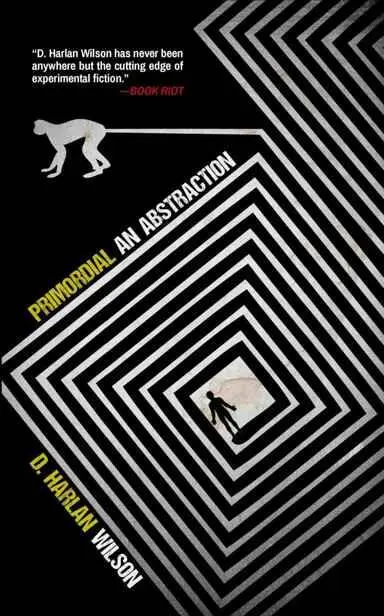
- Название:Primordial: An Abstraction
- Автор:
- Издательство:Anti-Oedipus Press
- Жанр:
- Год:2014
- ISBN:нет данных
- Рейтинг книги:4 / 5. Голосов: 1
-
Избранное:Добавить в избранное
- Отзывы:
-
Ваша оценка:
Primordial: An Abstraction: краткое содержание, описание и аннотация
Предлагаем к чтению аннотацию, описание, краткое содержание или предисловие (зависит от того, что написал сам автор книги «Primordial: An Abstraction»). Если вы не нашли необходимую информацию о книге — напишите в комментариях, мы постараемся отыскать её.
is an exercise in contemporary idiocy that rakes academia over the coals while plumbing the uncanny obscurities of existence and identity.
Primordial: An Abstraction — читать онлайн бесплатно полную книгу (весь текст) целиком
Ниже представлен текст книги, разбитый по страницам. Система сохранения места последней прочитанной страницы, позволяет с удобством читать онлайн бесплатно книгу «Primordial: An Abstraction», без необходимости каждый раз заново искать на чём Вы остановились. Поставьте закладку, и сможете в любой момент перейти на страницу, на которой закончили чтение.
Интервал:
Закладка:
I get out my wine.
I ask where the wine glasses are.
The advisor pretends like she doesn’t know what I’m talking about.
I pull a few sips from the bottle, cork it and put it away.
I get it out again and uncork it and put it on her desk and place the cork at the base of the bottle, leaning it against the glass so that it doesn’t roll away. “Just in case,” I remark.
Clearly the advisor can’t or won’t help me get back my time, money, and expended intellectual energy.
I say, “Who’s a good dissertation advisor to pursue in my department?”
She asks me what department I’m in. I tell her.
She doesn’t know anybody in that department.
I say, “I have a plan to get my dissertation done in a timely fashion. Many of my graduate students used to have difficulty with this. They completed their coursework and couldn’t wrap their heads around the Final Stage. They were used to writing short essays, taking tests, and doing research, if they did any research at all. When they suddenly had to perform real research and produce a book-length manuscript, they faltered. And ultimately failed. Many of them never got past writing an introduction. In my case, I will print out my old dissertation in a new font and turn it in. This should take about five or ten minutes. I wrote it twenty years ago, but it’s still relevant, and the prose is hip. My prose has always been hip.”
My advisor says I can’t do that.
I ask why.
She says I just can’t do that.
I ask why again.
She doesn’t know; people might not like it, though.
I ask why again.
She says I ask too many questions and questions often lead to hurt feelings.
I say, “Well just pretend I never brought it up. I won’t plagiarize my old dissertation as far as you or anybody else knows. I’ll write a new one from scratch.”
“You can’t take things back like that.”
“They took my Ph.D. back.”
“That’s different.”
I don’t say anything.
The advisor says something.
I say, “Stand up and turn around so I can look at you. I have no idea what you look like from the opposite direction. You’ve been sitting there the whole time.”
My quicksilver deflection works like a charm. Already she has forgotten what I said about turning in my old dissertation with a new font. And when she gets out of the chair, a new chapter unfolds.
41
“There’s going to be a fire drill today.”
“What?”
Timidly, tentatively, my roommate repeats himself.
“A fucking fire drill? Are you kidding me?”
“A fire drill,” he says. “Nobody knows when it’s going to happen. Everybody’s betting on when it’s going to happen. Some people are, like, I don’t know. . scared.”
“Scared?”
He nods gravely. “Yeah. You know. Because of the sound. It’s gonna be loud.”
“Loud?”
He nods again.
“Are you fucking kidding me?”
He shakes his head.
I go talk to a Dean of something.
“What’s this shit about a fuckin’ fire drill?”
“Fire drill?” says the Dean. But he obviously knows there’s going to be one.
“Fuck your fire drill. If I hear a fucking fire drill today I swear to god I’m gonna burn this goddamn hellhole to the ground! Dipshit!”
The Dean plays dumb for awhile longer. Eventually I get him to promise there won’t be a fire drill.
When the fire alarm goes off, I’m sitting in ENG 801: Introduction to Graduate Studies.
Everybody screams.
“Stay calm!” exclaims the professor. “Stay in your seats, by God!”
Everybody stays in their seats.
The professor charges across the classroom towards the door. Students try to trip him and take out his legs. He’s light of foot in spite of a terrific belly. Nobody even touches him.
The alarm is loud. My roommate was right. I’m scared.
The door won’t open. The professor pounds on it and hollers for somebody in the hallway to open it.
Nobody opens it.
The students can’t stand it any longer. They leap out of their chairs and make for the door.
They press against the professor, squeezing him into the cold wood.
His cheek presses against the glass window in the door, emboldening a popped blood vessel.
He moans.
The lights start blinking.
The floor starts shaking.
We slide across it in slowtime.
Unexpectedly, the professor collapses over a desk. I try to help him up. He shoos me away.
The fire alarm won’t stop.
There might be a real fire somewhere.
Somebody says they see a fire out the window. “A real one,” they emphasize.
We run to the window, trampling the professor. He begins to cough and choke. Long strands of plasma extend from his open mouth.
Next door a building is on fire. I don’t even know what building it is even though I have used several of the toilets inside of it.
Venomous flames hiss and buckle in every exploded window and doorway.
There are people on the roof.
They’re all on fire.
They screech and wail as they run back and forth like angry swarms of fireflies. Sometimes they crash into one another and fall off the roof.
The fire alarm keeps ringing even when the firemen show up, put out the fire, help the people, and go back to the fire station. Two days later it’s still ringing.
Then it stops.
42
I get back from the wine store or the gym or gym class or somewhere or someplace and I catch my roommates doing the Macarena.
I’ve suspected this for a long time.
When I’m gone, they line-dance. I don’t think they do much else.
They try to keep it to themselves because they think I’ll shame and ridicule and symbolically castrate them.
When I interrupt them doing the Macarena, I can tell they’re mad, because they really like that one, but anxiety trumps enjoyment, and they break out of formation and pretend to be inspecting the walls, and inspecting the ceiling, and inspecting their fingernails, and thumbing through textbooks that would otherwise remain permanently shut.
I say, “Were you just doing the Macarena?”
Their faces bunch in surprise and confusion. “Macarena?” says one of them, as if I’m speaking Spanish.
“Don’t lie to me. I saw you doing the Macarena.”
“What’s the Macarena?” says another one.
Eyeballing him, I slowly pace across the room to the Victrola sitting atop the minifridge.
The title of the record has been crossed out with a thick black marker.
I adjust the fleur-de-lis, wind up the machine, maneuver the swing tube, and lower the needle onto the vinyl.
There’s some static.
There’s the music.
Then, finally, there’s the chorus:
Dale a tu cuerpo alegria, Macarena.
Que tu cuerpo es pa’ darle alegria y cosa buena.
Dale a tu cuerpo alegria, Macarena.
Heeeeey Macarena. (Aaaaaiy!)
I give the needle a flick and the music squelches off. I watch the record turn for awhile, then look over my shoulder and stink-eye the rabble. “That sounds like the fuckin’ Macarena to me.”
They all deny it.
Each of them has a different excuse as to why they weren’t doing the Macarena.
One was studying.
One was playing a video game.
One was ordering a pizza.
One was daydreaming.
One recycles another one’s excuse.
Another one recycles another one’s excuse.
Etc.
I pretend to believe them before applying a chokehold of circular logic that broadsides their excuses and reveals their absurdity. This takes hours. I attend to each roommate in turn. By the time I’m finished with them, not only do they admit to line-dancing, they commence line-dancing, limbs swimming and synching like a cell of eels in an aquarium.
Читать дальшеИнтервал:
Закладка:
Похожие книги на «Primordial: An Abstraction»
Представляем Вашему вниманию похожие книги на «Primordial: An Abstraction» списком для выбора. Мы отобрали схожую по названию и смыслу литературу в надежде предоставить читателям больше вариантов отыскать новые, интересные, ещё непрочитанные произведения.









Обсуждение, отзывы о книге «Primordial: An Abstraction» и просто собственные мнения читателей. Оставьте ваши комментарии, напишите, что Вы думаете о произведении, его смысле или главных героях. Укажите что конкретно понравилось, а что нет, и почему Вы так считаете.