D. Wilson - Primordial - An Abstraction
Здесь есть возможность читать онлайн «D. Wilson - Primordial - An Abstraction» весь текст электронной книги совершенно бесплатно (целиком полную версию без сокращений). В некоторых случаях можно слушать аудио, скачать через торрент в формате fb2 и присутствует краткое содержание. Год выпуска: 2014, Издательство: Anti-Oedipus Press, Жанр: Старинная литература, на английском языке. Описание произведения, (предисловие) а так же отзывы посетителей доступны на портале библиотеки ЛибКат.
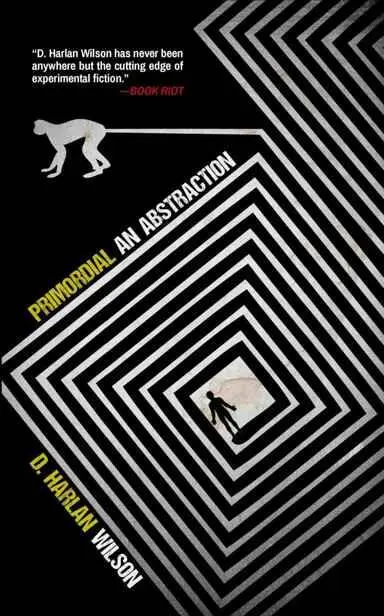
- Название:Primordial: An Abstraction
- Автор:
- Издательство:Anti-Oedipus Press
- Жанр:
- Год:2014
- ISBN:нет данных
- Рейтинг книги:4 / 5. Голосов: 1
-
Избранное:Добавить в избранное
- Отзывы:
-
Ваша оценка:
Primordial: An Abstraction: краткое содержание, описание и аннотация
Предлагаем к чтению аннотацию, описание, краткое содержание или предисловие (зависит от того, что написал сам автор книги «Primordial: An Abstraction»). Если вы не нашли необходимую информацию о книге — напишите в комментариях, мы постараемся отыскать её.
is an exercise in contemporary idiocy that rakes academia over the coals while plumbing the uncanny obscurities of existence and identity.
Primordial: An Abstraction — читать онлайн бесплатно полную книгу (весь текст) целиком
Ниже представлен текст книги, разбитый по страницам. Система сохранения места последней прочитанной страницы, позволяет с удобством читать онлайн бесплатно книгу «Primordial: An Abstraction», без необходимости каждый раз заново искать на чём Вы остановились. Поставьте закладку, и сможете в любой момент перейти на страницу, на которой закончили чтение.
Интервал:
Закладка:
The professor says, “The abyss.”
I say, “That doesn’t make any sense. Speak in complete sentences. That’s a fragment.”
The professor remains silent.
I say, “I assume your silence means a title page is ok. What else could your silence mean? Nothing.”
The professor remains silent.
“Sir? Hey, you. You there. What the fuck are you doing? C’mon. Seriously? C’mon. No? Yes? Ok. All right. Yes or no. Don’t answer that. It wasn’t a question anyway. No. All right. Well. Well. Thank you, sir.”
The professor remains silent.
I turn to the rest of the class and say, “Do you hear that? Title pages are ok. Go ahead and include one if you want to. Or don’t. It’s up to you. It’s always been up to you. Nothing else matters but subjectivity and the unique arc of the human spirit.”
56
I don’t talk much about my fitness habits. I drink a lot of wine, but I hit the gym six days a week, sometimes twice a day, and while I will occasionally sip wine during cardio, particularly on stationary bikes and elliptical machines, for the most part I keep it clean. The point is, staying in good muscular and cardiovascular shape is part of my routine. The spectacle of my physique does not require the crutch of language.
57
On another, similar note:
I go to a college bar and they’re shooting pornos all over the place.
In the restrooms.
On the dance floor.
Behind the bar.
I have more or less forgotten about pornos since they are shot everywhere, all the time, in every nook and cranny of college space and life. They have become as normative a fixture as the air I breathe.
Something about this particular spectacle piques my interest. It incites obsession, in fact, and I must drink large quantities of alcohol in order to exorcize the demons from my innerspace.
Drunk, I call my wife.
I try to tell her how I feel.
I slur my words and she gets mad and hangs up on me.
I call her back and tell her I’m sorry and hang up on her.
I call her one more time and assure her that I didn’t mean to hang up on her. She didn’t deserve that.
“How are the kids?”
“The kids?”
“How are the kids?”
“They’re grown up.”
“They’re grown up?”
“They’re grown up. They’re not kids anymore.”
I wobble back and forth. “What year is it?”
She tells me what year it is.
A student waiting for her scene brushes against me and leans onto the wall. She only has on a thong and her breasts and navel have been slathered with glitter. She looks at me through two puddles of mascara.
I look at her through blurred vision.
She moans perfunctorily.
I don’t know if the moan is directed at me or if she’s merely practicing her lines. I ask her.
She calls me a name and turns with a jerk.
I try to get her attention.
She’s gone.
I remember that I’m on the phone. Nobody’s there. I can’t remember who I was talking to anyway.
58
Strobes of reality. Strophes of alterity.
59
I’m still drunk. It feels gud.
60
There’s a raw fingerprint on the faux stainless steel, fingerprint-proof kitchenette trashcan. Somebody must have left it there.
I confront my roommates.
“There’s no fingerprint,” responds one of them. “There can’t be.” He presses a fingertip against the siding and no fingerprint comes off.
“Don’t get smart with me,” I tell him.
I pass out.
My roommates put me on their shoulders, carry me to bed, and tuck me in.
I wake up with a hangover.
I go to the Union to get coffee and a bagel. No cream in the coffee. No cream cheese on the bagel.
All of the writers are dead.
They’re strewn across the floors and the tables and the stairways and the railings and the embankments like wet papier-mâché mannequins. The pages of their manuscripts and their creative writing degrees tangle and snarl in the dust devils that rip across the floortiles and the grass and the bodies.
“Gesundheit.”
A mortician takes me aside and asks if I will help clean up the mess.
“I don’t know these people. Can’t somebody else do it?”
The mortician insists there’s nobody else.
I see people everywhere.
I say, “There’s people everywhere. Seriously. Can’t you ask somebody else? Him. Her. Her. Her. Her. Him. Her. Ask her.”
The mortician doesn’t want to. He likes the way I look. My brow, apparently, casts an attractive shadow onto the blank screen of my cheeks. “It’s a shadow I can trust,” explains the mortician.
“Fine. Fine. Fine. Fine. All right.”
The dead writers smell terrible. Decomposition, let alone rigor, hasn’t set in. This is how they smelled when they were alive. Slathering a mustache of mentholatum across my overlip doesn’t help. I can still smell the writers. I worry that I’ll never be able to get the smell off of me.
The mortician plays coach and directs me where to go. At first I defy him and demand that he disposes of some bodies too.
He won’t do it. He’s adamant. Almost arrogant.
On another day I may have let him have it, but I’m afraid of morticians, of their resolve, of their existential apathy, and I would do anything any mortician told me to do under any circumstances, although not without complaint. Like an unparented child, I never comply without the pretext of a complaint.
There are a lot of dead writers.
Students and faculty and staff and administrators and townies and other people that don’t belong at the University stop and stare at me as I lift the bodies and hurl them into the mortician’s jacked-up hearse.
There are dents all over the hearse. Especially on the hood. I assume they were produced by angry grievers who struck the vehicle with bats and bricks and sledgehammers as the mortician drove off with the corpses of their loved ones. I want to ask him if this is in fact the case.
I don’t ask him.
After heaving about fifty writers into the trunk, I feel like I’ve caught something. I feel. . dumb. And naïve. And invincibly self-important.
“I write because I’m weak!” I announce, slipping into character. I immediately regret it. Then I announce it again.
Before I can go on, the mortician kicks me in the knee and I fall over. Like a wrestler, he picks me up by the head, shakes me for about half a minute, then discards me. I do a maladroit somersault across the grass.
The audience cheers, claps.
I may or may not pass out. At no point do I lose the light, but there is a temporal gap.
Palsied, I stand and ask the mortician what happened.
He’s gone.
And a new, much larger horde of writers have already overtaken the Union. Careworn manuscripts in one hand, creative writing degrees in the other, they stagger back and forth in search of fresh meat. .
61
Nobody’s looking at me anymore. It gives me time to think about things. This is the first thing I think: I admire people who are not afraid to raise their naked limbs and reveal their untrimmed ditches.
62
There is only realtime, slowtime, fasttime, outrétime and primaltime. If nothing else, I always try to account for each modality in the same protein-infused breath.
63
The snow comes down more horizontally than vertically and the wind sends ferocious ripples across the windowscreens on the porch, threatening to tear off the windowscreens and hurl them into the Loch. The corpses of Junebugs remain intact, the fingers of their insect limbs fused to the steel lattice. Nothing can evacuate them. Not even the heavy breaths of God.
Читать дальшеИнтервал:
Закладка:
Похожие книги на «Primordial: An Abstraction»
Представляем Вашему вниманию похожие книги на «Primordial: An Abstraction» списком для выбора. Мы отобрали схожую по названию и смыслу литературу в надежде предоставить читателям больше вариантов отыскать новые, интересные, ещё непрочитанные произведения.






Обсуждение, отзывы о книге «Primordial: An Abstraction» и просто собственные мнения читателей. Оставьте ваши комментарии, напишите, что Вы думаете о произведении, его смысле или главных героях. Укажите что конкретно понравилось, а что нет, и почему Вы так считаете.