Richard Patterson - Conviction
Здесь есть возможность читать онлайн «Richard Patterson - Conviction» весь текст электронной книги совершенно бесплатно (целиком полную версию без сокращений). В некоторых случаях можно слушать аудио, скачать через торрент в формате fb2 и присутствует краткое содержание. Жанр: Старинная литература, на английском языке. Описание произведения, (предисловие) а так же отзывы посетителей доступны на портале библиотеки ЛибКат.
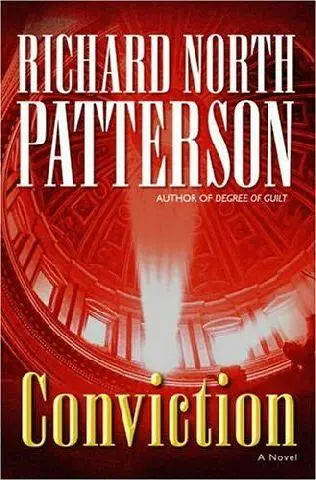
- Название:Conviction
- Автор:
- Жанр:
- Год:неизвестен
- ISBN:нет данных
- Рейтинг книги:3 / 5. Голосов: 1
-
Избранное:Добавить в избранное
- Отзывы:
-
Ваша оценка:
Conviction: краткое содержание, описание и аннотация
Предлагаем к чтению аннотацию, описание, краткое содержание или предисловие (зависит от того, что написал сам автор книги «Conviction»). Если вы не нашли необходимую информацию о книге — напишите в комментариях, мы постараемся отыскать её.
Conviction — читать онлайн бесплатно полную книгу (весь текст) целиком
Ниже представлен текст книги, разбитый по страницам. Система сохранения места последней прочитанной страницы, позволяет с удобством читать онлайн бесплатно книгу «Conviction», без необходимости каждый раз заново искать на чём Вы остановились. Поставьте закладку, и сможете в любой момент перейти на страницу, на которой закончили чтение.
Интервал:
Закладка:
Kuhl folded his arms. "What I said, Ms. Paget, is that I don't believe that abuse relates to mental retardation."
"Really? So, in your opinion, even the most severe abuse won't make a retarded person even more prone to fright, or confusion?"
"I wasn't asked to form an opinion on that."
"Were you asked to consider whether abuse might contribute to the potential sleep disorder described in Payton's deposition?"
"No."
"So you have no insight to offer us on Rennell's sleep patterns, or the likelihood he was fast asleep on the day that Thuy Sen died."
"No."
"No," Terri repeated coldly. "This morning, you offered us a critique of Atkins. One of the reasons the Supreme Court gave in Atkins for barring the execution of the mentally retarded was that retarded people have a harder time comprehending the legal system. In this case, the case of Rennell Price, an allegedly retarded man about to be executed, did you try to determine whether he was capable of understanding—and waiving—his lawyer's conflict of interest in also representing Payton?"
"No, Ms. Paget. The Attorney General's Office didn't ask me to address that."
Returning to the defendants' table, Terri glanced at a piece of paper. "Having met Rennell Price, do you—as a professional—honestly believe that he got it when Judge Warner asked, 'Do you understand that, by employing Mr. James to represent you both, you assume the risk that he may not represent your individual interests as effectively as separate counsel?' "
Kuhl shook his head. "I need to know more, Ms. Paget. For example, how well did the lawyer explain to Rennell his choices—"
"He didn't," Terri snapped. "Assuming that fact, how would you evaluate Rennell's ability to comprehend the judge's admonition?"
"That's beyond the scope of my opinion."
"Isn't everything? Yet you also offered Rennell's orderly existence in prison as evidence of his adaptive skills. Precisely what skills does that existence require?"
"Conformity to rules, among other things."
"What rules are there, Dr. Kuhl? 'Stay in your cell' . . . ?"
"All right," Bond interjected. "If you have a question to ask the witness, ask it with respect."
Not so easy, Terri wanted to say. But Kuhl was shaken now, and she did not wish to give him time. "All right," she said. "Can retarded people take showers?"
"Of course."
"Can they eat meals put through the meal slot?"
"Of course."
"Can they go to the bathroom unassisted?"
"Yes."
"Can they go where they're told when they're told?"
"Yes."
"Impressive," Terri said coolly. "Isn't it true that the simplified existence of an inmate in solitary confinement presents far fewer challenges or surprises to the retarded than does the outside world?"
Kuhl regarded her with a closed expression. "It presents fewer variables . . ."
In the quiet of the courtroom, someone laughed again. Bond crisply banged his gavel. "You showed us a videotape," Terri said mildly, "in which Rennell attributed his academic failures to not trying. What role did this self-evaluation play in your opinion that Rennell is not retarded?"
Kuhl frowned again. "My primary reliance was testing, and his adaptive skills. My only point was that Rennell Price provided an alternative explanation for his poor performance—"
"Pretty dumb, wasn't it? I mean, here's the prisoner who may well die unless this Court finds him retarded, and he keeps on insisting that he's not."
"It struck me as a matter of pride, Ms. Paget. Rennell Price did not want to be taken for something which he doesn't believe he is."
Terri gave him a dubious smile. "Isn't it true, Dr. Kuhl, that retarded people often resist acknowledging their limitations?"
"They can."
Terri skipped a beat. "How do you know?"
Kuhl looked puzzled. "I don't understand . . ."
"I mean, have you actually ever met a retarded person?"
Bond—she saw from his swift glance at the witness—perceived where Terri was going. But the witness did not seem to. "I still don't understand."
"Let's break it down. You've never met one on death row, correct?"
Kuhl's shoulders twitched. "That's not what I said . . ."
"What you said, Doctor, is that none of the inmates you've examined for retardation were, in your opinion, retarded. Is that correct?"
"Yes."
"And you never met a retarded person in your practice, because you have no practice—correct?"
Kuhl hesitated. "Correct."
"How long has it been since you became a psychologist?"
"Seventeen years."
"And in all those years, you never met a single retarded person?"
"I've certainly encountered them in life . . ."
"On the street, but not on death row?" Terri summoned a tone of mock bewilderment. "How did you know they were retarded?"
"It was obvious . . . ," Kuhl began, and then his voice trailed off. "What I mean is, their conduct, combined with their appearance, clearly suggested retardation."
"But you didn't actually test them."
"Of course not."
"Well, based on your reading about retarded people, can you always determine by observation whether someone is retarded?"
"Of course not. That's why we have a regime of testing."
"And in your regime of testing, you've never found anyone you tested to be mentally retarded."
"Asked and answered," Pell called out.
"Point made," Bond told her with a look of annoyance. "Move on."
Kuhl looked toward the judge. "If I may say one thing, Your Honor. During my medical education, I encountered a number of persons—often in public mental facilities—who had been found to be retarded."
"But not by you," Terri said. "Correct?"
Turning, the witness summoned an expression which, Terri supposed, was meant to be long-suffering. "Not by me, counselor. But I was able to observe them."
"Did all of their eyes bug out?" Holding up a hand, she said, "Forgive me, Your Honor. I'll move on."
"Please do."
"This morning, Dr. Kuhl, you said there was no evidence that Rennell Price suffered from fetal alcohol syndrome or organic brain damage. Is it possible to have either, or both, while having a 'normal' appearance?"
"That's possible, yes."
"And that a CAT scan won't necessarily reveal either?"
"That's true."
"And that the so-called practice effect could have improved Rennell's scores on the tests you gave him to evaluate his IQ?"
"That's also true." Kuhl's voice held a trace of exasperation. "Which is why I emphasize forensic behavioral analysis, re-creating a defendant's actions in his normal life."
"Let's break that down. You'll concede that Rennell's 'normal life' on death row does not refute the assertion that he's retarded?"
"Not in itself, no . . ."
"Isn't it also true that—based on your nine-hour review—you are aware of nothing which makes his academic failure more likely to be willful than a sign of retardation?"
"Other than his own admission."
" 'Other than his own admission,' " Terri repeated softly. "I guess that leaves us with all those deliberate things he did in the commitment of this crime. Of course, if Payton Price were telling the truth, those things never happened, did they?"
"If Payton were telling the truth," the witness rejoined, "Rennell's innocent, retarded or no. But that's not what the jury found."
"True. In forming your opinion, Dr. Kuhl, did Mr. Pell give you any instructions regarding how to view the testimony of Eddie Fleet?"
"I was instructed to assume its truth."
Though questioning the witness, Terri directed her gaze at Bond. "In other words, your 'forensic behavioral analysis' rests primarily on the testimony of Mr. Fleet."
"In some measure, yes."
"Aren't you at least curious about whether he's telling the truth?"
Читать дальшеИнтервал:
Закладка:
Похожие книги на «Conviction»
Представляем Вашему вниманию похожие книги на «Conviction» списком для выбора. Мы отобрали схожую по названию и смыслу литературу в надежде предоставить читателям больше вариантов отыскать новые, интересные, ещё непрочитанные произведения.











Обсуждение, отзывы о книге «Conviction» и просто собственные мнения читателей. Оставьте ваши комментарии, напишите, что Вы думаете о произведении, его смысле или главных героях. Укажите что конкретно понравилось, а что нет, и почему Вы так считаете.