Richard Patterson - Conviction
Здесь есть возможность читать онлайн «Richard Patterson - Conviction» весь текст электронной книги совершенно бесплатно (целиком полную версию без сокращений). В некоторых случаях можно слушать аудио, скачать через торрент в формате fb2 и присутствует краткое содержание. Жанр: Старинная литература, на английском языке. Описание произведения, (предисловие) а так же отзывы посетителей доступны на портале библиотеки ЛибКат.
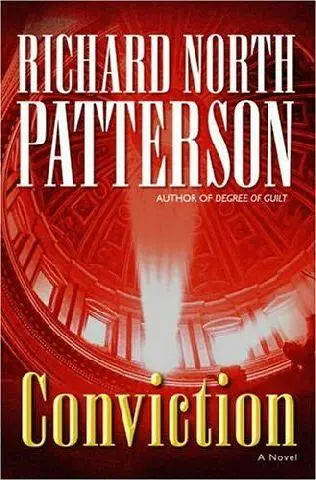
- Название:Conviction
- Автор:
- Жанр:
- Год:неизвестен
- ISBN:нет данных
- Рейтинг книги:3 / 5. Голосов: 1
-
Избранное:Добавить в избранное
- Отзывы:
-
Ваша оценка:
Conviction: краткое содержание, описание и аннотация
Предлагаем к чтению аннотацию, описание, краткое содержание или предисловие (зависит от того, что написал сам автор книги «Conviction»). Если вы не нашли необходимую информацию о книге — напишите в комментариях, мы постараемся отыскать её.
Conviction — читать онлайн бесплатно полную книгу (весь текст) целиком
Ниже представлен текст книги, разбитый по страницам. Система сохранения места последней прочитанной страницы, позволяет с удобством читать онлайн бесплатно книгу «Conviction», без необходимости каждый раз заново искать на чём Вы остановились. Поставьте закладку, и сможете в любой момент перейти на страницу, на которой закончили чтение.
Интервал:
Закладка:
"Tomorrow morning we turn to the alleged new evidence of innocence. Unlike with Mr. Fleet, Ms. Paget, you do control the presence of Rennell Price." After pausing, the judge concluded firmly, "It's time for you to decide. Either call the petitioner as a witness or make your showing without him."
* * *
It was midnight, and Terri sat with Chris at their kitchen table. The high from her cross-examination of Davis Kuhl seemed to have occurred in some other life, perhaps to another lawyer.
"I can't do it," Terri said. "I think Pell could destroy Rennell. I think Bond could use some foolish thing he said—like 'I was just a fuck-off'—to send him to the death chamber." Pausing, she watched her husband's expression. "On retardation, I pretty much eviscerated Davis Kuhl. On innocence, no jury would convict Rennell with the evidence we have today—"
"That's not the point, Terri, and you know it." In the harsh light of the kitchen, Chris's face, lean and weathered, held a melancholy certainty. "The only way to keep this judge from dissolving the stay of execution is to show Rennell Price to the world. That's the place Bond put you when he allowed the State to conceal Eddie Fleet."
Terri thought of Rennell as she had seen him that afternoon, listening to her account of the day's proceedings as though Bond's courtroom were a foreign country he feared to visit. "Been in court," he had said softly. "Don't never want to go again." The tremor in his voice had conveyed far more than words.
"Even if Bond turns us down," Terri told Chris, "there's a fair chance Blair Montgomery's panel will agree to hear the case."
"Maybe so. But spin out with me what happens next.
"If Rennell wins before Bond, and then the Ninth Circuit agrees, even if Pell succeeds in getting the U.S. Supreme Court to review it, you're still in okay shape. At least you and the Ninth Circuit are both relying on the opinion of a very conservative district judge. But if a Ninth Circuit panel reverses Bond, and Pell takes it to the Supreme Court, you've got an entirely different dynamic—"
"I know," Terri said tiredly. "The Supreme Court will see a rogue panel from a rogue circuit, headed by a liberal judge, flouting the law as interpreted by a right-thinking conservative like Gardner Bond."
"You've got Justice Fini," Chris said flatly. "And you don't want this case ever to cross his mind."
Exhausted, Terri tried to imagine the gravitational pull between a retarded black man and a brilliant Supreme Court justice she hoped would never become aware of Rennell's existence. "Too far ahead," she finally answered. "All I can try to do is what's best to do tomorrow."
FOURTEEN
"WHAT'S YOUR PLEASURE," GARDNER BOND INQUIRED OF TERRI, "with respect to Rennell Price?"
Standing at the defense table, Terri hesitated—not because of last-minute indecision but because her decision felt so fateful. "We've determined not to call him as a witness, for all the reasons cited in Atkins—that he's prone to confusion, won't understand what he's asked, and doesn't know what happened the day that Thuy Sen died—"
"Wait a minute," Bond interrupted. "If Mr. Price wants to tell us that, he can. But don't withhold his testimony, then testify on his behalf."
"That wasn't my intention," Terri said simply.
"Good." Bond nodded her toward the podium which faced his bench. "On the question of Mr. Price's supposed innocence, you have asked us either to exonerate him, requiring his release from prison, or—at the least—to order a new trial. We've already reviewed Payton Price's deposition and the declarations of the others you wanted to call as witnesses. We're prepared to hear your argument, and that of Mr. Pell, and then rule."
Terri walked to the podium and rested her hands on its burnished wood. Bond had reduced the question of Rennell's fate to this—a half-hour argument between lawyers about a terrible event, fifteen years past, to which the actual witnesses were absent, or dead. Even the lawyers were new.
"At the moment Payton broke his silence," Terri began, "one thing was clear at once—that, on the record before this Court, the State of California should not be allowed to execute his brother—"
"You're assuming Payton's credibility," Bond interjected. "Why should this Court agree?"
"Normally," Terri conceded, "eleventh-hour confessions should be viewed with skepticism. But Payton's makes too much sense for that.
"First, it's consistent with the physical evidence. There's no forensic evidence whatsoever of Rennell's involvement in the crime itself—"
"What about Rennell's fingerprints, Ms. Paget? They were found in Fleet's car."
"But not in the trunk, Your Honor, where Fleet placed Thuy Sen's body. Payton Price confirmed what common sense suggests—because Fleet functioned as his driver, both brothers were frequent passengers in his Cadillac. Rennell's fingerprints are proof of nothing—"
"And Payton Price had nothing to lose by saying whatever he pleased."
"Perhaps," Terri answered softly. "But fifteen years ago, when Eddie Fleet testified against Rennell, Fleet had everything to gain: his freedom, and his life—despite a crime in which, even by his own self-serving admission, he was involved. And today, when Fleet has everything to lose, he refuses to repeat the testimony which sent Rennell to the death chamber.
"Today, the sole witness to the murder, Payton Price, testifies in the black and white of his deposition that Eddie Fleet killed Thuy Sen in an act of pedophilia. And that the State, by cutting a deal with Fleet then, and protecting him now, has become his accomplice in a second murder—"
"You go too far," Bond remonstrated. "What about Flora Lewis?"
"At seventy-two years old, she was looking at two men from over ninety feet away—too far to make out faces. So she 'saw' what she expected to see, Payton Price with Rennell, instead of what Payton swore she really saw: a man in a bulky sweatshirt who's the same height as Rennell, Eddie Fleet—"
Holding up his hand for silence, Bond riffled some legal pleadings in front of him. "According to the record, the police put Eddie Fleet in the same lineup with Rennell Price. Flora Lewis still picked out Rennell."
Terri nodded. "In support of our petition, we submitted school photographs of Rennell and Eddie Fleet, showing that their general features were quite similar. We've also submitted the declaration of Dr. Libby Holt, an expert on cross-racial identification, whom we've offered to call as a witness—so that the Court can see her, and Mr. Pell may cross-examine her. Dr. Holt makes two points: that eyewitness identifications are frequently driven by emotions and the witnesses' need for certainty. And that cross-racial identifications—especially those of blacks by whites—are particularly unreliable—"
"Even in a lineup?"
"Of course Flora Lewis 'identified' Rennell. She knew him." Terri paused, attempting to drain the exasperation from her voice. "At ninety feet, it's doubtful she could make out faces. All the lineup proved is that Flora Lewis could identify her neighbor, Rennell Price, from a distance of ten feet.
"Rennell's death sentence resulted from a tragic combination of Fleet's lies, Payton's self-serving silence, an old lady's mistake, and the incompetence of a lawyer who neither knew nor cared that Rennell Price is retarded—"
"If he is," Bond countered. "We can't assume Mr. Price's retardation for purposes of determining whether you've offered persuasive proof of innocence."
"But we know a lot," Terri countered. "As Yancey James spelled out in his declaration—and as he would tell this Court if asked—he believed Rennell guilty because Payton tacitly admitted that he, Payton, was guilty. James never developed a separate defense for Rennell, refused to believe Rennell's protestation of innocence, never investigated Eddie Fleet, and never raised the possibility that Fleet, not Rennell, was guilty—"
Читать дальшеИнтервал:
Закладка:
Похожие книги на «Conviction»
Представляем Вашему вниманию похожие книги на «Conviction» списком для выбора. Мы отобрали схожую по названию и смыслу литературу в надежде предоставить читателям больше вариантов отыскать новые, интересные, ещё непрочитанные произведения.










Обсуждение, отзывы о книге «Conviction» и просто собственные мнения читателей. Оставьте ваши комментарии, напишите, что Вы думаете о произведении, его смысле или главных героях. Укажите что конкретно понравилось, а что нет, и почему Вы так считаете.